South Korean President Lee Jae Myung has navigated a delicate political tightrope, simultaneously validating public concerns about systematic voting failures while drawing a sharp distinction between legitimate criticism and what he characterises as baseless claims of electoral manipulation. Speaking from Vatican City on June 15, where he was presiding over a senior leadership meeting via video, Lee attempted to restore equilibrium to a nation fractured by competing demands for accountability and institutional stability.
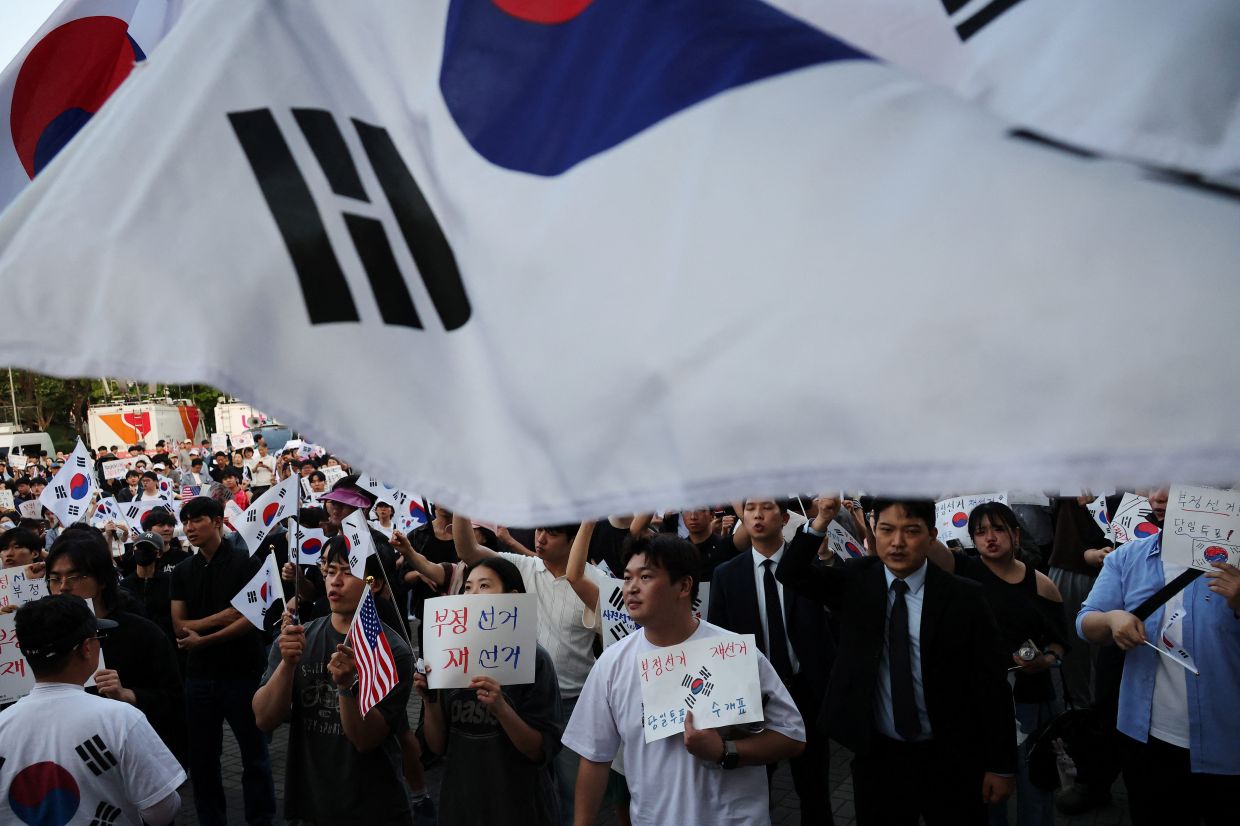
The immediate trigger for Lee's intervention was the escalating disruption caused by ongoing demonstrations centred around Olympic Park's handball arena in southern Seoul. The venue, which functioned as the principal vote-counting facility for the contested June 3 local elections, has become the focal point of sustained protests. Sports organisations with offices throughout the Olympic Park complex reported significant operational difficulties as protesters maintained blockades preventing staff and athletes from accessing essential facilities. These disruptions carry particular urgency for South Korea's international sporting commitments, as administrative work essential for athlete participation in global competitions had been compromised by the access restrictions.
Lee's statement emphasised that while citizens possess legitimate grounds for expressing discontent, the exercise of this right must not transgress the legitimate entitlements of others. His message on the social media platform X urged protesters toward greater restraint, acknowledging that the boundary between passionate civic engagement and obstruction of ordinary activities represents a critical democratic threshold. This position reflected mounting frustration within government circles regarding what officials viewed as the increasingly disruptive nature of the demonstrations, even as Lee maintained rhetorical support for investigating the underlying grievances.
The National Election Commission's management of the June 3 local elections had demonstrably failed citizens, Lee conceded in language that departed from typical executive equivocation. He characterised the ballot paper shortages and associated voting disruptions as a serious institutional breakdown that fundamentally compromised voter enfranchisement. The failures resulted in temporary voting suspensions and delays at certain polling stations, directly preventing citizens from exercising their constitutional rights at their preferred times. For Lee to acknowledge this dimension explicitly represented a significant concession to public anger, particularly among younger demographics increasingly sceptical of institutional competence.
Yet Lee's recognition of systemic failure carried an important caveat. He firmly rejected what he termed conspiracy theories alleging outright election rigging or manipulation, positioning such claims as fundamentally distinct from legitimate criticism of administrative incompetence. This distinction matters considerably, as allegations of deliberate fraud attack the legitimacy of democratic outcomes themselves, whereas criticism of operational failures, however serious, accepts that the final results remain authentic. Lee characterised those propagating fraud narratives as exploiting genuine public frustration to advance divisive agendas that threaten social cohesion.
The President referenced troubling behaviour by some protesters, including intimidation of police personnel and ordinary citizens, disruptive facility inspections, and obstruction of official duties. These actions crossed what Lee identified as inviolable institutional lines that must be preserved regardless of legitimate grievances. He instructed law enforcement to investigate not merely those who engaged in forcible obstruction but also individuals who conspired to organise such activities, indicating his administration's determination to establish accountability across the protest movement's organisational chain.
Lee simultaneously directed multiple institutional processes intended to provide transparency regarding the election failures. He called upon the National Election Commission to cooperate fully with parliamentary investigations expected to commence that week, effectively placing electoral authorities on notice that their accountability would be scrutinised by the legislative branch. Separately, he accelerated the joint investigation team comprising prosecutors and police personnel, explicitly instructing them to pursue responsibility determinations without institutional sanctuary, language that signalled potential high-level accountability.
The President's framing attempted to reposition the election failure narrative from a binary debate between institutional legitimacy and popular grievance into a framework emphasising democratic renewal. He suggested the voting disruptions represented an opportunity to strengthen democratic institutions and citizen sovereignty through transparent fact-finding, constructive alternatives to current procedures, and systemic reforms preventing recurrence. This reframing acknowledged underlying public anger as justified while redirecting its energy toward institutional improvement rather than delegitimisation.
For Malaysian and Southeast Asian observers, South Korea's election crisis illuminates recurring tensions across the region regarding electoral management, public protest dynamics, and institutional accountability. Like other democracies in the region grappling with concerns about voting system reliability and administrative capacity, South Korea demonstrates that even well-established electoral systems prove vulnerable to operational failures capable of generating significant public mistrust. The episode underscores how such failures, if not addressed with transparency and genuine institutional reform, can provide openings for more corrosive delegitimisation narratives that threaten democratic foundations themselves.
Lee's balancing act reflects the genuine difficulty democratic leaders face when addressing simultaneous pressures: acknowledging legitimate public concerns while maintaining institutional stability and preventing protest movements from employing genuine grievances as platforms for more fundamental challenges to system legitimacy. His call for responsible action from both protesters and institutions suggests recognition that democracies require both accountability mechanisms and acceptable boundaries for civic contestation to remain viable.
The coming weeks would prove consequential, as parliamentary investigations and prosecutorial inquiries proceeded. Whether South Korea's institutional responses proved sufficiently thorough and transparent to restore public confidence in electoral processes, or whether the episode marked the beginning of more sustained challenges to institutional legitimacy, remained uncertain. The President's own conduct throughout the controversy would substantially influence whether his administration emerged having restored democratic equilibrium or merely postponed deeper fractures.