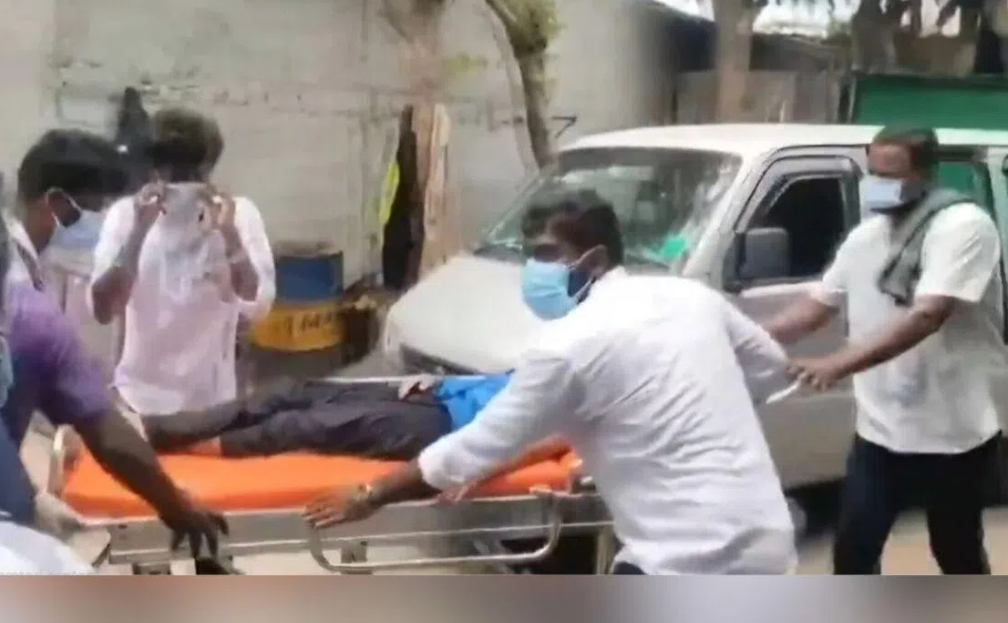
A catastrophic ammonia gas leak at a seafood export processing facility in Tamil Nadu's Thiruvallur district claimed at least six lives and sent dozens of workers to hospital on Sunday, June 21, raising fresh concerns about occupational safety in India's food processing sector. The incident unfolded at a processing unit situated near Periyapalayam village, where approximately 120 migrant labourers, predominantly women recruited from states including Assam, Odisha and Jharkhand, were on duty when the leak was detected.
The toxic gas is believed to have originated from either the refrigeration or processing systems within the facility, rapidly dispersing across multiple sections of the plant. Workers caught in the exposure zone experienced harrowing symptoms ranging from acute respiratory distress to severe dizziness and chemical irritation of the respiratory tract and eyes. Medical personnel later reported that some casualties exhibited alarming signs including hemorrhaging from the mouth and nasal passages, a clinical indication of the gas's extreme corrosiveness and the severity of workers' exposure levels.
The sudden crisis sparked pandemonium throughout the facility as employees attempted to evacuate. While some workers managed to flee toward safer areas, others became incapacitated by inhalation of the noxious fumes and collapsed where they stood. The chaotic scene was further complicated by the large concentration of migrant labourers, many of whom may have had limited familiarity with emergency protocols or the dangers of ammonia exposure.
Emergency services responded swiftly to distress calls, with ambulances, police units and district administration personnel arriving to coordinate rescue efforts. The hospitalised workers received urgent medical intervention, though officials indicated that several patients remained in precarious clinical condition requiring intensive care monitoring. The scale of the disaster underscored the vulnerability of migrant workers in India's industrial sectors, who frequently work in conditions lacking adequate safety infrastructure.
Tamil Nadu Chief Minister C. Joseph Vijay issued immediate directives following news of the tragedy, ensuring that state hospitals would extend comprehensive medical support to all affected individuals. Beyond immediate relief measures, the chief minister's office acted decisively to establish accountability, announcing the formation of a three-member investigative committee tasked with examining the root causes of the catastrophe. The panel received orders to conduct a thorough inspection of the facility and produce detailed findings within 24 hours, signalling the government's intention to swiftly determine whether systemic failures enabled the disaster.
The investigation will scrutinise multiple dimensions of the facility's operations, including adherence to safety regulations, the adequacy of maintenance schedules for refrigeration apparatus, worker training protocols and management procedures for handling hazardous substances. Officials will assess whether the company had complied with prescribed industrial safety standards and whether deficiencies in equipment inspection or staff preparation contributed to the gas release.
Police have initiated formal criminal proceedings, registering a case against the facility's operators as preliminary investigations commenced. The case will likely examine whether workplace safety violations under relevant labour laws and industrial regulations occurred, and whether negligence by management contributed to workers' deaths. Such investigations frequently reveal patterns of cost-cutting on safety infrastructure and inadequate hazard communication in facilities employing vulnerable migrant populations.
The incident echoes previous industrial accidents across South Asia involving chemical leaks at food processing and manufacturing units, many resulting from deferred maintenance, inadequate ventilation systems and insufficient worker awareness of hazard response. Ammonia is particularly dangerous in industrial settings, as exposure to concentrated vapours can cause fatal respiratory failure within minutes, yet it remains widely used in refrigeration systems throughout the subcontinent's seafood export industry.
For Malaysian readers, the incident carries implications beyond India's borders. The seafood supply chain connecting South Asia with Malaysian importers and regional exporters operates within competitive cost structures that sometimes incentivise safety shortcuts. Malaysia's food safety standards and workplace regulations are generally stronger than in comparable Indian facilities, yet enforcement challenges persist across Southeast Asia's processing sector. The Tamil Nadu tragedy underscores the importance of rigorous supplier audits and supply chain transparency, particularly as Malaysian companies increasingly source raw materials and processed goods from larger South Asian facilities.
The broader context reveals systemic vulnerabilities in how migrant workers across South Asia are treated within industrial settings. Labourers recruited from economically disadvantaged regions frequently lack employment contracts specifying safety provisions, face language barriers that impede emergency communication and receive minimal training on hazard recognition. The reliance on migrant labour in India's export-oriented seafood sector, while economically efficient, creates moral hazards when workplace protections are not adequately enforced.
The three-member inquiry committee's findings will likely recommend enhanced regulatory oversight, mandatory safety audits at processing facilities and stricter penalties for non-compliance. Industry observers anticipate that the incident may prompt Tamil Nadu authorities to conduct surprise inspections across similar facilities, potentially disrupting operations but establishing stronger baselines for occupational safety. Whether such interventions prove sustained or temporary depends largely on political will and resource allocation by state authorities.
As investigations progress, the focus will inevitably shift toward whether the seafood facility possessed adequate emergency response systems, whether workers had received training on ammonia exposure risks and evacuation procedures, and whether management had prioritised cost reduction over infrastructure investments in safety. The answers will determine not only accountability in this specific case but also signal to the region's industrial operators the consequences of treating worker safety as a discretionary rather than mandatory component of operations.

