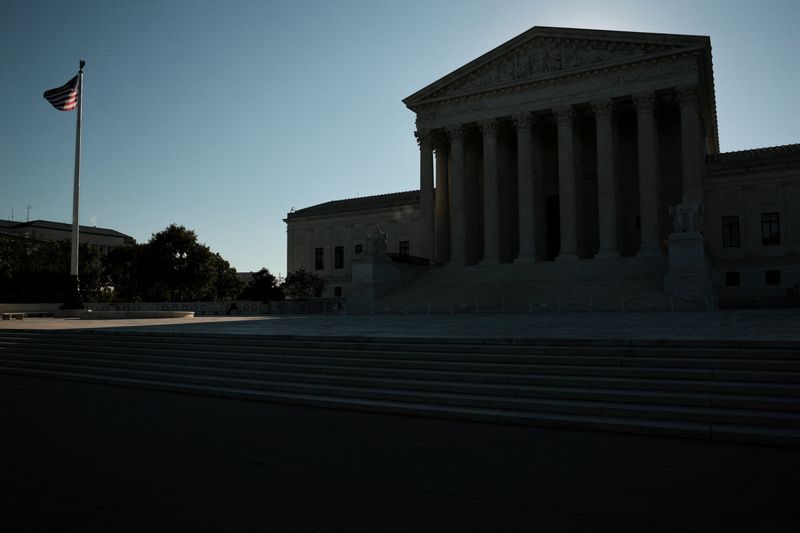
The United States Supreme Court has declined to hear Tata Consultancy Services' appeal in a major trade secrets case, allowing a $168 million damages award to stand against the Indian IT services giant. The decision, delivered on Monday, marks the end of a legal battle spanning multiple years and levels of the American court system, with implications for how intellectual property disputes are handled in the technology sector globally.
At the heart of the dispute lies DXC Technology's claim that Tata misappropriated proprietary information related to life-insurance software. DXC, based in Ashburn, Virginia, traced its complaint back to the 1990s when its predecessor company, Computer Sciences Corporation, had licensed the software to insurance firm Transamerica. The 2019 lawsuit, filed in Dallas federal court, alleged that Tata engaged in a systematic effort to replicate DXC's technology by hiring approximately 2,200 former Transamerica employees who possessed direct knowledge of CSC's proprietary systems and processes.
Tata's defence throughout the proceedings centred on two main arguments. The company maintained that the information in question did not qualify as trade secrets under US law and that it had accessed any relevant software through legitimate, licensed channels. By claiming the information was not properly protected as confidential, Tata sought to undermine the legal foundation of DXC's entire case. This defence strategy reflected a broader corporate argument that information circulating within a workforce cannot reasonably be classified as secret, particularly when employees move between companies.
The judicial process unfolded across three separate proceedings, each escalating the stakes. A jury in 2023 delivered an advisory verdict recommending damages of $210 million for what it deemed willful theft of trade secrets. While non-binding, this advisory verdict signalled strong juror sentiment regarding Tata's conduct. US District Judge Brantley Starr subsequently reduced the award to $168 million in 2024, comprising $56 million in compensatory damages and $112 million in punitive damages. The judge's reduction reflected a judicial reassessment of what the evidence warranted, though the amount remained substantial.
When the New Orleans-based Fifth US Circuit Court of Appeals reviewed the case in 2025, it upheld Judge Starr's decision in full, rejecting Tata's contentions on both the magnitude and legal basis of the award. This appellate confirmation prompted Tata to pursue its final legal remedy through the Supreme Court, presenting arguments about the appropriate legal framework for calculating damages in trade secrets cases under American law.
Tata's Supreme Court petition challenged a fundamental aspect of how the damages were constructed. The company argued that DXC should not have been permitted to recover unjust enrichment damages—money gained through wrongful conduct—without simultaneously proving that DXC had suffered identifiable, quantifiable losses. This distinction matters considerably in trade secrets litigation because it determines whether a plaintiff must demonstrate actual harm or whether a defendant's wrongful gain alone justifies compensation. Tata also contended that the punitive damages component, designed to deter future misconduct, had exceeded what the law reasonably permitted.
US trade secrets law, shaped primarily by the Defend Trade Secrets Act and state legislation modelled on the Uniform Trade Secrets Act, permits recovery based on both actual losses to the plaintiff and the defendant's unjust enrichment. Notably, the $168 million award DXC received rested entirely upon the unjust enrichment theory rather than proven losses. This methodological choice reflected the court's assessment that while DXC may have struggled to quantify precise revenue losses, Tata had clearly benefited substantially from deploying proprietary knowledge without compensation.
DXC's response to the Supreme Court appeal was characteristically terse, asserting that the appellate court's analysis involved settled legal principles applied to specific facts and circumstances that hardly warranted further Supreme Court review. This argument suggested that no broader legal question or circuit split existed—merely a straightforward application of established law to Tata's particular conduct. The argument proved persuasive to the Supreme Court, which declined to grant certiorari.
For multinational technology companies operating globally, this outcome carries significant implications. The decision confirms that US courts will aggressively protect trade secrets and that hiring large cohorts of employees from a competitor carries substantial legal risk, particularly when those employees bring detailed knowledge of proprietary systems. The reliance on unjust enrichment damages also signals that companies need not prove quantifiable losses to recover substantial sums; demonstrating that a defendant profited from misappropriated information may suffice.
The case holds particular relevance for Indian IT services companies, which frequently expand through hiring talent from established technology players. The precedent establishes that such hiring practices, if accompanied by deployment of prior employers' proprietary knowledge, will face serious legal consequences in American courts. The Supreme Court's refusal to revisit the case suggests American jurisprudence on intellectual property protection remains stringent and unlikely to be relaxed by higher courts.
For Malaysia and the broader Southeast Asian technology sector, the ruling underscores the enforcement mechanisms available in the United States for protecting intellectual property. As regional technology firms expand internationally and compete with multinational players, this case demonstrates both the vulnerabilities of aggressive talent acquisition strategies and the robust legal protections that exist in mature markets like the United States.