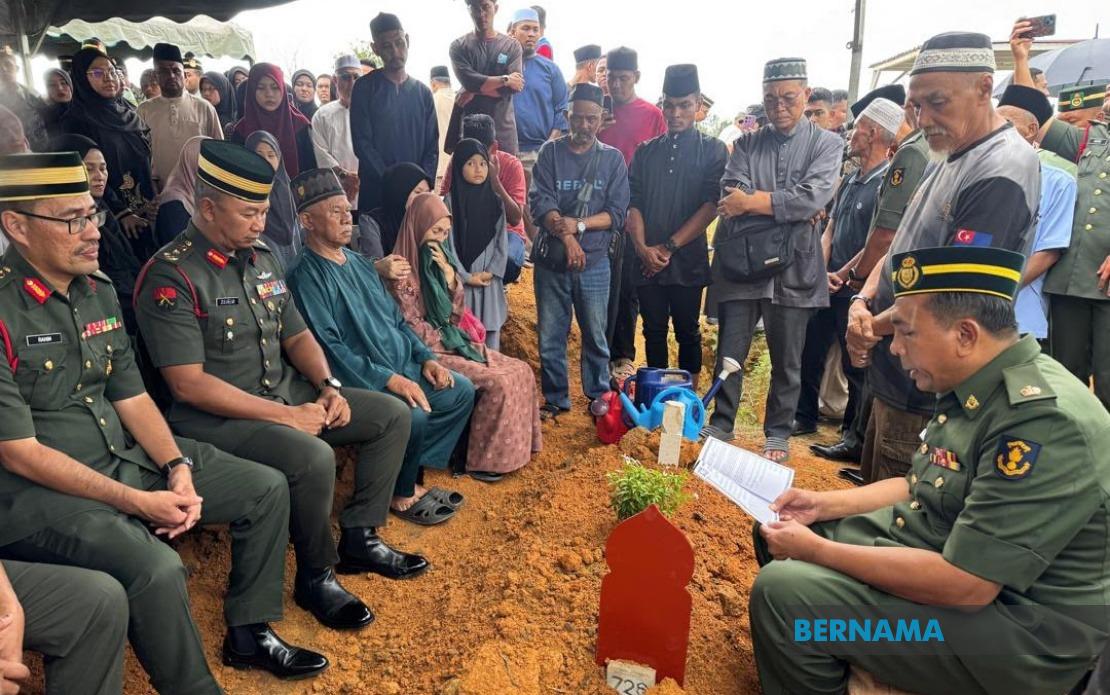
The Malaysian Army suffered a significant loss yesterday when Private Siti Khadijah Sungip, 24, was killed during a grenade training exercise at Hobart Camp in Gurun, Kedah. The youngest of seven children, she represented a new generation of the Sungip family's military service, having deliberately chosen to follow in the footsteps of her father, retired soldier Sungip Jais, 65, who served with distinction in the Royal Artillery Regiment. Her death marks a tragic intersection between family pride and the inherent risks of military service, raising fresh questions about safety protocols during live-fire and explosives training in the Malaysian armed forces.
Sungip Jais has spoken of his daughter's unwavering commitment to the military profession since childhood. She had been drawn to the armed forces through her father's career narrative and family tradition, pursuing formal education in a related field before making her formal application to join the Malaysian Army. After completing a Diploma in Civil Engineering (Highways and Transportation) at the Mara Higher Skills College in Sri Gading, she took the decisive step to enlist, fulfilling a lifelong ambition to wear the uniform. For her family in Taman Sri Lambak, Kluang, her recruitment represented the continuation of values and service that had defined their household for decades.
What makes her commitment to military life particularly poignant is the sacrifice she believed it required. Speaking through his grief, Sungip Jais revealed that his daughter had explicitly postponed any thoughts of marriage to prioritise caring for her aging parents. In a society where family obligations and personal advancement often compete for priority, her choice underscores a sense of duty that extended beyond national service to encompassing familial responsibility. She had told her father that she wanted to establish herself in her career and ensure her parents' wellbeing before considering matrimonial arrangements, a decision that reflected maturity and consideration characteristic of her personality.
Private Sungip's brief military career had already garnered recognition. She was awarded the Best Female Recruit (Academic) Award in January following her completion of basic military training at the Army Basic Training Centre in Port Dickson, Negeri Sembilan. Born on September 19, 2002, in Kluang, she had undertaken training as a female recruit with Juliet Company and was subsequently posted to the Royal Army Engineers Regiment, a technical and engineering-focused unit within the Malaysian Army. The recognition of her academic performance demonstrated her capability and the promise she held for a sustained military career.
The incident occurred at 10.57 am on June 16 during what should have been a routine part of military training. Private Sungip and Corporal Norazmi Abu Bakar, another service member, were killed when an explosion during the grenade exercise caused injuries so severe that neither could survive the journey to medical care. Despite being rushed to Sultan Abdul Halim Hospital in Sungai Petani, both personnel succumbed to their injuries. The circumstances surrounding the exact nature of the accident remain under investigation, but the incident highlights the persistent dangers that military personnel face during training operations, even under controlled conditions with established safety frameworks.
The family's last contact with Private Sungip came on the evening of June 15, when her elder sister Siti Zaihah, 39, received a WhatsApp photograph showing Siti Khadijah during a shooting practice session. The image has now become a precious final memory, capturing her during what the family understands to have been one of the most enjoyable and fulfilling aspects of her training experience. In the message accompanying the photograph, Siti Khadijah had mentioned her schedule for the following day, noting that the grenade exercise was scheduled to commence around 8 am. She gave no indication of concern or apprehension about the upcoming training.
For the family, the transition from anticipation to devastation occurred with shocking speed. At approximately 1 pm on June 16, Siti Zaihah received a phone call informing her that her youngest sister had been involved in an accident during training. Initial confusion followed about the severity and nature of the incident, but a subsequent call made clear that Siti Khadijah had been fatally injured and had already passed away. The compressed timeline between ordinary routine and sudden loss created a disorientation that the family is still processing. Siti Zaihah recalled that when she had last seen her sister a week before Aidiladha, Siti Khadijah had appeared completely normal and content, exhibiting none of the anxiety or behavioural changes that sometimes precede tragedy.
The burial of Private Sungip took place at the Taman Sri Lambak Islamic Cemetery in Kluang on the afternoon of June 16, bringing her final journey home to the neighbourhood where she had grown up and where her parents continue to reside. The funeral service would have been attended by family members and, likely, military personnel honouring a fallen comrade. For Malaysian military families, such losses carry particular weight because they represent the price of national service, a sacrifice made in pursuit of professional duty rather than in active conflict or wartime conditions.
This tragedy inevitably invokes broader considerations about safety culture within the Malaysian Armed Forces. Training accidents involving explosives and live ammunition represent recurring risks that military organisations worldwide acknowledge and attempt to mitigate through strict protocols and regular safety reviews. The fact that fatalities occur during peacetime training suggests that despite established procedures, the inherent dangers of handling ordnance and explosives remain difficult to entirely eliminate. Military leadership will likely conduct comprehensive investigations into the specific circumstances of the Hobart Camp incident, examining whether all safety protocols were properly implemented and whether any procedural improvements might prevent similar tragedies in future.
For the Sungip family and the Malaysian military community, Private Siti Khadijah Sungip's death represents a profound loss. She embodied qualities that military organisations seek to cultivate: dedication, academic achievement, family values, and professional commitment. She had chosen her path deliberately and pursued it with evident enthusiasm and competence. Her father's dream of witnessing his youngest child continue the family military legacy has been forever altered by her death, leaving Sungip Jais and his family to grapple with grief compounded by the knowledge that she died serving the nation, just as her father did throughout his career. The incident underscores that military service, even during training, carries genuine risks that no amount of preparation can completely eliminate, and that the families of service members bear an invisible burden alongside their loved ones' professional commitment.