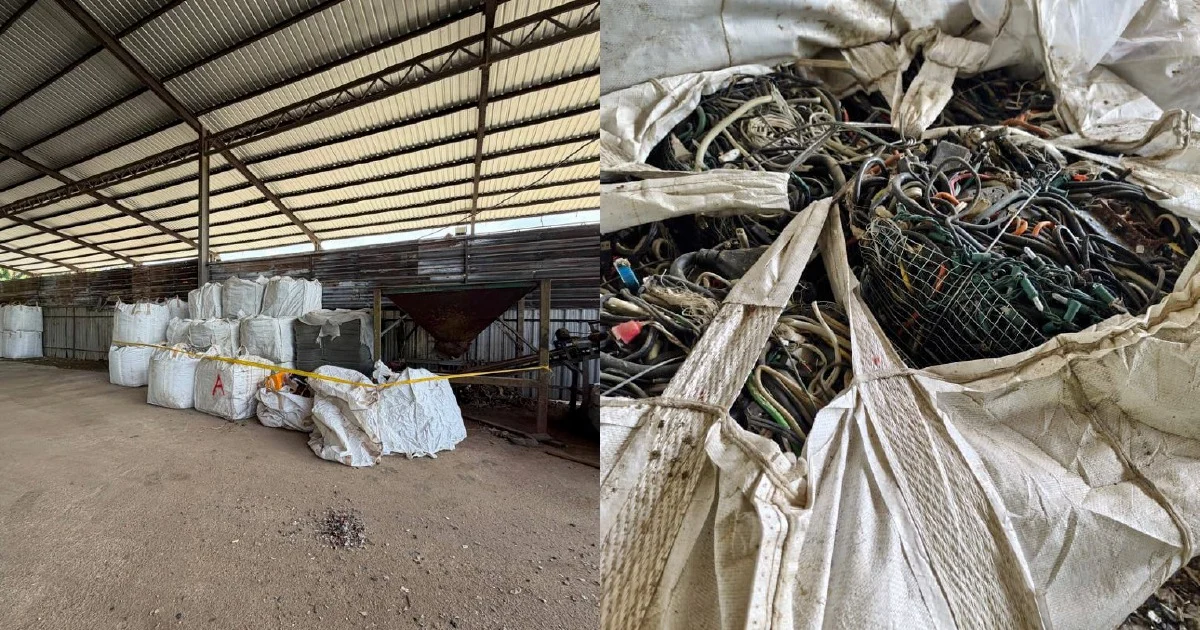
Enforcement authorities executed a raid on an unlicensed electronic waste facility in Bukit Mertajam yesterday, dismantling what investigators believe to be a significant illegal operation. Officers impounded materials estimated at RM3 million in total value, marking a substantial enforcement victory in the ongoing battle against unregulated e-waste trafficking in Peninsular Malaysia. The operation culminated in the detention of five individuals suspected of involvement in the processing and storage of hazardous electronic refuse without proper licensing or environmental safeguards.
The discovery of this clandestine facility underscores the persistent challenge facing Malaysian environmental regulators as illegal e-waste operations continue proliferating across the country's industrial zones. Unlike legitimate recycling enterprises that maintain proper facilities and comply with emission standards, such unregulated processing sites pose considerable risks to both surrounding communities and the broader environment. The concentration of such activities in industrial areas like Bukit Mertajam reflects the strategic placement chosen by operators seeking to blend into legitimate commercial hubs whilst evading detection by authorities.
E-waste represents one of Malaysia's most pressing waste management challenges, driven by the nation's rapid adoption of electronic devices and the absence of comprehensive circular economy frameworks for consumer electronics. The informal recycling sector has mushroomed precisely because legitimate pathways remain cumbersome and economically unviable for many small-scale collectors. This enforcement action illuminates the shadow economy surrounding electronics disposal, where operators extract recoverable materials such as copper wiring, circuit boards, and rare earth metals without observing environmental protocols or worker safety standards.
The five individuals apprehended face potential prosecution under Malaysia's environmental protection legislation, which carries penalties including substantial fines and imprisonment for unlicensed waste processing operations. Their cooperation with investigators will prove crucial in determining the operational scope of this facility and identifying upstream sources of the accumulated e-waste. Authorities are particularly interested in tracing supply chains, as such facilities typically receive materials from collection agents, wholesalers, and possibly even contaminated import shipments mislabeled as legitimate second-hand electronics.
Bukit Mertajam's location in Penang's industrial heartland makes it strategically significant for illegal recycling networks. The district serves as a junction between port facilities and manufacturing zones, affording operators relatively easy access to both sourced materials and distribution channels. The concentration of industrial activity creates natural camouflage for illicit facilities, though yesterday's successful raid demonstrates that sustained enforcement efforts and intelligence gathering can penetrate these networks.
The confiscated materials will require specialized disposal through licensed recycling facilities capable of safely processing hazardous components found in electronics. This creates a secondary burden for environmental authorities, who must now arrange proper treatment of the seized stock whilst simultaneously investigating the operation's origins and reach. The cost of properly managing this impounded material underscores the economic argument for preventive enforcement and regulatory tightening at source.
Malaysia's vulnerability to e-waste trafficking reflects broader Southeast Asian challenges, as the region has become a destination for developed nations seeking to offload their electronic refuse. Despite international agreements restricting such transfers, enforcement gaps and corruption enable shipments to arrive disguised as second-hand goods or legitimate spare parts. Domestic illegal operations subsequently process these imports using rudimentary techniques that maximize material extraction whilst minimizing operational costs, inevitably compromising environmental and occupational safety.
The RM3 million valuation reflects the economic calculus driving these operations. Recovery of copper, gold, and other precious materials yields substantial margins even after accounting for legal exposure and operational inefficiencies. For communities neighbouring such facilities, however, the cost extends far beyond economics—soil and water contamination from improper processing and emissions of toxic fumes during material extraction pose genuine health hazards. Workers within these operations typically labour without protective equipment, facing chronic exposure to hazardous materials.
This enforcement action aligns with Malaysia's stated commitment to strengthening environmental protection frameworks, though observers note that sustained conviction rates remain inconsistent. The authorities' capacity to detect and prosecute such operations depends heavily on maintaining adequate inspection personnel, equipment, and inter-agency coordination. Yesterday's successful raid suggests that targeted intelligence and coordinated response can yield results, offering a template for additional operations targeting similar facilities across other industrial zones.
Moving forward, authorities must balance enforcement with broader policy approaches. Incentivizing participation in licensed recycling schemes, strengthening port inspections to prevent contaminated imports, and improving reverse logistics for consumer electronics would address root causes rather than merely treating symptoms. Malaysia's standing as a significant electronics manufacturer and consumer creates an opportunity to establish regional leadership in responsible e-waste management, transforming what currently represents an environmental liability into a demonstrable commitment to sustainable industrial practices.
%22%2F%3E%3C%2Fpattern%3E%3C%2Fdefs%3E%3Crect%20width%3D%22100%25%22%20height%3D%22100%25%22%20fill%3D%22url(%23ph2dqntg)%22%2F%3E%3Crect%20width%3D%22100%25%22%20height%3D%22100%25%22%20fill%3D%22url(%23ph2dqntp)%22%2F%3E%3Ctext%20x%3D%2250%25%22%20y%3D%2250%25%22%20text-anchor%3D%22middle%22%20dominant-baseline%3D%22central%22%20fill%3D%22rgba(255%2C255%2C255%2C0.95)%22%20font-family%3D%22Georgia%2C%20'Times%20New%20Roman'%2C%20serif%22%20font-weight%3D%22700%22%20font-size%3D%22320%22%20letter-spacing%3D%22-0.02em%22%3EFive%3C%2Ftext%3E%3C%2Fsvg%3E)