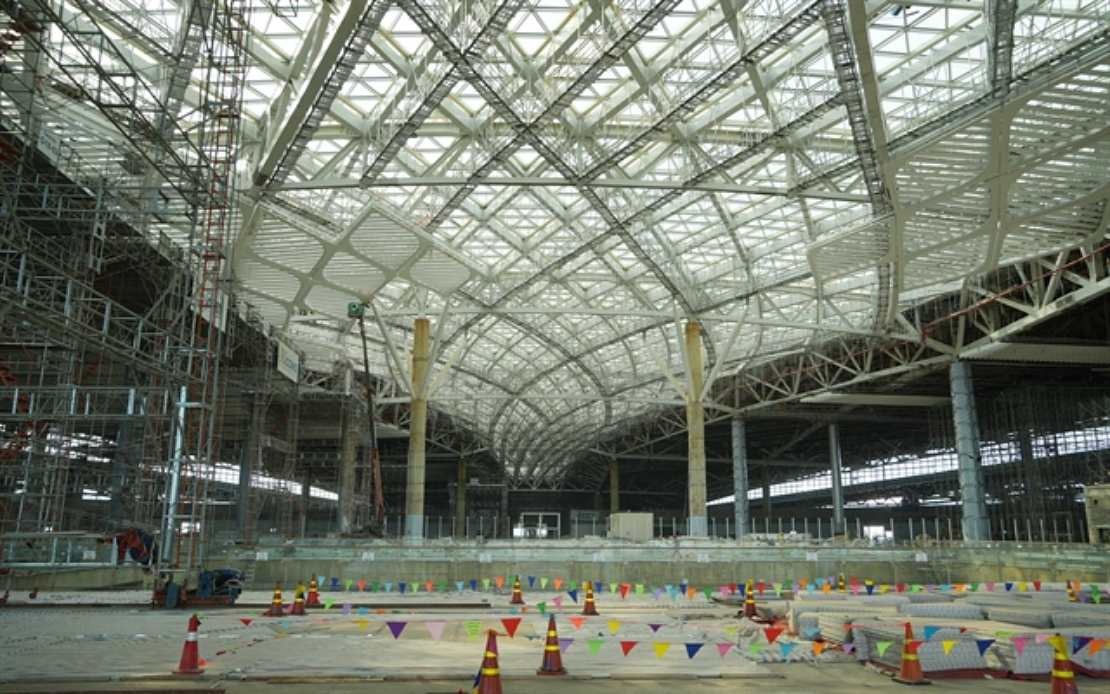
Vietnam's Ministry of Construction is charting an ambitious course to overhaul the nation's aviation infrastructure, reviewing comprehensive adjustments to the national airport development strategy that stretches to 2050. The expansion programme represents the most significant restructuring of Vietnam's civil aviation network in recent history, with the Ministry planning to increase the total number of operational airports from the current 22 facilities to 32 by 2030, and eventually to 35 by the middle of the century. This strategic initiative reflects Hanoi's determination to position air transport as a critical pillar supporting the country's economic renaissance during a pivotal phase of development following major administrative realignment.
The driving force behind this ambitious infrastructure overhaul is Vietnam's confidence in its economic trajectory. Government planners are targeting double-digit growth rates over the coming five years, a benchmark that demands robust transport connectivity to facilitate trade, attract foreign investment, and capitalise on the country's growing appeal as a tourism destination. Aviation infrastructure has emerged as central to realising these objectives, as policymakers recognise that modern, efficient airports serve as essential gateways for both domestic and international commerce. The expansion plan therefore represents far more than mere capacity augmentation; it signals Vietnam's intention to strengthen its competitive position within Southeast Asia's increasingly interconnected regional economy.
Current aviation demand already tells a compelling story about pressure on existing facilities. Vietnam's airports collectively processed more than 100 million passengers during the most recent reporting period, yet several major transportation hubs have long operated beyond their designed capacity constraints. The situation at Tan Son Nhat near Ho Chi Minh City, Da Nang on the central coast, and Cam Ranh further south illustrates the severity of congestion, with these critical gateways functioning systematically above their intended passenger throughput levels for extended periods. This chronic overcapacity has created operational inefficiencies, degraded passenger experience quality, and potentially deterred some aviation business from shifting to alternative hubs.
Projections compiled by the Ministry paint a picture of accelerating demand across multiple metrics. Under scenarios incorporating double-digit annual economic expansion, passenger traffic is forecast to mushroom to beyond 191 million annually by 2030, translating to average year-on-year growth approaching 9.7 per cent. This conservative projection assumes sustained economic momentum but accounts for efficiency gains and modal shifts that might moderate pure demand expansion. The growth trajectory becomes even more pronounced when examining cargo operations, where forecasters project annual throughput reaching approximately 3.75 million tonnes by 2030—representing explosive average annual expansion of roughly 19.3 per cent. Such divergent growth rates between passenger and cargo suggest that Vietnam's logistics sector is transforming, potentially reflecting deepening integration into regional and global supply chains.
For Malaysian stakeholders and regional observers, Vietnam's infrastructure ambitions carry significant implications. The expansion of Vietnamese aviation capacity alters competitive dynamics within Southeast Asia's air transport market, potentially redirecting passenger and cargo flows that previously transited through Malaysian hubs or regional alternatives. Airlines operating across the region must recalibrate route planning and capacity allocation decisions to accommodate Vietnamese growth. Regional airports in neighbouring markets may experience shifts in transit traffic as Vietnamese facilities become more capable and better-connected. Additionally, as Vietnam strengthens its air freight capabilities, the competitive landscape for logistics hubs across Southeast Asia will intensify, with Malaysian operators and planners needing to assess their response strategies.
The sustainability dimension embedded within Vietnam's aviation strategy deserves particular attention. Rather than pursuing expansion divorced from environmental considerations, planners have signalled commitment to efficiency and ecological responsibility within the development framework. This positioning suggests Vietnamese airports will incorporate modern environmental management systems, efficient terminal designs, and potentially clean energy infrastructure. For a region increasingly attuned to climate concerns and carbon accountability, Vietnam's approach provides a template worth monitoring. Malaysian industry observers may find instructive elements applicable to domestic aviation modernisation efforts, particularly regarding balancing rapid growth with environmental stewardship.
Implementing such an ambitious programme poses considerable logistical and financial challenges. The phased approach—establishing 32 airports by 2030 with subsequent consolidation to 35 by 2050—suggests incremental development aligned with demand realisation and resource availability. This measured tempo reduces risks of creating excess capacity that generates operational losses, whilst maintaining sufficient expansion momentum to prevent recurrence of current congestion problems. The timeframe also permits technological integration, including potentially deploying advanced air traffic management systems and automation technologies that enhance efficiency and reduce environmental footprints.
The institutional framework guiding these developments matters significantly. Vietnam's Ministry of Construction oversight suggests coordination with national economic planning bodies and private sector stakeholders will shape implementation. Regional airports will require strategic positioning to serve emerging economic zones, capture tourism markets, and facilitate cargo operations supporting export industries. The distribution of new facilities across Vietnam's geography will determine which regions benefit most directly from improved connectivity, potentially influencing investment patterns and economic development trajectories.
Looking ahead, Vietnam's airport expansion programme represents a critical infrastructure bet on sustained economic dynamism and regional integration. Success requires not merely constructing new facilities but developing integrated transport ecosystems where airports function efficiently within broader mobility networks. For Southeast Asia, Vietnam's aviation transformation presents both competitive challenges and potential opportunities for enhanced cross-border connectivity and supply chain optimisation. Malaysian stakeholders—whether in aviation, logistics, tourism, or international trade—should monitor this Vietnamese expansion closely, as the outcomes will substantially reshape regional transport dynamics and competitive positioning within Asia-Pacific air transport markets over the coming decade.

