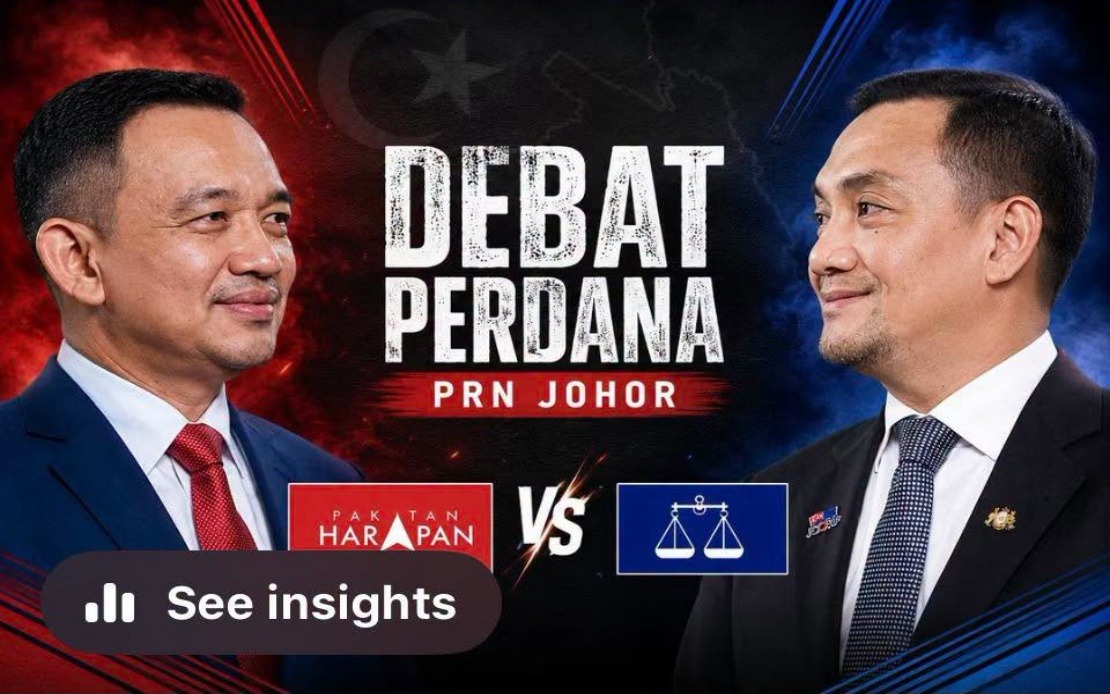
Former Education Minister Maszlee Malik has publicly embraced an invitation to engage in a televised debate with Johor Menteri Besar Onn Hafiz Ghazi as the state gears up for polling day on July 11. The announcement marks an escalation in campaign intensity, with both sides signalling their readiness to contest key policy positions before voters head to the ballot box this Saturday for nominations.
Maszlee, who secured the Pakatan Harapan nomination for the Puteri Wangsa seat, framed his acceptance around democratic principles and his conviction that structured political discourse elevates public understanding. In a statement released via social media, the former minister emphasised that accepting such challenges reflects respect for democratic values and contributes to fostering a culture of mature political engagement among Malaysians. His willingness to participate comes as considerable public interest has built around the proposed encounter, with multiple parties reaching out to confirm his involvement.
The initiative for what proponents are calling the "Johor State Election Grand Debate" originated from social media influencer Muhamad Harris Nasril and gained traction after being amplified through the Redaksi.com Facebook platform. The timing is significant, coming immediately after Pakatan Harapan chairman Anwar Ibrahim formally unveiled all 56 coalition candidates contesting the state election. Such high-profile debates have become increasingly common in Malaysian electoral cycles, serving as crucial moments for candidates to establish their credentials and articulate competing visions for state governance.
Pakatan Harapan's campaign strategy for Johor reflects broader coalition dynamics, with the 56 candidates distributed across three partners: PKR fielding 20 candidates, Amanah contributing 19, and DAP providing 17. This composition underscores the internal negotiations and power-sharing arrangements that characterise opposition politics in Malaysia. The distribution aims to balance representation while respecting each party's electoral strength and grassroots presence across different constituencies.
The Johor state election represents a critical electoral test for Pakatan Harapan, which seeks to consolidate its presence in a state historically dominated by Barisan Nasional. For Maszlee specifically, the Puteri Wangsa seat offers an opportunity to re-establish political relevance following his departure from the Education portfolio. His acceptance of the debate challenge signals confidence in his ability to articulate alternative policy positions and challenge the incumbent government's record on key development and governance issues.
Onn Hafiz Ghazi, as the sitting Menteri Besar, enters the debate from a position of administrative authority, with the ability to point to government initiatives and developmental projects undertaken during his tenure. The debate format provides both candidates with a platform to distinguish themselves on substantive policy grounds rather than relying solely on campaign rhetoric or social media messaging. This elevation of political discourse addresses longstanding concerns about the quality of electoral competition in Malaysia.
The electoral calendar is now firmly established, with the Election Commission setting Saturday as nomination day, July 7 for early voting, and July 11 as the main polling date. This compressed timeline means candidates have limited weeks to make their cases to voters. High-profile debates thus become invaluable tools for reaching broad audiences and generating media coverage that extends beyond paid advertising. For younger voters and those seeking substantive policy engagement, such debates offer rare opportunities to assess candidates directly rather than through edited campaign videos or political advertisements.
Maszlee's explicit framing of the debate as a platform for educating voters and elevating political maturity reflects an awareness that Malaysian electoral politics has faced criticism for lacking substantive policy discussion. By emphasising the potential for dialogue and civic education, he positions acceptance not merely as tactical campaign manoeuvre but as contribution to improving democratic culture. This rhetorical positioning may resonate with voters frustrated by personality-driven politics and seeking genuine engagement with governance issues affecting their daily lives.
The debate also carries implications for how opposition parties present themselves to the electorate. By accepting the challenge publicly and emphasising democratic principles, Maszlee reinforces a narrative of opposition openness to scrutiny and confidence in their policy positions. This contrasts with any perception of avoidance or evasion, which could undermine credibility among swing voters in marginal constituencies like Puteri Wangsa.
For the broader Southeast Asian context, Malaysia's embrace of election debates reflects regional trends toward more transparent and interactive campaign formats. Thailand, Indonesia, and the Philippines have similarly seen increased prominence of televised debates and public forums during electoral campaigns. The Johor exercise demonstrates how Malaysian politics is gradually incorporating international best practices in electoral competition, even as the substantive policy differences between competing parties remain significant.
The success of the proposed debate will likely depend on its format, moderation, and media coverage. If structured effectively, with neutral moderators and clearly defined parameters, the encounter between Maszlee and Onn Hafiz could set a template for future state and federal campaigns. Conversely, if it devolves into personal attacks or avoids substantive policy discussion, it may reinforce public scepticism about Malaysian electoral politics. The stakes extend beyond the individual contest, potentially shaping expectations for campaign conduct across the broader political landscape.

