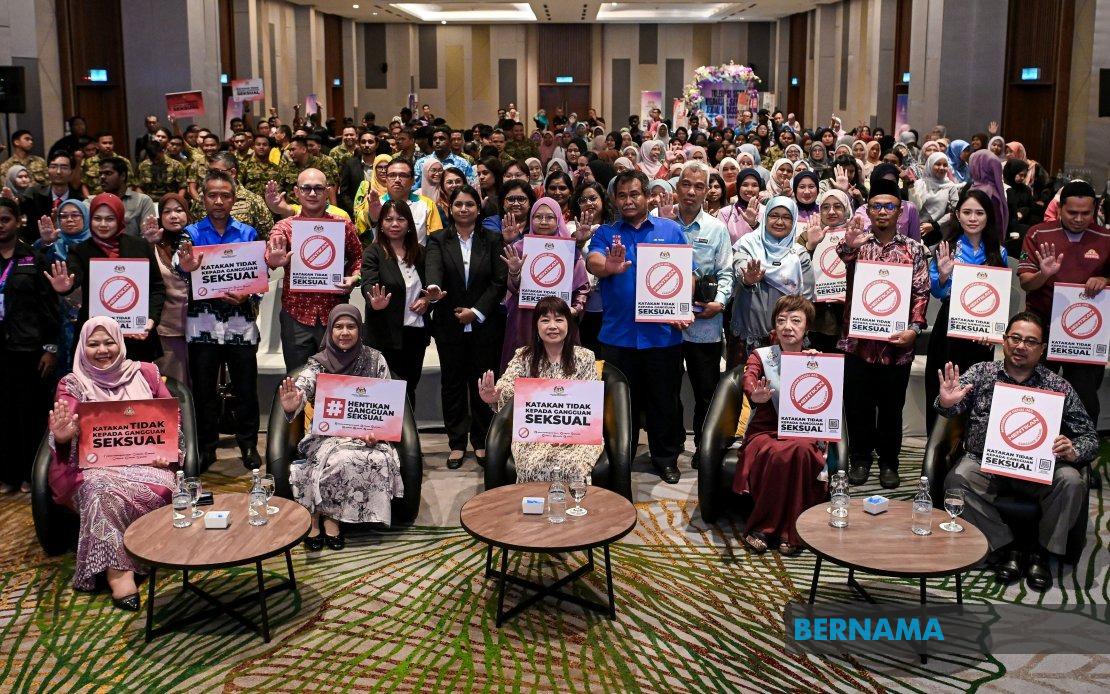
Malaysia's sexual harassment landscape is shifting as more cases come to light, with authorities documenting 388 incidents during the first five months of 2024. The disclosure, made by Deputy Minister of Women, Family and Community Development Lim Hui Ying, reveals a trajectory of rising reports stretching back several years, climbing from 477 recorded cases in 2022 to 1,038 complaints in 2023. While the numbers appear alarming on their surface, officials and observers interpret them as a positive indicator of cultural and institutional change rather than simply reflecting worsening conditions.
The interpretation of these statistics warrants careful consideration, particularly for Malaysian policymakers and employers grappling with workplace safety frameworks. Lim emphasised that the upward trajectory does not necessarily mean harassment is becoming more prevalent; rather, it signals fundamental shifts in victim empowerment and community willingness to confront behaviour previously shrouded in silence. This distinction carries significant weight when evaluating government progress and the effectiveness of awareness campaigns. The courage required for victims to step forward and lodge formal reports remains substantial, suggesting that unreported incidents likely dwarf the official figures and continue to represent a substantial hidden burden.
The geographical and relational patterns of harassment present a concerning picture. According to data cited by Lim, most documented cases originate in workplace settings and frequently involve perpetrators with existing family or social connections to victims. This proximity factor complicates reporting mechanisms considerably. Victims often fear professional repercussions affecting career advancement, particularly in hierarchical organisational structures common across Malaysia. Additionally, concerns about family stability and social standing deter many from formalising complaints, perpetuating cycles where misconduct escapes accountability and normalises problematic behaviour within institutions.
While sexual harassment predominantly affects women in Malaysia and globally, the phenomenon extends beyond gender boundaries. Men also experience workplace and social harassment, though reported cases involving male victims remain comparatively low. This discrepancy raises questions about whether men face genuine lower rates of harassment or whether reporting barriers specific to male victims—including stigma, shame, and masculine socialisation discouraging vulnerability—suppress official figures. Lim acknowledged this complexity, urging colleagues, employers, and family members to provide gender-neutral support frameworks recognising that harassment undermines dignity and wellbeing regardless of victim demographics.
The establishment of the Tribunal for Anti-Sexual Harassment (TAGS) represents a structural innovation designed to expedite justice and reduce victim burden. As of mid-June 2024, the tribunal had processed 100 complaints with 82 cases resolved within 60 days of initial hearings. This performance metric demonstrates meaningful institutional capacity for addressing grievances swiftly, though questions persist regarding case complexity distribution and whether rapid resolution equates to satisfactory outcomes for complainants. The tribunal's effectiveness potentially encourages reporting by signalling that formal mechanisms deliver tangible results rather than protracted processes that re-traumatise victims.
Matricesoftopolicypushingforwardinclude the government's Women, Peace and Security advocacy initiative aligned with the National Action Plan 2025–2030. This framework situates harassment prevention within broader security and development strategies, recognising that safe workplaces and communities strengthen national cohesion and economic productivity. By linking gender safety to peace and development objectives, policymakers attempt to elevate harassment concerns beyond isolated human resources issues into systemic governance challenges requiring whole-of-society attention and resource allocation.
The responsibility for cultural transformation extends far beyond ministerial pronouncements or tribunal mechanisms. Lim articulated clearly that parents, educators, employers, colleagues, and students collectively bear responsibility for constructing environments intolerant of harassment. Early education proving critical to this architecture, equipping younger generations with language and concepts to recognise inappropriate behaviour before normalisation occurs. Building courage to speak publicly about harassment requires sustained reinforcement through institutional policies, leadership modelling, and peer support systems that validate reporting without punishment or social ostracisation.
Support infrastructure remains unevenly distributed across Malaysia. The government operates Talian Kasih 15999, a 24-hour counselling and psychosocial support hotline, supplemented by local social support centres. Yet access varies considerably between urban and rural areas, with resource constraints limiting availability of culturally competent, trauma-informed services. For many victims, particularly in peninsular states beyond major urban centres, barriers to accessing integrated support persist despite nominal service expansion. Language accessibility and trust in government-operated services also present obstacles for marginalised communities including migrant workers and persons from minority ethnic backgrounds.
The escalation pathway from unaddressed harassment to serious violence represents perhaps the most sobering dimension of preventative efforts. Lim cautioned that early-stage misconduct, when tolerated or minimised, frequently metamorphoses into severe violence affecting individual wellbeing and broader social harmony. This cascade effect underpins arguments for proactive, low-threshold intervention mechanisms catching misconduct before entrenched patterns develop. Schools, workplaces, and community organisations implementing clear reporting channels and supportive response protocols thus function as early-warning systems preventing tragedy.
For Malaysian employers and institutional leaders, the current moment demands active engagement with harassment prevention rather than passive compliance with regulatory minimums. Organisations demonstrating serious commitment implement comprehensive training programmes, establish confidential reporting mechanisms independent of human resources departments, and create credible accountability procedures deterring would-be perpetrators. Transparent monitoring of harassment prevalence trends, rather than suppressing reports to appear problem-free, reflects institutional maturity and commitment to victim protection. Companies and agencies pioneering these practices position themselves advantageously within increasingly conscious market and talent landscapes where workplace culture significantly influences recruitment and retention.
Regional comparisons illuminate Malaysia's positioning within Southeast Asian contexts. Neighbouring countries including Singapore and Thailand have established specialised tribunals and legislative frameworks specifically addressing harassment, though implementation effectiveness varies considerably. Malaysia's tribunal represents regional convergence toward specialised institutional mechanisms rather than channelling complaints through generic employment or criminal systems. Yet comparative analysis suggests Malaysia lags behind some peers in integrated public awareness campaigns and comprehensive prevention funding, particularly at secondary education levels where harassment prevention research emphasises early intervention yields strongest returns.
Moving forward, success metrics should extend beyond complaint volumes to encompassing victim satisfaction, perpetrator accountability rates, and most crucially, demonstrable changes in organisational cultures reducing harassment incidence rather than simply increasing reporting. The current trajectory of rising cases provides both opportunity and challenge: opportunity to cement victim protection mechanisms and transform workplace cultures, challenge to prevent statistics inflation from triggering backlash or suggestion that awareness campaigns backfired. Sustained, adequately funded commitment to education, support services, and institutional accountability will ultimately determine whether Malaysia progresses beyond documenting harassment toward genuinely eliminating it.