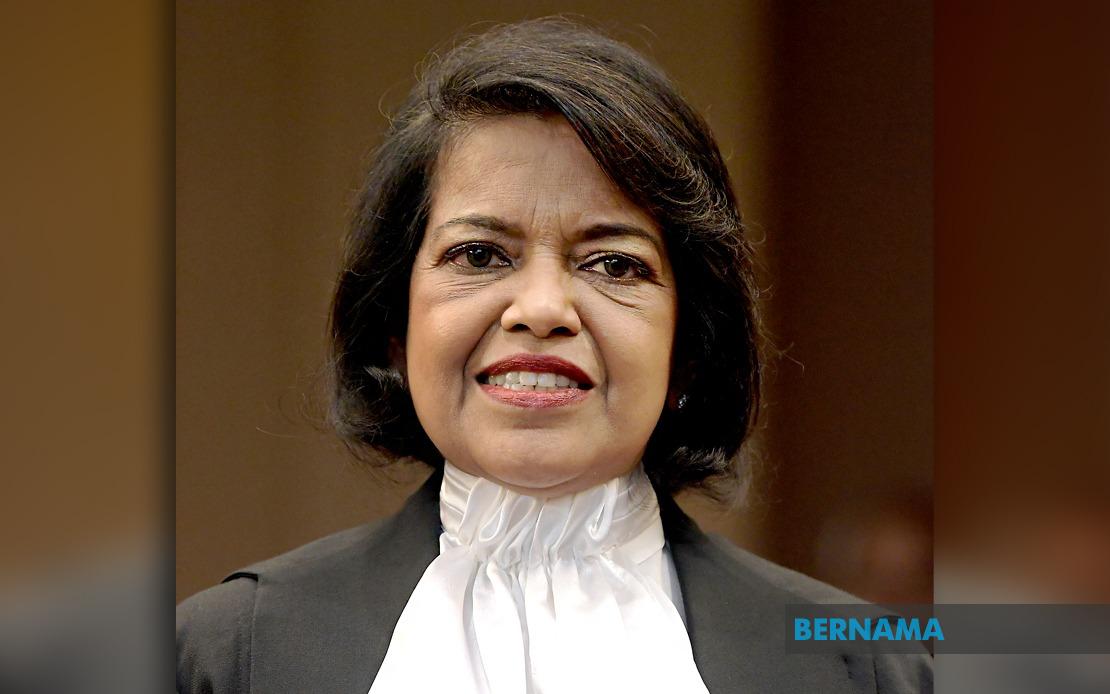
The appointment of Tan Sri Nallini Pathmanathan, a former Federal Court judge, to lead the Malaysian Media Council (MMM) has drawn widespread commendation from media practitioners and industry bodies, who view her judicial credentials as a catalyst for strengthening the sector's autonomy and ethical standing. Her unanimous endorsement by MMM board members on May 26 marks a significant milestone for Malaysia's self-regulatory media framework, establishing leadership grounded in the judicial system rather than commercial or political affiliations.
The confidence expressed by media organisations reflects deeper concerns about maintaining institutional independence amid pressures facing the sector. Datuk Yong Soo Heong, president of the Malaysian Press Institute, underscored how a former judge's detachment from vested interests positions the council to make decisions rooted in fairness and the public good rather than partisan considerations. This distinction carries weight in Malaysia, where questions about media autonomy periodically surface during political transitions. The expectation is that an appointment drawing from the judiciary signals to both the industry and public that MMM operates beyond the gravitational pull of commercial media owners or government influence.
The selection also resonates with longstanding aspirations for the council's independence. Datuk A. Kadir Jasin, a National Journalism Laureate, traced the vision back decades, noting how proposals for the National Union of Newspaper Editors during the 1980s embodied calls for neutral media stewardship. When he participated in launching the MMM's formation in 2018 alongside then Communications Minister Gobind Singh Deo under former Prime Minister Tun Dr Mahathir Mohamad's administration, the emphasis remained consistent: the council needed not only to be independent but to be perceived as such by stakeholders and the public. Nallini's appointment fulfils that criterion in tangible form, moving beyond aspirational language to institutional reality.
Kadir expressed optimism that her leadership would catalyse progress across the industry through collaborative engagement with all sectors. The appointment arrives at a moment when media professionals face mounting complexity in their work. Misinformation campaigns, the velocity of false information online, and emerging regulatory dilemmas around artificial intelligence create an environment where credible institutional guidance matters considerably. A council guided by someone trained in judicial reasoning and precedent offers the profession a framework for addressing contemporary challenges while anchoring decisions in established principle.
Monamad Fauzi Ishak, president of the Malaysian Media Clubs Association, identified a pressing structural constraint facing the MMM: insufficient statutory authority to address numerous complaints from media practitioners. While the council has fielded various grievances from journalists and news organisations, its inability to act on certain matters stems from ambiguities or gaps in the MMM Act 2025. Fauzi advocated for reviewing the legislative foundation underlying the council's mandate, proposing that clearer legal provisions would enable more effective defence of members' rights and swifter resolution of industry disputes. This agenda intersects directly with Nallini's appointment—a respected judicial figure carries credibility to champion legislative enhancement without appearing self-interested.
The timing of this leadership transition amplifies its significance for media professionals grappling with accelerating technological and social change. Artificial intelligence tools capable of generating synthetic content, deepfakes, and automated misinformation networks represent challenges that traditional editorial guidelines and professional codes did not anticipate. A council chair with expertise in judicial interpretation and precedent-setting becomes valuable in constructing frameworks that acknowledge innovation while protecting journalistic integrity. The expectation among industry leaders is that Nallini will help develop guidance responsive to these emerging phenomena rather than reactive to crises.
Fauzi additionally stressed the imperative for the MMM to preserve its independence and freedom from vested interests as it navigates expansion of its institutional role. This framing reveals an underlying anxiety within Malaysia's media ecosystem: that regulatory bodies, however well-intentioned, risk capture by commercial or political forces if leadership lacks demonstrable autonomy. Nallini's judicial background, coupled with her seniority and public recognition, offers inoculation against such perceptions. Her stature means that attributing council decisions to external pressure becomes implausible, thus sustaining public and professional confidence in its impartiality.
The appointment also signals commitment to elevating professional standards across newsrooms and media organisations. Fauzi articulated the dual challenge facing regulatory oversight: defending media freedom while maintaining accountability among practitioners themselves. This balance proves delicate—too much emphasis on policing journalistic conduct risks self-censorship; too little risks declining public trust in institutional credibility. A council steered by a retired judge accustomed to weighing competing interests and applying legal frameworks offers the prospect of calibrated enforcement that respects professional autonomy without absolving practitioners of responsibility for accuracy and fairness.
For Malaysian readers and the broader Southeast Asian context, Nallini's appointment carries implications beyond immediate governance restructuring. The region's media landscape faces recurrent tensions between governmental control and editorial independence, with various countries implementing self-regulatory bodies that function effectively or, in other instances, become extensions of state authority. Malaysia's explicit choice of a judicially experienced leader suggests awareness of these regional patterns and commitment to differentiation. By anchoring the MMM in someone with decades of judicial service, the country positions its media council as a model oriented toward genuine self-regulation rather than state-supervised compliance.
Industry cooperation will determine whether this leadership transition translates into tangible improvements in media freedom and professional practice. Kadir emphasised the need for stakeholders across journalism, publishing, broadcasting, and digital media to work collaboratively under Nallini's direction. This framing acknowledges that institutional leadership, however credible, achieves little without buy-in from the practitioners and organisations the council serves. The challenge ahead involves mobilising that cooperation to modernise the MMM's statutory powers, develop guidance addressing artificial intelligence and misinformation, and reinforce professional standards at a moment when public trust in media institutions faces pressures globally.
As Nallini assumes her role, expectations centre on her capacity to translate judicial experience into effective media governance. Her appointment represents both continuity—sustaining the MMM's founding commitment to independence—and potential evolution, expanding the council's institutional reach and authority. The coming months will reveal whether her leadership precipitates the legislative reforms and industry collaborations that media practitioners have championed, or whether structural and political constraints limit the council's practical impact. For now, her appointment stands as an affirmation that Malaysia's media community values independent, credible institutional stewardship as foundational to a healthy democratic information ecosystem.