The Indonesian Attorney General's Office has moved swiftly to expand its investigation into alleged corruption within the nation's free nutritious meals initiative, a flagship social programme intended to feed over 80 million schoolchildren and pregnant women across the archipelago. The latest arrests signal the authorities' determination to pursue what appears to be a sophisticated scheme involving multiple layers of corruption spanning government agencies and private contractors. The expansion of the probe comes amid mounting public pressure and growing concerns about the competence of the programme's administration, even as government officials insist the initiative remains essential for addressing malnutrition in Southeast Asia's largest economy.
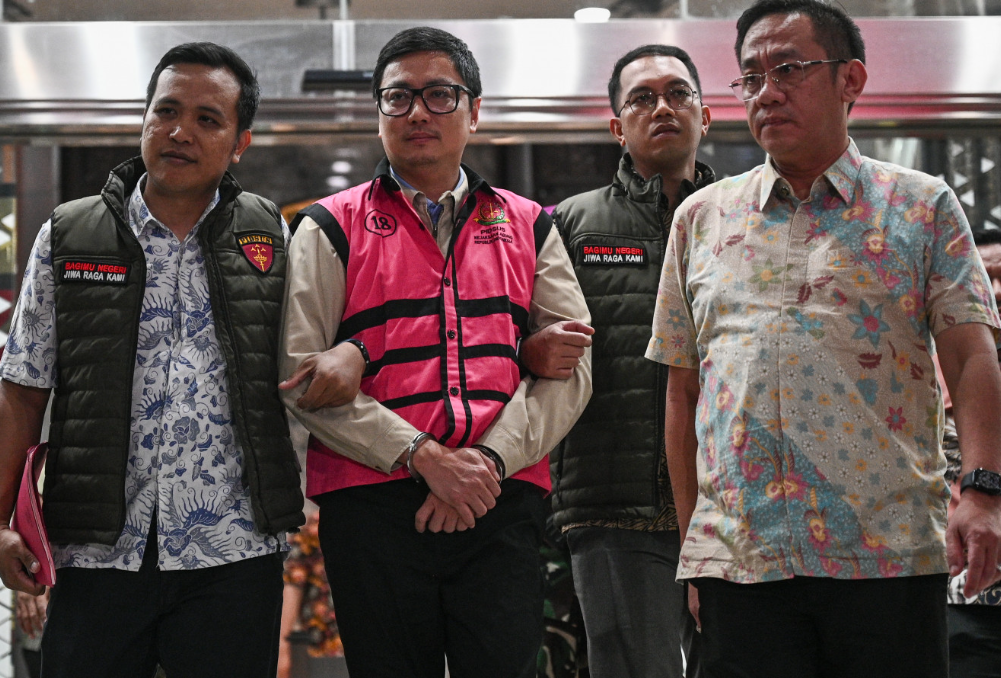
On June 12, investigators arrested Andri Mulyono, a commissioner at logistics company PT Yasa Artha Trimanunggal, on suspicion of price manipulation in a controversial procurement of electric motorcycles for the programme's kitchen operations nationwide. Syarief Sulaeman Nahdi, investigation director at the Office of Assistant Attorney General for Special Crimes, explained that Andri allegedly inflated the cost of more than 21,000 motorcycles to artificially reach the National Nutrition Agency's Rp 1.03 trillion procurement budget ceiling. Such a scheme would allow contractors to extract illicit profits while appearing to utilise the full allocation approved by the government, a common pattern in corruption cases involving large-scale public procurement.
The electric motorcycle purchase itself became a lightning rod for public criticism earlier this year when media coverage questioned whether acquiring motorcycles for kitchen operations represented an appropriate use of funds during Indonesia's broader economic challenges. Finance Minister Purbaya Yudhi Sadewa subsequently acknowledged internal miscommunication within the ministry regarding the motorcycle procurement, announcing that no additional electric motorcycle purchases would proceed in 2026. This administrative acknowledgement, while stopping short of a full accounting of how the decision reached approval stages, underscores the governance lapses that enabled the alleged corruption to flourish within the bureaucratic machinery.
The arrest of Andri follows the detention of businessman Asep Yusuf Somantri, who was previously apprehended in connection with his alleged association with Sony Sonjaya, a former deputy head of the National Nutrition Agency. Investigators contend that Asep exploited his connection to Sony to gain unauthorised influence over the verification process for prospective programme partners, effectively allowing him to manipulate kitchen registrations and facilitate applications beyond the official registration deadline. This pattern of using personal relationships and institutional access to circumvent transparent procurement procedures reveals how corruption networks often operate within Indonesian government structures, leveraging informal networks to override formal regulations.
The investigation has now ensnared five suspects in total, including three former National Nutrition Agency leaders who were summarily dismissed by President Prabowo Subianto. Former agency head Dadan Hindayana and deputies Sony Sonjaya and Lodewyk Pusung were all arrested on June 3, just hours after their dismissal from office, suggesting the president's office maintained awareness of serious irregularities within the programme's administration. The rapid succession of arrests indicates that investigations had progressed considerably before public announcement, with authorities apparently conducting extensive questioning to build their cases before making arrests.
Developments have taken an intriguing turn with Sony's application for justice collaborator status, which would allow him to provide testimony against co-conspirators in exchange for potential leniency. The Attorney General's Office indicated it would review Sony's application and question him further regarding alleged connections to over 20 additional individuals suspected of involvement in the corruption scheme. Such collaborator arrangements, while potentially accelerating investigations, often prove controversial when they result in reduced sentences for senior officials in exchange for testimony against subordinates or private sector partners.
The free meals programme itself has been battered by revelations beyond mere financial corruption. Since its rollout in early 2025, the initiative has generated at least 33,000 reported cases of mass food poisoning, raising serious questions about food safety protocols and kitchen management standards. These health incidents suggest that operational problems extend well beyond fraudulent procurement, encompassing fundamental failures in programme implementation that directly endanger the wellbeing of the vulnerable populations the scheme was designed to protect. The convergence of corruption investigations and mass poisoning cases has severely undermined public confidence in the programme's management.
Public backlash intensified dramatically when student protesters organised demonstrations on Friday calling for the programme's suspension, with the movement branded as #MenujuIndonesiaBangkrut (Indonesia heading for bankruptcy). Protesters characterised the free meals initiative as misaligned priorities for a nation grappling with a weakening rupiah and persistent economic pressures. This framing reflects broader public sentiment that government resources might be better allocated to address macroeconomic stability rather than expanding social programmes that appear plagued by mismanagement and fraud. The student protest movement represents a significant challenge to government messaging around the programme's importance.
Government Communications Agency head Muhammad Qodari responded to the protests with a defence of the programme's continuation, characterising implementation challenges as inevitable in any large-scale government initiative. His statement acknowledged that problems would arise during operational stages but argued such difficulties should not necessitate programme termination. Qodari's framing attempted to reposition the corruption allegations as manageable administrative issues rather than fundamental failures of programme design or oversight capacity. However, this approach risks appearing dismissive of legitimate concerns about both financial misappropriation and public health failures that have directly affected millions of beneficiaries.
The scandal carries significant implications beyond Indonesia's borders, as regional observers assess governance capacity within Southeast Asia's largest economy and most populous nation. Corruption in social programmes targeting vulnerable populations undermines both development outcomes and public trust in government institutions, challenges that resonate across the region as countries pursue their own poverty reduction and nutrition initiatives. The investigation's trajectory will likely influence how other Southeast Asian governments approach similar large-scale social spending programmes, potentially prompting more rigorous oversight mechanisms and external monitoring arrangements to prevent comparable schemes from becoming vehicles for systematic fraud and misappropriation of public resources.
Moving forward, the investigation's comprehensiveness will determine whether authorities can fully dismantle the corruption networks that enabled these schemes to operate, or whether the visible arrests represent only the most obvious layer of a more deeply embedded system of institutional capture. The mention of over 20 additional suspected individuals suggests the investigation potentially extends far beyond the five currently detained suspects, potentially implicating politicians, bureaucrats, and private sector figures across multiple agencies and organisations. How aggressively the Attorney General's Office pursues these leads, and whether political considerations influence case outcomes, will shape both the investigation's ultimate scope and its capacity to generate meaningful institutional reforms within the National Nutrition Agency and related government bodies responsible for programme oversight.

%22%2F%3E%3C%2Fpattern%3E%3C%2Fdefs%3E%3Crect%20width%3D%22100%25%22%20height%3D%22100%25%22%20fill%3D%22url(%23ph2lzsjg)%22%2F%3E%3Crect%20width%3D%22100%25%22%20height%3D%22100%25%22%20fill%3D%22url(%23ph2lzsjp)%22%2F%3E%3Ctext%20x%3D%2250%25%22%20y%3D%2250%25%22%20text-anchor%3D%22middle%22%20dominant-baseline%3D%22central%22%20fill%3D%22rgba(255%2C255%2C255%2C0.95)%22%20font-family%3D%22Georgia%2C%20'Times%20New%20Roman'%2C%20serif%22%20font-weight%3D%22700%22%20font-size%3D%22194%22%20letter-spacing%3D%22-0.02em%22%3EBersatu%3C%2Ftext%3E%3C%2Fsvg%3E)