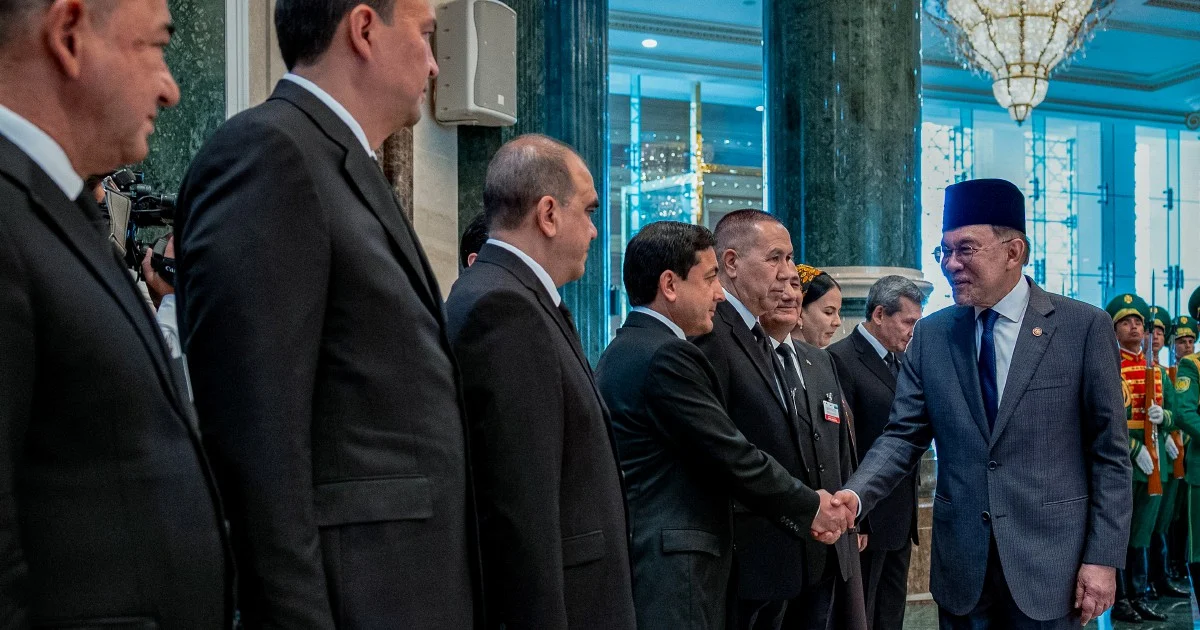
Prime Minister Datuk Seri Anwar Ibrahim's sustained engagement with international partners has emerged as a cornerstone of Malaysia's economic strategy, with observers increasingly confident that his diplomatic footwork can translate into tangible commercial gains. The global environment remains volatile, characterised by intensifying geopolitical rivalries and mounting trade tensions between major powers, yet Malaysia's leadership sees in this instability an opportunity to position the country as a reliable, principled player in multilateral forums and bilateral partnerships.
The backdrop to Anwar's diplomatic activism is decidedly complex. Developing economies like Malaysia confront headwinds from tightening monetary conditions in advanced markets, supply chain fragmentation, and competing spheres of influence. Against this backdrop, strategic diplomatic engagement becomes not merely ceremonial but operationally necessary. By cultivating relationships across diverse geopolitical camps—from Washington to Beijing, from New Delhi to Tokyo—Malaysia can hedge its exposure to any single power's decisions and create redundancy in its economic networks.
Academic observers argue that Anwar's approach reflects a recognition that Malaysia's prosperity depends on maintaining credible, multi-directional relationships. Rather than being forced into binary choices between rival blocs, the country's diplomacy emphasises shared prosperity, rule-based international order, and pragmatic cooperation on issues ranging from trade liberalisation to technological standards. This positioning makes Malaysia an attractive destination for foreign direct investment by firms seeking to diversify their geographical footprint away from more contested regions.
Trade partnerships constitute the most immediate avenue through which diplomatic gains convert into economic benefit. Malaysia's participation in regional and global trade agreements depends partly on the strength of political relationships with prospective partners. Anwar's personal engagement with counterparts in major trading nations can facilitate negotiations on tariff schedules, investment protections, and preferential access to markets. The Prime Minister's educational background and international profile provide him credibility in these discussions, allowing him to articulate Malaysia's interests persuasively.
Foreign direct investment flows respond powerfully to perceptions of political stability and international standing. When a nation's leader maintains active, respectful relationships with peers across the geopolitical spectrum, multinational corporations interpret this as a signal that the country offers a secure, predictable environment for capital deployment. Malaysia's existing strengths in semiconductor manufacturing, petrochemicals, and financial services can only expand if investors remain convinced that the nation will not be collateral damage in great-power competition.
Anwar's diplomatic efforts also address Malaysia's particular vulnerabilities in an era of technological competition. As advanced nations bifurcate into competing tech ecosystems and supply chains reorganise, countries that maintain relationships across these dividing lines enjoy superior access to innovation and critical inputs. Malaysia's role as a manufacturing hub depends on its ability to import cutting-edge technology and export to multiple markets without facing sanctions or exclusion. Diplomatic ties facilitate this freedom of action.
Regional stability constitutes another indirect economic benefit flowing from robust diplomacy. Southeast Asia's prosperity hinges on the maintenance of open sea lanes, orderly dispute resolution, and restraint by external powers. Malaysia, as a significant maritime economy and ASEAN member, has an interest in diplomatic frameworks that prevent regional tensions from disrupting trade or investment. Anwar's engagement with major powers complements ASEAN's own diplomatic efforts to maintain balance and prevent regional conflicts from escalating.
The academic community has flagged that Anwar's diplomatic activity also enhances Malaysia's soft power and brand reputation. Nations that are perceived as principled, non-aligned voices in international affairs attract talent, tourism, and partnership proposals from others seeking to diversify their networks. Malaysia's articulate positioning as a bridge-builder and advocate for developing-world interests enhances its standing in global governance forums and creates intangible advantages in competing for prestige investments and hosting international bodies.
However, translating diplomatic goodwill into sustained economic gains requires consistency and institutional depth. One-off high-level visits or statements must be followed by concrete negotiations, investments, and trade flows. The challenge facing Malaysia's diplomatic corps is ensuring that Anwar's personal relationships generate actionable commercial frameworks that benefit Malaysian businesses and workers. This demands coordination between the Ministry of Foreign Affairs, trade bodies, investment authorities, and the private sector.
Looking forward, observers suggest that Anwar's diplomatic agenda will be tested by his ability to secure new trade agreements, attract flagship investments, and position Malaysia as an essential node in supply chains being reshaped by geopolitical fragmentation. The economic payoff from diplomacy depends on execution: on turning sentiment into contracts, relationships into revenue streams, and strategic positioning into market access. Malaysia's near-term prosperity will partly hinge on whether Anwar's considerable diplomatic energy translates into these concrete outcomes, particularly as global uncertainties show little sign of abating.

