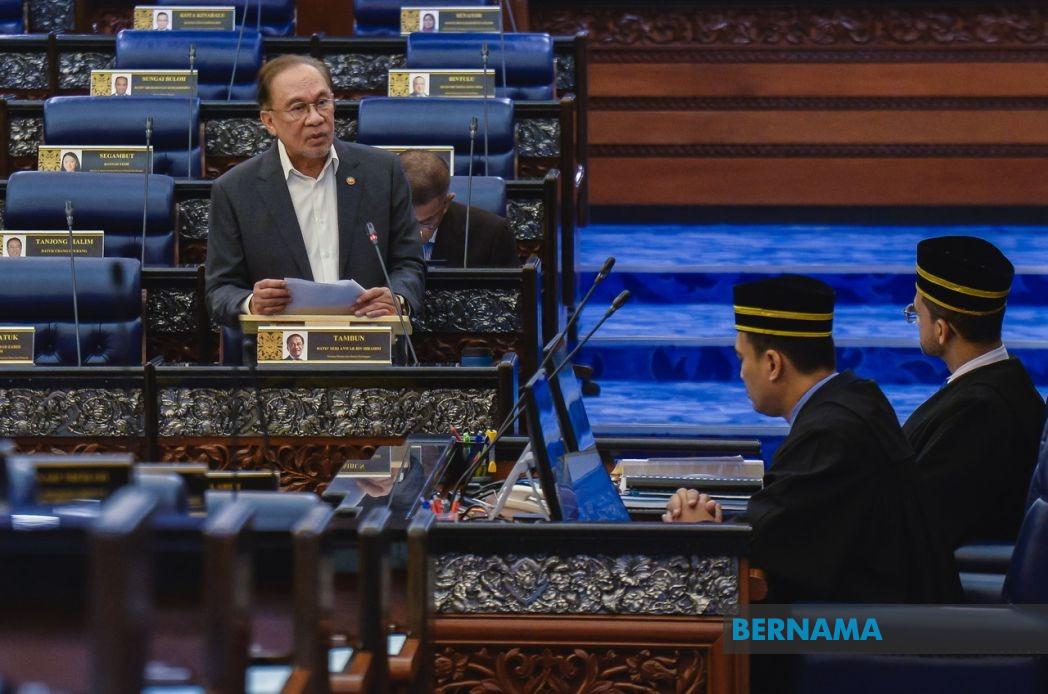
Prime Minister Datuk Seri Anwar Ibrahim moved to dispel concerns about restrictions on activities in Federal Land Development Authority settlements on June 30, asserting that the government maintains an open-door approach to programmes organised across FELDA communities. Speaking during Minister's Question Time in Parliament, Anwar addressed growing speculation that state-level initiatives and events in these settlements had faced impediments from federal authorities, a sensitive matter given FELDA's significance as home to tens of thousands of farming families across the country.
The distinction Anwar drew proved crucial: while state governments retain full liberty to organise activities within FELDA areas, including those initiated by menteri besar officials, the underlying legal framework constrains how such programmes may utilise government resources. This nuance speaks to Malaysia's complex federal structure, where state and federal authorities maintain overlapping jurisdictions, and where the boundaries between legitimate governance activities and election campaigning remain subject to strict statutory oversight. The Prime Minister's statement effectively positioned the government as a facilitator rather than an obstructor, even as it enforces electoral standards that apply uniformly across the nation.
Anwar specifically rejected assertions that he had issued directives to cancel the FELDA Settlers' Day programme scheduled for Kluang in Johor on June 20 and 21, framing the assertion as a misunderstanding of government policy. The programme's status had become a point of contention within political circles, with opposition figures questioning whether federal-level pressure had influenced its postponement. By directly addressing this claim in the parliamentary forum, Anwar sought to establish a clear public record that no blanket cancellation directive had been issued, thereby preventing the narrative from calcifying into accepted fact within rural communities where FELDA settlements maintain considerable influence over electoral outcomes.
The Prime Minister elaborated on the legal principles governing government resource deployment during election periods, emphasising that the restriction targets machinery and assets rather than the programmes themselves. Under Malaysia's election laws, federal government bodies including FELDA cannot allocate their operational capacity, personnel, or facilities toward partisan campaign activities. This prohibition extends to state governments utilising federal resources for their own election campaigns. Anwar's clarification sought to reframe the issue from one of censorship into one of regulatory compliance, a distinction that carries weight in constitutional democracies where the separation of partisan politics from state administration remains foundational.
The question posed by Datuk Seri Hamzah Zainudin of Perikatan Nasional highlighted tensions that persist within Malaysia's political ecosystem regarding FELDA communities. These settlements, established decades ago under now-reformed land schemes, represent constituencies of considerable political weight. Their residents have historically felt themselves somewhat marginalised by development priorities favouring urban areas, creating receptiveness to narratives about federal neglect. Opposition politicians have periodically mobilised grievances within FELDA areas, making disputes over access and resource allocation inherently political in nature.
Anwar used the parliamentary moment to reinforce the MADANI Government's commitment to FELDA welfare through concrete initiatives rather than rhetorical appeals. He referenced the establishment of dialysis centres in settlements and the expansion of development infrastructure through federal agencies as tangible evidence of renewed governmental attention. This approach implicitly contrasted current policy with what Anwar characterised as the previous government's inadequate stewardship, during which he contended that numerous FELDA settlements suffered from poor administration and exclusion from rural development programmes. The messaging resonated with a broader MADANI narrative positioning the current administration as corrective, reversing years of systemic underinvestment.
Deputy Prime Minister Datuk Seri Dr Ahmad Zahid Hamidi's involvement in FELDA policy, as referenced by Anwar, also carries political significance. Zahid's portfolio encompasses rural development matters, and his partnership with Anwar on FELDA initiatives signals institutional commitment transcending individual ministers. This collaborative stance matters because FELDA's structure involves multiple levels of authority—settlement committees, regional oversight bodies, and federal coordination—all of which require synchronised policy implementation to achieve meaningful outcomes.
The controversy illuminates broader questions about resource allocation and political fairness during Malaysia's electoral cycles. State governments, whether led by Barisan Nasional, Perikatan Nasional, or Pakatan Harapan coalitions, maintain legitimate interests in maintaining visibility within rural constituencies. Yet federal election law imposes constraints on how government machinery may be deployed to support state-level campaigns. These competing interests generate friction, particularly in constituencies where electoral margins remain tight and where FELDA settler voting patterns carry decisive weight.
Anwar's parliamentary statement also implicitly addressed anxieties within FELDA communities about political marginalisation. By affirming that menteri besar officials face no impediments to entering settlements and organising programmes, the Prime Minister signalled respect for federalism principles. Simultaneously, by emphasising that state governments issuing land titles must comply with election regulations, he underscored that federalism operates within constitutional and statutory boundaries. This balancing act reflects the political tightrope that Malaysian governments must walk, particularly when managing relationships between federal and state authorities during contested political periods.
The matter of land titling, which Anwar mentioned as falling within state prerogatives, connects to historical grievances within FELDA settlements regarding land rights and security of tenure. Some settlers have faced uncertainties regarding plot ownership and inheritance rights. State governments' authority to address these concerns, provided they respect electoral regulations, represents a genuine decentralisation of problem-solving authority. Anwar's acknowledgment of this state capacity, even while insisting on electoral compliance, effectively validated legitimate state-level initiatives while maintaining federal oversight of proper procedures.
Looking forward, Anwar's clarification may help reduce friction between state and federal authorities regarding FELDA programming, though underlying political tensions will likely persist. The FELDA settler constituency represents a demographic whose economic circumstances, political consciousness, and electoral preferences continue evolving. Rural development initiatives, including those within FELDA areas, remain central to electoral competition across Malaysian political parties. The government's emphasis on welfare improvements and infrastructure expansion represents one response to these dynamics, though sustained delivery on such promises will ultimately determine political credibility within these communities.

