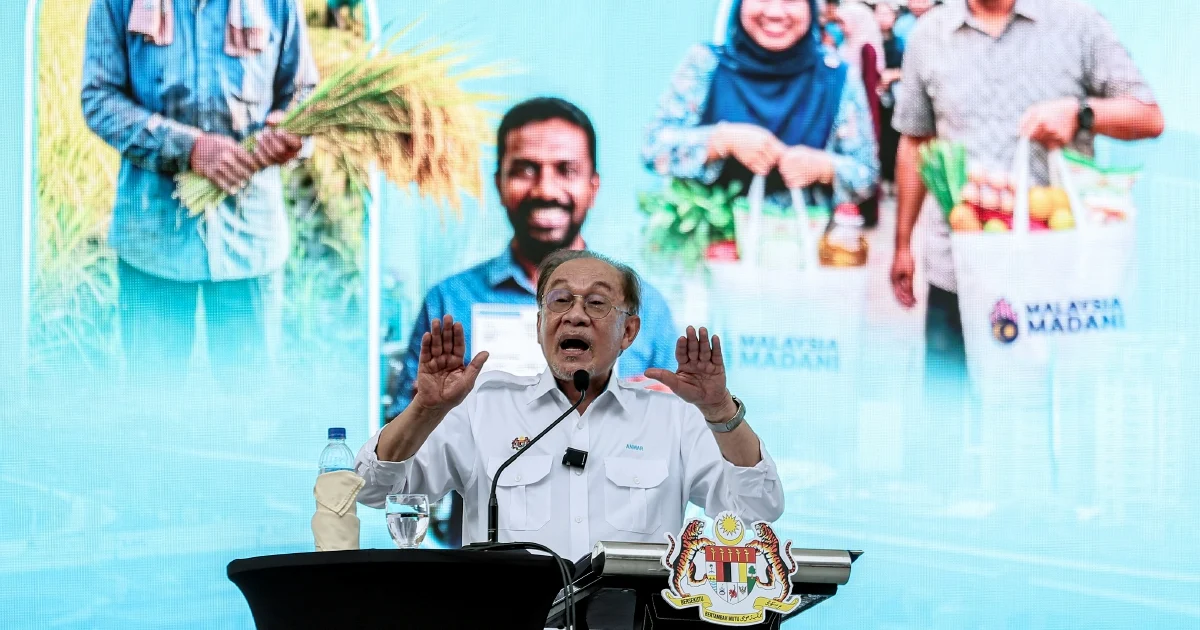
Prime Minister Anwar Ibrahim has announced a substantial increase in annual grants for Neighbourhood Watch Areas (KRT) across Malaysia, marking a meaningful shift in the government's approach to community policing and grassroots security initiatives. The new annual allocation will rise to RM10,000 from RM6,000, representing a 67 per cent increase that reflects the administration's commitment to strengthening local crime prevention efforts. The announcement, made in Segamat, signals a recognition of the vital role these volunteer-led organisations play in maintaining neighbourhood safety and fostering community cohesion at the grassroots level.
The enhanced funding is scheduled to commence on January 1, 2027, giving authorities time to implement the new disbursement system across all eligible KRT units nationwide. This deliberate timing allows local communities and federal agencies to prepare for the transition and ensure smooth administration of the increased grants. The decision demonstrates the government's willingness to allocate additional resources to community-level initiatives that have proven effective in reducing crime rates and building public confidence in local security arrangements.
For Malaysian communities, particularly in suburban and rural areas, the boost represents tangible recognition of the unpaid labour that thousands of neighbourhood watch volunteers contribute each year. These organisations have become the backbone of preventive policing in residential areas, conducting regular patrols, maintaining communication networks, and serving as the first point of contact between residents and formal law enforcement. The increased funding will enable KRT groups to expand their operational capacity, invest in better communication systems, enhance training programmes, and organise more frequent community engagement activities.
The previous RM6,000 annual grant, which had remained static for several years, had become increasingly insufficient to cover the growing operational costs of running effective neighbourhood watch schemes. Rising expenses for logistics, communication technology, volunteer coordination, and community events meant that many KRT groups were operating below their potential despite strong membership participation. The 67 per cent funding increase addresses this long-standing capacity constraint and acknowledges the inflationary pressures that community organisations face just like other sectors of the economy.
From a policy perspective, the announcement reflects a broader government strategy to invest in community-based crime prevention rather than relying solely on police force expansion and enforcement measures. International evidence suggests that active neighbourhood watch programmes, when adequately resourced, can significantly reduce residential crime rates, improve community trust in local institutions, and create a stronger sense of collective responsibility for public safety. By increasing the financial support for KRT initiatives, the government is essentially investing in what criminologists term situational crime prevention—making neighbourhoods less attractive targets for criminal activity through visible community presence and coordination.
The initiative also carries important implications for rural and semi-urban communities, where formal police presence is often stretched thin due to geographical constraints and officer distribution challenges. In these areas, neighbourhood watch groups frequently serve as the primary security apparatus, bridging the gap between residential communities and distant police stations. The enhanced funding enables these volunteer networks to acquire better equipment, establish more reliable communication channels, and conduct more regular training sessions that keep members informed about current crime trends and prevention techniques.
Malaysian communities should note that the effectiveness of this funding increase will depend significantly on how local KRT units utilise the additional resources. Successful implementation requires clear guidelines from the government on permissible expenditures, encouragement of transparent financial management, and mechanisms for sharing best practices among different neighbourhood watch groups. The best-performing KRT organisations could serve as models for others, demonstrating how increased funding can be strategically deployed to maximise community safety outcomes.
The timing of this announcement also carries political significance, coming as the government continues to implement its broader public safety agenda. By recognising and rewarding grassroots security efforts, the administration reinforces its message that community participation and partnership between residents and authorities form the foundation of effective policing. This approach contrasts with purely top-down security measures and suggests a shift toward collaborative governance models that emphasise shared responsibility for public order.
For neighbourhood watch coordinators and active members nationwide, the January 1, 2027 implementation date provides a window to plan how the additional RM4,000 per unit can be deployed most effectively. Groups should consider investing in communication technology upgrades, organising specialised training workshops on emerging crime prevention techniques, enhancing their visibility through better signage and uniforms, or establishing partnerships with local schools and businesses to strengthen community networks. The success of this funding initiative will ultimately be measured by whether it translates into reduced crime rates, increased community reporting of suspicious activities, and enhanced sense of security among residents.

