The Federal Government's decision to nearly triple Sabah's interim Special Grant allocation represents a substantial shift in how Kuala Lumpur is addressing the state's long-standing financial grievances. The boost from RM600 million to RM1.5 billion, announced by Prime Minister Datuk Seri Anwar Ibrahim on May 31, signals tangible movement on one of Malaysia's most contentious constitutional issues—the decades-long dispute over Sabah's 40 per cent revenue entitlement under the original federation agreement.
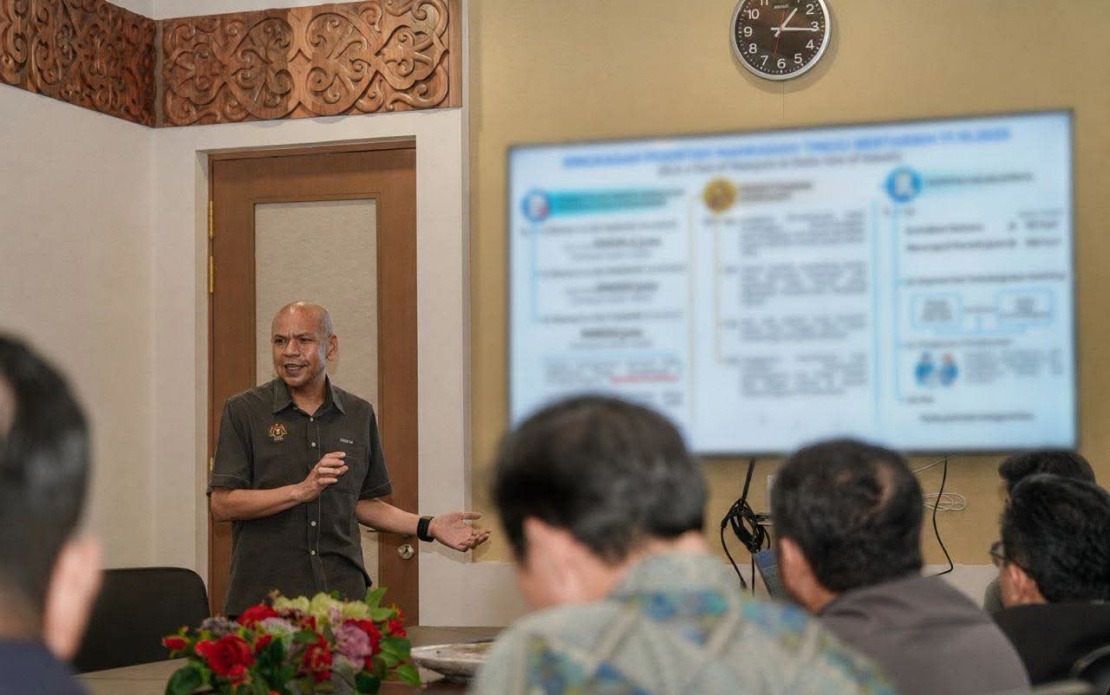
Gabungan Rakyat Sabah secretary-general Datuk Armizan Mohd Ali characterised the announcement as a watershed moment for the state's fiscal autonomy. Speaking in Kota Kinabalu, Armizan emphasised that this allocation represents far more than a budgetary adjustment; it constitutes federal acknowledgement of Sabah's constitutional position as a co-equal partner in Malaysia. The timing and magnitude of the increase carry symbolic weight in a state where historical grievances about federal resource distribution have shaped local politics for decades.
The Malaysia Agreement 1963, which brought Sabah, Sarawak, and Singapore into the federation, contained specific provisions intended to protect these territories' financial interests during the critical early years of nationhood. Article 112C and Article 112D of the Federal Constitution enshrine these protections, yet their implementation has remained contested throughout Malaysia's post-colonial history. The dispute centres on whether Sabah should receive 40 per cent of revenue from natural resources extracted within its borders—a figure substantially higher than what the state has historically received.
Armizan's position reflects a delicate political balance within Sabah's ruling coalition. While the state government remains engaged in legal proceedings over the 40 per cent entitlement claim, GRS is simultaneously pressing for immediate implementation of an enhanced Special Grant arrangement. This dual-track approach allows the party to claim progress for constituent voters while maintaining the principled legal challenge. Crucially, Armizan has stated that GRS expects the revised grant to be formally gazetted within the current year, transforming what remains technically an interim measure into permanent constitutional adjustment.
The Prime Minister's explicit statements on this matter, including his parliamentary address on November 13, 2025, have provided political cover for the arrangement. Anwar Ibrahim's government has positioned the MADANI framework as inherently more receptive to federal-state equity concerns than previous administrations, a rhetorical stance that resonates with Sabah's political leadership. By publicly recognising Sabah's constitutional entitlements, the federal government has shifted the conversation from whether the state deserves enhanced resources to when and how such arrangements will be implemented.
For Malaysian readers and policymakers, this development carries broader implications for federalism in Southeast Asia. Malaysia's constitutional arrangement with Sabah and Sarawak remains distinct within the region, combining elements of confederation with conventional federalism. How successfully the current government navigates these disputes may influence perceptions of federal goodwill toward other states and territories with historical grievances. The precedent set here could affect negotiations with other sub-national units regarding resource-sharing and fiscal autonomy.
Armizan's simultaneous position as Domestic Trade and Cost of Living Minister lends institutional weight to his pronouncements on this matter. His ability to convene meetings with Sabah MPs and coordinate with federal structures suggests GRS maintains meaningful influence within the coalition government. The state's MPs represent vital political assets for Kuala Lumpur's federal stability, a dynamic that undoubtedly influences the priority assigned to Sabah-related matters within cabinet deliberations. This arrangement reflects the complex interplay between coalition politics and constitutional obligation that characterises contemporary Malaysian governance.
The increased allocation addresses immediate fiscal pressures on Sabah's state government, which has historically operated with constraints that have limited infrastructure development and public service expansion. The RM900 million increment provides resources for addressing educational facilities, health services, and transportation infrastructure—visible improvements that translate into political currency for the ruling coalition ahead of future elections. Beyond the immediate budgetary relief, however, the arrangement also validates the legitimacy of Sabah's historical claims.
Political observers note that sustained federal engagement on this issue distinguishes the current administration from its predecessors. Previous governments occasionally acknowledged Sabah's constitutional position rhetorically while declining to implement corresponding financial arrangements. The current commitment appears more substantive, though the distinction between interim and permanent arrangements leaves room for future political manoeuvre. Should a federal government change occur, the stability of these enhanced allocations could face scrutiny.
The legal proceedings regarding the full 40 per cent entitlement will likely continue in parallel with implementation of enhanced Special Grant arrangements. Courts operate on their own timeline, and constitutional disputes of this magnitude typically consume years or decades. Meanwhile, the interim Special Grant provides measurable relief within a more practical timeframe. This staggered approach suggests both federal institutions and Sabah's political leadership recognise the need for immediate fiscal improvements while pursuing longer-term constitutional resolution.
GRS's commitment to constructive engagement with the federal government, as articulated by Armizan, indicates the state's leadership prefers collaborative problem-solving over confrontational approaches. This stance contrasts with occasional rhetoric from some Sabah politicians suggesting separation or radical constitutional restructuring. The party's positioning emphasises incremental but substantive progress toward full recognition of constitutional entitlements through negotiation rather than rupture. This negotiating posture has apparently yielded results in the form of the enhanced allocation.
The broader Southeast Asian context adds dimension to this development. Neighbouring Indonesia manages significant fiscal transfers to special regions like Aceh and Papua, navigating comparable tensions between central and regional authority. Thailand's efforts to address northeastern grievances carry similar dimensions. Malaysia's approach to accommodating Sabah's interests will be observed throughout the region by stakeholders concerned with centre-periphery relations in diverse, multi-ethnic federations. Success or failure in honouring these commitments carries implications extending beyond domestic politics into questions about constitutional governance and institutional stability.
%22%2F%3E%3C%2Fpattern%3E%3C%2Fdefs%3E%3Crect%20width%3D%22100%25%22%20height%3D%22100%25%22%20fill%3D%22url(%23ph27o3xg)%22%2F%3E%3Crect%20width%3D%22100%25%22%20height%3D%22100%25%22%20fill%3D%22url(%23ph27o3xp)%22%2F%3E%3Ctext%20x%3D%2250%25%22%20y%3D%2250%25%22%20text-anchor%3D%22middle%22%20dominant-baseline%3D%22central%22%20fill%3D%22rgba(255%2C255%2C255%2C0.95)%22%20font-family%3D%22Georgia%2C%20'Times%20New%20Roman'%2C%20serif%22%20font-weight%3D%22700%22%20font-size%3D%22170%22%20letter-spacing%3D%22-0.02em%22%3EMalaysia%3C%2Ftext%3E%3C%2Fsvg%3E)