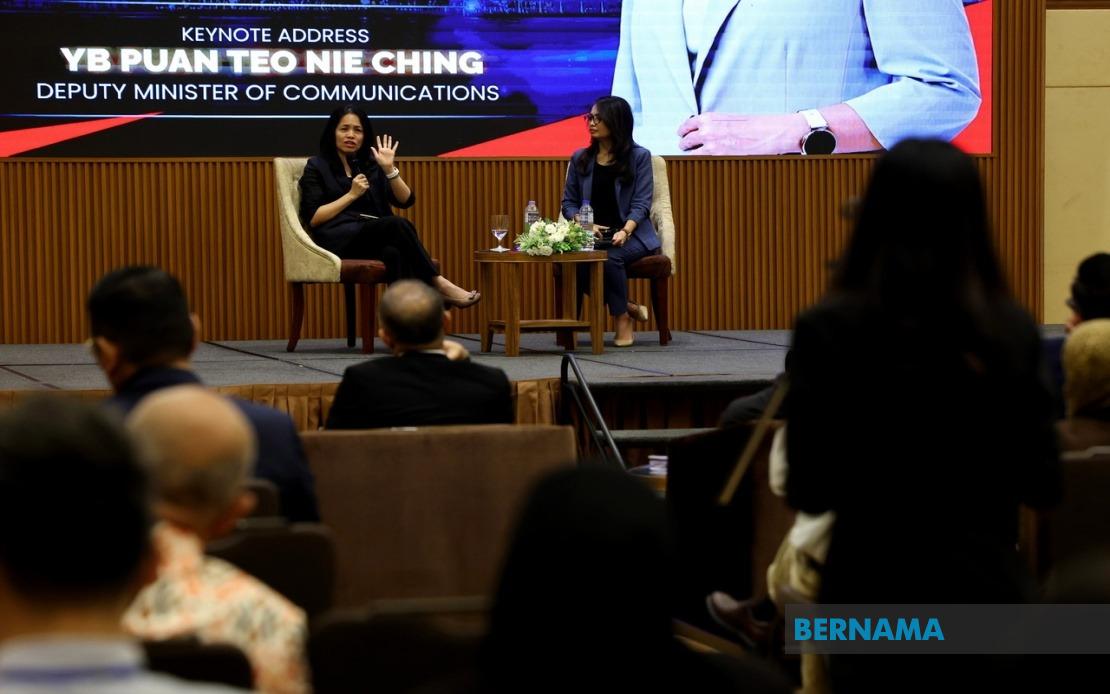
Deputy Communications Minister Teo Nie Ching has issued a reminder to all public sector employees to exercise restraint when making public statements, emphasising the need to maintain professional standards through appropriate and courteous language. Speaking in Putrajaya on June 15, Teo stressed that government workers should be particularly mindful of this responsibility, as their words carry official weight and can influence public discourse across the nation.
The call comes amid ongoing scrutiny of recent statements attributed to Mohd Hisyamuddin Ghazali, who took the helm of the Department of Community Communications (J-KOM) on June 9, succeeding Datuk Ismail Yusop. Critics have raised concerns that the newly appointed director-general has employed language deemed inappropriate and unbecoming of his position since assuming the role, prompting the deputy minister's intervention on behalf of the broader public service.
Teo's guidance extends beyond mere professionalism to encompass a critical aspect of Malaysia's social fabric: the avoidance of contentious matters involving race, religion, and royalty—commonly referred to as 3R issues. These sensitivities remain integral to Malaysia's constitutional framework and social stability, and their potential mishandling by government officials can quickly escalate into broader public tensions. The deputy minister's remarks underline the government's expectation that public servants should recognise and respect these boundaries regardless of circumstance.
While Teo did not name specific incidents in her statement, her timing suggests a deliberate attempt to set clear expectations for the civil service at large. Her advice was delivered during the opening of an industry dialogue course titled 'Balancing Virality & Responsibility: Journalism Amid Speed, Trust & Impact,' indicating that the government views responsible communication as a shared concern across media and government sectors. In an era when public statements can spread rapidly across social media platforms and digital channels, the capacity for misstatement to cause damage has multiplied exponentially.
The deputy minister's decision to address the matter publicly rather than privately demonstrates the seriousness with which the government views official conduct in the communications space. By framing her guidance as advice to all parties rather than specific criticism, Teo attempted to establish broader institutional norms without appearing to single out individuals, though the context made the underlying reference unmistakable. This approach reflects a delicate balance between accountability and maintaining collegial working relationships within government.
Notably, Teo indicated that she has not yet arranged a meeting with Mohd Hisyamuddin to convey her concerns directly. This suggests that the matter may still be developing, or that the deputy minister is allowing the public guidance to serve as an indirect but official warning. Given the hierarchical nature of Malaysia's civil service, such public statements from senior political figures carry considerable weight and typically prompt swift corrective action from those implicitly referenced.
The emphasis on avoiding inappropriate language and 3R sensitivities applies equally to election campaigns and routine government operations, according to Teo. This universalising principle is significant, as it establishes that professional standards should not fluctuate based on the political calendar. During election periods, when political rhetoric often becomes more heated, the pressure on public servants to maintain neutrality and propriety intensifies, yet Teo's statement suggests this standard should be consistent year-round.
For civil servants navigating their roles, the implications are clear: the ministry expects heightened awareness of how communication choices can affect public perception and social cohesion. The appointment of new leaders to sensitive positions like J-KOM, which handles community communications and government messaging, naturally invites scrutiny of their approach and style. The rapid public guidance following Mohd Hisyamuddin's June 9 appointment indicates that concerns had already surfaced within government circles.
The broader context of this intervention reflects ongoing challenges within Malaysia's governance structure regarding the standard of public discourse. As the nation navigates a complex political landscape with competing interests and sensitivities, the government has identified the need to reinforce expectations for professional conduct among its communications apparatus. The J-KOM specifically plays a crucial role in shaping how government messages reach and resonate with Malaysians across diverse communities.
For readers and observers, Teo's public statement serves as a reminder that Malaysia's government is actively engaged in policing its own conduct and attempting to set standards for official communication. Whether these efforts will prove sufficient to prevent future controversies remains to be seen, particularly as social media continues to amplify and accelerate the spread of contentious statements from public figures. The challenge for the civil service lies in maintaining open and candid internal communication while exercising appropriate caution in public-facing remarks.
%22%2F%3E%3C%2Fpattern%3E%3C%2Fdefs%3E%3Crect%20width%3D%22100%25%22%20height%3D%22100%25%22%20fill%3D%22url(%23ph5cfmbg)%22%2F%3E%3Crect%20width%3D%22100%25%22%20height%3D%22100%25%22%20fill%3D%22url(%23ph5cfmbp)%22%2F%3E%3Ctext%20x%3D%2250%25%22%20y%3D%2250%25%22%20text-anchor%3D%22middle%22%20dominant-baseline%3D%22central%22%20fill%3D%22rgba(255%2C255%2C255%2C0.95)%22%20font-family%3D%22Georgia%2C%20'Times%20New%20Roman'%2C%20serif%22%20font-weight%3D%22700%22%20font-size%3D%22272%22%20letter-spacing%3D%22-0.02em%22%3EAnwar%3C%2Ftext%3E%3C%2Fsvg%3E)

%22%2F%3E%3C%2Fpattern%3E%3C%2Fdefs%3E%3Crect%20width%3D%22100%25%22%20height%3D%22100%25%22%20fill%3D%22url(%23ph13ezig)%22%2F%3E%3Crect%20width%3D%22100%25%22%20height%3D%22100%25%22%20fill%3D%22url(%23ph13ezip)%22%2F%3E%3Ctext%20x%3D%2250%25%22%20y%3D%2250%25%22%20text-anchor%3D%22middle%22%20dominant-baseline%3D%22central%22%20fill%3D%22rgba(255%2C255%2C255%2C0.95)%22%20font-family%3D%22Georgia%2C%20'Times%20New%20Roman'%2C%20serif%22%20font-weight%3D%22700%22%20font-size%3D%22136%22%20letter-spacing%3D%22-0.02em%22%3EBangladesh%3C%2Ftext%3E%3C%2Fsvg%3E)