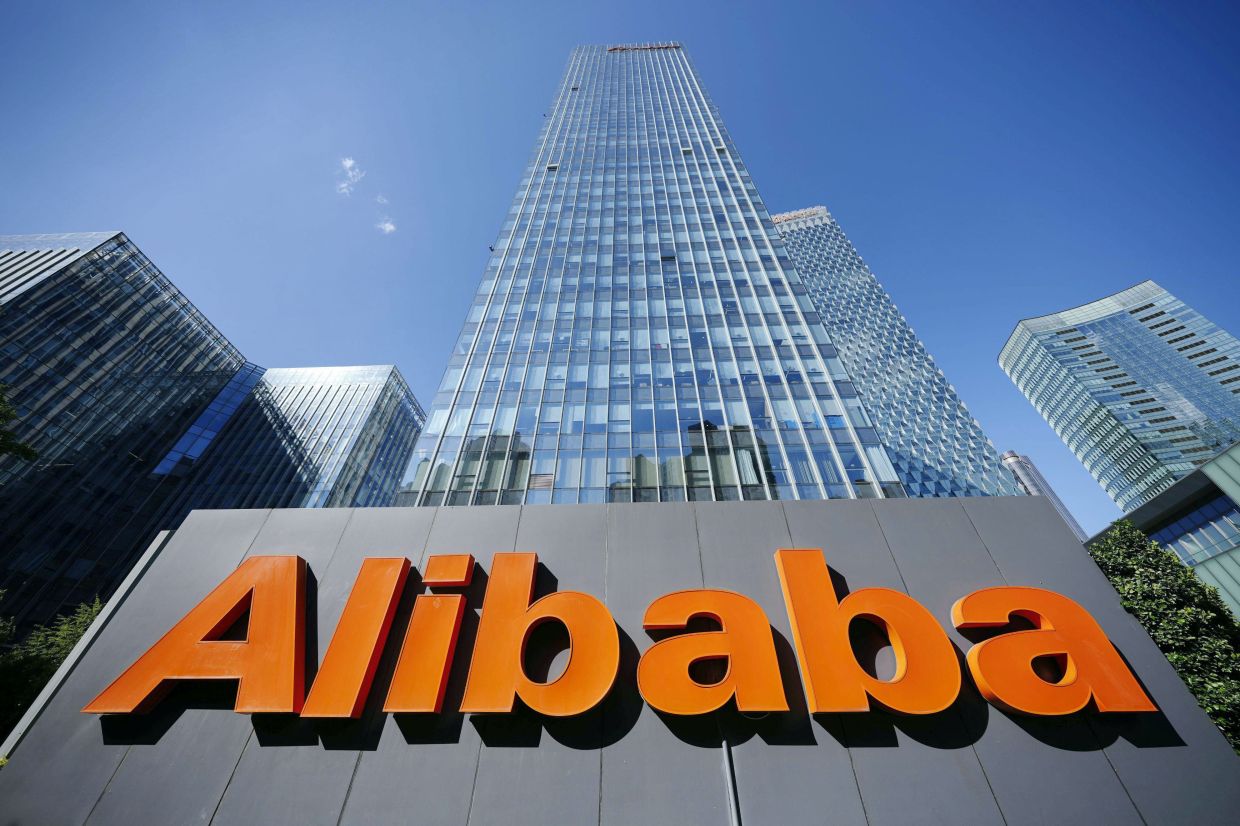
Alibaba Group Holding, the Hangzhou-based technology and e-commerce behemoth, has escalated its dispute with Washington by filing a lawsuit against the US Department of Defence in a federal district court in San Jose, California, demanding removal from a controversial blacklist of Chinese companies allegedly linked to military activities. The action represents a significant pushback against Pentagon determinations that have increasingly drawn scrutiny from affected Chinese firms and prompted swift retaliatory measures from Beijing.
The Pentagon designation arrived on June 9 when the Department of Defence added Alibaba alongside several other prominent Chinese firms—including electric vehicle manufacturers BYD and Nio, search engine giant Baidu, robotics specialist Unitree Robotics, and networking equipment producer TP-Link—to a list formally designated as "Chinese military companies" under Section 1260H of the National Defence Authorisation Act. The inclusion of these firms reflects their central roles in technological domains where Washington perceives intensifying strategic competition with Beijing, spanning artificial intelligence, biotechnology, solar energy, and advanced manufacturing.
Alibaba's legal challenge contests the factual and legal foundations of the Pentagon's classification on multiple grounds. The company argues in its complaint that the Department of Defence has violated fundamental constitutional protections, including due process rights and freedom of expression safeguards. Beyond these constitutional objections, Alibaba specifically refutes the Pentagon's core assertions: that the company maintains indirect affiliation with China's State-owned Assets Supervision and Administration Commission (SASAC), and that it functions as a contributor to China's military-civil fusion strategy through ties to the Ministry of Industry and Information Technology (MIIT). Alibaba contends it has no relationship whatsoever with SASAC and that any interactions with MIIT amount merely to standard regulatory compliance obligations that all technology companies operating in China must satisfy.
The practical consequences of the Pentagon's designation extend beyond symbolic stigmatisation. While the 1260H listing does not automatically trigger comprehensive sanctions, it substantially complicates the blacklisted companies' access to American capital markets and excludes them from competing for US government contracts. For a multinational enterprise like Alibaba with diverse global interests, these restrictions carry meaningful commercial implications that justify the company's aggressive legal response. An Alibaba spokesperson characterised the Pentagon's decision as "arbitrary and capricious," emphasising that "the company is not a Chinese military company nor part of any military-civil fusion strategy."
Alibaba's timeline of engagement with Pentagon officials reveals frustration with the apparent disregard for procedural fairness. The company met with Defence Department representatives in January to address the potential designation, subsequently submitted a detailed written response in March outlining its position, yet the Pentagon proceeded with the June blacklisting regardless. This sequence suggests the Pentagon operated from a predetermined conclusion rather than genuinely considering the company's substantive objections—a procedural deficiency that strengthens Alibaba's constitutional arguments regarding due process violations.
Several other designated companies have similarly rejected the Pentagon's determinations. Both Baidu and BYD have issued strong statements opposing their inclusions, and broader opposition has emerged from China's diplomatic apparatus. The Chinese embassy in Washington issued a formal statement condemning what it characterised as an "overstretched view of national security," explicitly referencing Washington's reliance on "discriminatory lists" as a mechanism for advancing strategic objectives.
Alibaba's lawsuit represents merely one dimension of an escalating economic confrontation between Washington and Beijing. China's Ministry of Commerce announced on Monday that it had added ten American companies to its own export control list, including defence contractors and advanced technology firms such as Aveox, Red Cat Holdings, Teal Drones, IMSAR, Jaia Robotics, Ball Aerospace & Technologies, Oshkosh Defense, L3Harris Maritime Services, MP Materials, and USA Rare Earth. A ministry spokesperson characterised these actions as necessary responses to what it termed "malicious actions" by the United States.
Simultaneously, China's Ministry of Finance escalated its counter-measures by announcing restrictions on 46 American firms regarding government procurement opportunities, effective immediately with limited exceptions for existing US-Sino joint ventures. This expansive retaliation encompasses major defence contractors including Lockheed Martin, Raytheon Missiles & Defense, General Atomics Aeronautical Systems, Boeing Defence Space & Security, General Dynamics Land Systems, and the Javelin Joint Venture partnership between Lockheed Martin and Raytheon. The breadth and speed of Beijing's response underscores the intensity of the current phase in US-China technological and strategic competition.
For Southeast Asian nations and Malaysian enterprises in particular, the implications of this escalating conflict warrant close attention. The deepening divisions between Washington and Beijing over military-linked technology firms create complex navigational challenges for regional companies attempting to maintain economic relationships across both sides. Malaysian firms with ties to Chinese technology ecosystems or joint ventures involving American defence and advanced technology companies face potential exposure to secondary sanctions or procurement restrictions as the conflict intensifies.
The Pentagon's refusal to comment on ongoing litigation—a standard practice for government agencies facing legal challenge—offers little insight into the department's confidence in its designation methodology or receptiveness to eventual settlement. The outcome of Alibaba's lawsuit may establish important precedents regarding the evidentiary standards and procedural safeguards applicable to future Section 1260H designations, potentially influencing how aggressively the Pentagon pursues military-linkage classifications in coming years.
Alibaba's ownership of the South China Morning Post adds an additional dimension to this dispute, raising questions about potential tensions between maintaining editorial independence and the company's acute interest in favourable coverage of its legal position. Nevertheless, the company's core legal arguments regarding due process and the characterisation of its MIIT and SASAC relationships merit serious consideration within American judicial proceedings.

