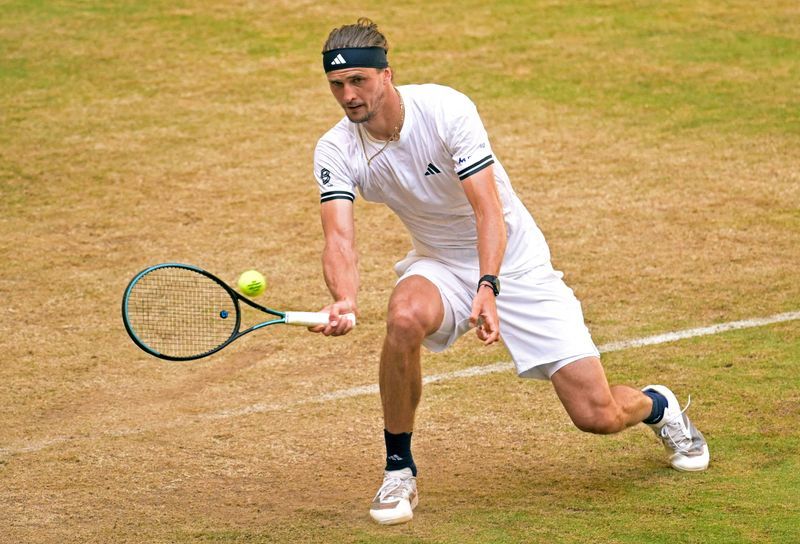
World number three Alexander Zverev has blamed a faulty glucose monitoring device for his disappointing Halle Open semi-final loss to American Taylor Fritz on Saturday, describing the technical failure as a distressing ordeal that severely impacted his physical condition during the match. The German player fell short in a closely contested affair that stretched two hours and 39 minutes, succumbing 6-7(4) 6-4 7-5 to an opponent against whom he carried a losing record of six consecutive defeats heading into their semi-final encounter.
Zverev's account of what transpired reveals the hidden complexities that elite athletes managing chronic health conditions must navigate at the highest levels of professional sport. The malfunction occurred with his Medtronic glucose sensor, which is designed to provide real-time readings of blood sugar levels—a critical tool for maintaining optimal performance. Instead of delivering accurate data, the device registered dangerously inflated numbers when his actual glucose levels were alarmingly low, causing him to administer significantly more insulin than his body required. This mismatch between readings and reality set off a metabolic chain reaction that left him severely depleted during crucial moments of the match.
The severity of Zverev's glucose management crisis became apparent when he consumed approximately 350 grams of sugar within the opening 45 minutes of play in an attempt to counteract what the sensor incorrectly suggested was a dangerous hypoglycaemic state. Despite these emergency measures, he continued to feel physically awful throughout this period, struggling to maintain the energy and mental acuity essential for competing against world-class opposition. Such extreme caloric intake during match play represents an extraordinary intervention that underscores how desperate the situation had become.
Yet even whilst acknowledging the medical setback that compromised his performance, Zverev demonstrated characteristic sportsmanship by offering full credit to his opponent for earning the victory. He recognised that Taylor Fritz outplayed him on the day and was deserving of his progression to the final, a magnanimous concession from a player clearly frustrated by circumstances beyond his competitive control. This gracious acceptance reflects the maturity expected of top-ranked professionals who understand that tennis, like all sport, sometimes involves factors external to one's control.
The broader context of Zverev's Type 1 diabetes adds significant depth to understanding his achievement as a world-class athlete. Diagnosed at just four years old, he has spent nearly two decades competing at elite levels whilst managing a lifelong autoimmune condition that demands constant biochemical vigilance. His reliance on Medtronic technology since 2016 or 2017 has generally provided dependable assistance in regulating his glucose levels, enabling him to function competitively across the demanding schedules that professional tennis requires.
What renders this incident particularly noteworthy is its rarity within Zverev's experience with glucose monitoring. In approximately nine years of consistent sensor usage, he had never encountered a malfunction of this magnitude, suggesting that such dramatic technical failures are genuinely exceptional occurrences rather than predictable complications. This track record of reliability makes the Halle incident all the more frustrating for an athlete who has demonstrated remarkable discipline in managing his condition throughout his professional career.
The timing of this setback carries implications for Zverev's preparation heading towards Wimbledon, the oldest and most prestigious tennis tournament, scheduled to commence on June 29. However, Zverev has already indicated that he harbours no concerns about his equipment reliability for the fortnight ahead at the All England Club. This confidence suggests that the sensor malfunction at Halle appears to have been isolated rather than systematic, with his technical team likely already investigating what caused the anomaly and implementing safeguards against recurrence.
For Malaysian and Southeast Asian sports audiences, Zverev's experience illustrates the sophisticated medical infrastructure that modern elite athletes require to perform at peak levels. Professional tennis players at his calibre operate within a complex ecosystem of coaches, trainers, nutritionists, and in Zverev's case, medical technology specialists who maintain the systems supporting his competition. The reliability of such infrastructure is taken for granted only until it fails, as happened at Halle.
Furthermore, Zverev's openness about his diabetes management sends an important message about living with chronic illness at the highest echelons of professional sport. Rather than treating his condition as a disability or limitation to be hidden, he has publicly acknowledged his reliance on assistive technology and the real challenges that managing Type 1 diabetes presents. This transparency helps normalise conversations about chronic disease among aspiring athletes across the region who may themselves be managing similar conditions.
The incident also highlights the unpredictable elements that can influence outcomes in professional tennis, where margins between victory and defeat are often infinitesimal. Zverev entered the match already contending with a difficult recent record against Fritz, making the technical medical crisis an additional burden that compounded an already challenging matchup. Whether the faulty glucose sensor ultimately determined the outcome remains debatable, but it certainly robbed observers of the opportunity to see Zverev perform at his physiological best against formidable opposition.

