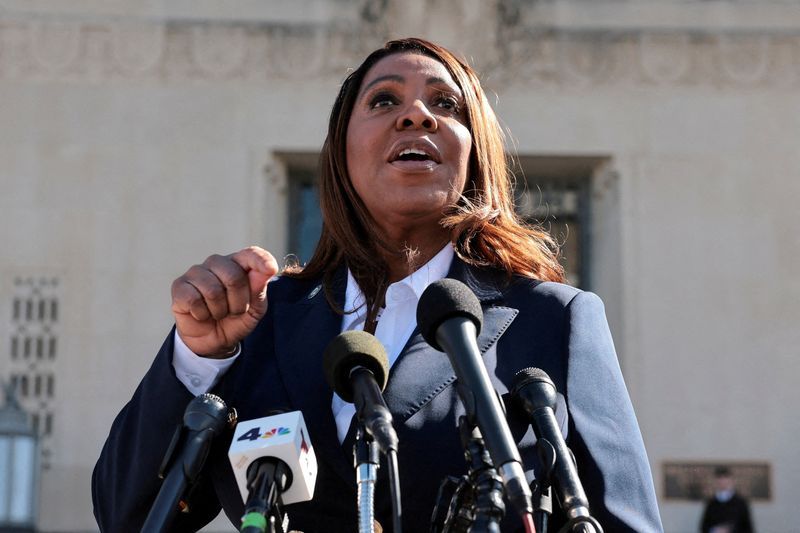
A New York state court judge has dealt a significant blow to Zelle by refusing to dismiss a landmark lawsuit brought by Attorney General Letitia James, who alleges that the popular electronic payment platform deliberately overlooked critical safety measures to prioritize rapid market expansion. Justice Phaedra Perry-Bond's decision on Tuesday paves the way for a full trial and marks a watershed moment for consumer protection advocates challenging how major fintech platforms balance growth with security obligations.
James has argued that Zelle's parent company, Early Warning Services—a consortium backed by seven major American banks including Bank of America, JPMorgan Chase, Wells Fargo, Capital One, PNC, Truist, and US Bank—knowingly sacrificed consumer protection to capture market share. The attorney general contends that despite objections from banking partners, Zelle rushed to market without implementing safeguards that the platform had itself proposed, leaving customers vulnerable to sophisticated fraud schemes that collectively cost them more than $1 billion.
The court's ruling found merit in James's core allegation that Zelle prioritized "accessibility, convenience, consumer adoption, and market dominance at the expense of consumer safety." This language directly contradicts the platform's own marketing claims, which positioned Zelle as a secure, bank-backed service offering consumers "peace-of-mind." Perry-Bond determined that these assurances, viewed against the backdrop of allegedly inadequate protections, constitute potentially misleading advertising that warrants examination at trial.
A particularly damaging aspect of the court's decision involves Zelle's continued collection of fees from transactions involving fraudulent activity. Perry-Bond noted that Zelle's admission of this practice raises uncomfortable questions about whether the company implicitly or explicitly condoned fraudulent transactions—a finding that could expose the platform to significant liability beyond simple negligence claims. The implications are substantial: if Zelle benefited financially from fraud while failing to implement reasonable preventive measures, this suggests a deliberate business model choice rather than innocent oversight.
The types of scams targeting Zelle users reveal the vulnerability of the platform's architecture. James documented how fraudsters gained unauthorized access to user accounts to execute transfers without permission, deployed social engineering tactics to convince victims to send money for goods and services that never existed, and impersonated trusted institutions including banks, government agencies, and utility companies. These fraud methods have become increasingly sophisticated, yet Zelle allegedly lacked basic defenses that industry standards would ordinarily demand.
Crucially, the attorney general's investigation found that Zelle did not adopt elementary protective measures until 2023—a four-year gap after Early Warning Services had itself proposed these same safeguards internally. This timeline becomes even more significant when considering external pressure: the adoption of "basic" security features came only after the U.S. Consumer Financial Protection Bureau and multiple congressional delegations initiated formal probes into the platform's practices. The implication is clear: absent regulatory oversight, Zelle showed little inclination to prioritize consumer protection over operational convenience.
Zelle's response to the court decision has been characteristically defensive, with company spokesman Eric Blankenbaker asserting that "reports of fraud and scams committed by bad actors against Zelle users have always been exceptionally low." The platform has also accused James of pursuing the case for political advantage, claiming that similar allegations have been rejected as meritless by courts across the country. However, this rhetorical strategy appears undermined by the fact that a judge has now deemed the allegations sufficiently credible to proceed to trial, suggesting that James's legal theories are not frivolous.
The timing of James's lawsuit carries particular significance in the current regulatory environment. The CFPB had filed a comparable case against Zelle but dropped it in March 2025, shortly after President Donald Trump commenced his second term. That agency subsequently curtailed most of its enforcement activities, leaving state-level officials as primary guardians of consumer protection in the fintech space. James's decision to proceed independently demonstrates how state attorneys general are increasingly filling enforcement gaps created by federal regulatory retreat.
For Malaysian and Southeast Asian readers, this case offers instructive lessons about platform accountability and regulatory leverage. As digital payment systems expand rapidly across the region—with services like GCash in the Philippines, Promptpay in Thailand, and local e-wallet operators gaining market dominance—questions about security standards and corporate responsibility become increasingly urgent. Zelle's experience demonstrates that platforms cannot indefinitely dodge accountability by claiming fraud is inevitable, and that regulatory intervention, whether federal or state-level, can successfully challenge even well-resourced tech companies.
The broader implications extend to how emerging markets structure their financial technology oversight. Unlike the United States, where fragmented authority creates enforcement challenges, countries such as Malaysia have opportunities to establish comprehensive frameworks from the outset. The Zelle precedent suggests that regulators should demand security architecture be built into platforms before market launch, rather than retrofitted after billions in losses accumulate. Companies that resist such requirements do so at legal and reputational peril.
Zelle, which launched in 2017 as a direct competitor to PayPal's Venmo and Block's Cash App, has captured significant market share by emphasizing the security advantages of bank backing. This court decision suggests that such reassurances carry legal weight and create enforceable obligations—companies cannot market themselves as secure while simultaneously dismissing fraud prevention as optional. As the litigation proceeds toward trial, additional discovery may reveal internal communications showing awareness of security vulnerabilities, potentially strengthening James's case considerably.

