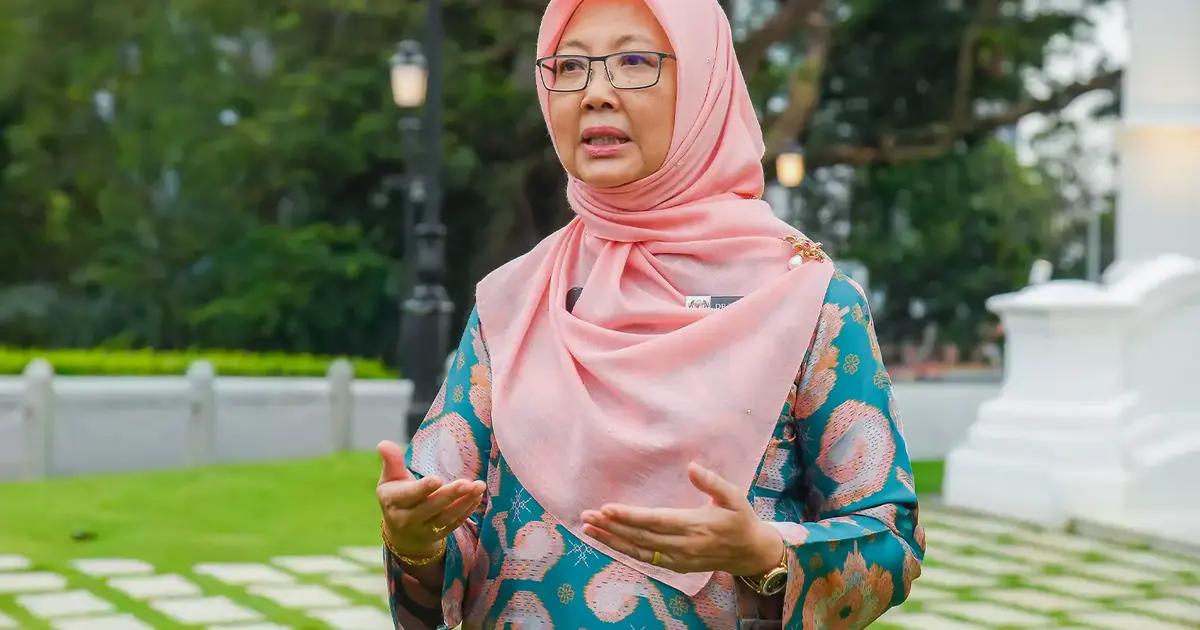
PKR vice-president Zaliha Mustafa has expressed confusion over Johor Barisan Nasional chairman Onn Hafiz Ghazi's recent public call for the opposition Pakatan Harapan coalition to name its intended menteri besar candidate, questioning the logic of disclosing such a figure when no electoral victory is assured.
Zaliha's remarks underscore the tactical complexity inherent in Malaysian state-level politics, where the eventual chief minister is typically determined following an election result rather than being predestined by pre-poll announcements. The PKR leader's puzzlement reflects a broader strategic concern within the opposition camp about prematurely committing to specific leadership designates before voters have cast their ballots and coalition partners have negotiated post-election arrangements.
The demand from Onn Hafiz, who chairs the Johor BN machinery, appears to place Pakatan Harapan in a no-win position. If the opposition advances a named candidate and subsequently loses the election, that individual becomes a focal point for public criticism and intra-coalition blame-shifting. Conversely, naming someone risks internal competition and divisions within PH's multi-party structure, potentially weakening cohesion during the critical campaign period leading up to the Johor state elections.
In Malaysian political convention, identifying a menteri besar candidate before confirming electoral success represents a departure from standard practice. Opposition coalitions, in particular, have historically adopted a more circumspect approach, preferring to finalize leadership appointments only once seats are secured and negotiation with partners becomes necessary. This allows flexibility in factoring actual results, seat distributions among component parties, and the relative bargaining power of each organization within the winning alliance.
For Pakatan Harapan in Johor specifically, the challenge involves balancing the aspirations of PKR, Democratic Action Party (DAP), Amanah, and potentially other aligned parties. Each component may harbour leadership ambitions, and premature declaration of a singular candidate could provoke resentment or reduced campaign commitment from rivals within the coalition. Zaliha's commentary suggests the opposition intends to maintain tactical flexibility rather than surrender such leverage before election results are known.
Onn Hafiz's request could equally be interpreted as a political gambit designed to expose perceived disunity or indecision within Pakatan Harapan rather than a genuine expression of interest in opposition transparency. By publicly demanding a named candidate, the BN chairman creates a scenario where any refusal can be portrayed as evasiveness, while simultaneous announcement of multiple candidates might be depicted as chaotic or evidence of fundamental disagreement within the coalition regarding future direction and leadership.
The Johor state political landscape carries particular significance for both coalitions. As a traditionally Barisan Nasional stronghold with substantial Malay-Muslim majority demographics, Johor has proven challenging terrain for opposition advances. Any electoral gains by Pakatan Harapan would carry symbolic weight across Malaysia's broader political landscape, potentially influencing voter sentiment in other states and strengthening the opposition's claims of momentum heading into any future general election.
Zaliha's public expression of bewilderment also serves to reframe the narrative surrounding the demand itself, casting aspersions on its reasonableness rather than engaging substantively with the underlying request. This rhetorical strategy allows PKR to maintain its preferred position while avoiding the appearance of evasion—she effectively communicates that the demand is illogical rather than declining to answer it outright.
The broader context involves Malaysia's constitutional framework, wherein state assemblies determine their chief minister through a vote among elected representatives. Neither the electorate nor pre-poll coalitions formally designate this office; rather, post-election mathematical majorities and negotiated agreements among winning parties determine outcomes. This structural reality fundamentally distinguishes Malaysian elections from presidential systems where voters directly select chief executives, thereby partially invalidating the premise of Onn Hafiz's demand.
From a strategic communications perspective, Zaliha's response demonstrates opposition parties' recognition that electoral politics in Malaysia increasingly incorporates sophisticated media and public relations dimensions. By expressing puzzlement rather than defensiveness, PKR simultaneously avoids committing to transparency measures that might disadvantage Pakatan Harapan while maintaining rhetorical high ground by suggesting the request itself merits questioning.
Looking ahead, the Johor state elections will test whether Pakatan Harapan can translate incremental recent improvements in opposition organization into concrete electoral advances in a state where BN has historically dominated. The coalition's strategic approach to menteri besar designation—balancing transparency against tactical advantage—will likely mirror approaches adopted in other states where opposition coalitions face electoral prospects. Zaliha's comments signal that Pakatan Harapan intends to navigate this terrain carefully, preserving flexibility until such moment as actual results dictate substantive negotiations among winning partners.

