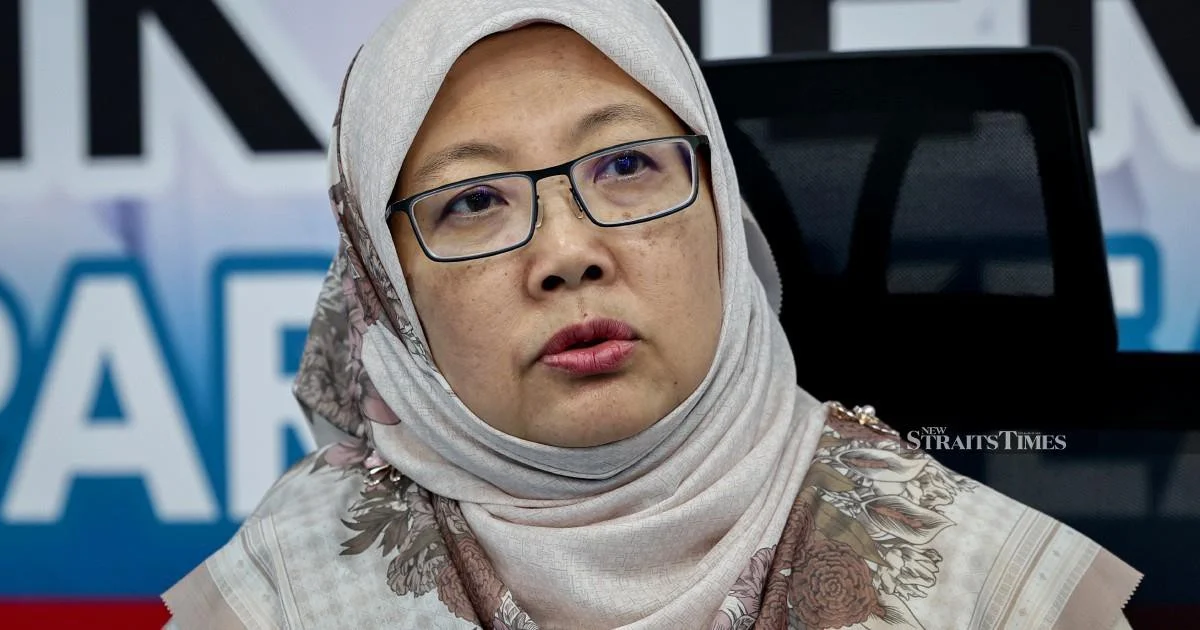
Datuk Seri Dr Zaliha Mustafa, the PKR vice-president, has thrown down a rhetorical gauntlet to Johor's political leadership, challenging what she characterises as contradictory positioning from Johor Barisan Nasional chairman Datuk Onn Hafiz Ghazi regarding the opposition coalition's readiness for upcoming state elections. The dispute centres on a fundamental question of political transparency: whether the Pakatan Harapan alliance should publicly identify its menteri besar candidate before or after electoral contests determine the composition of the state assembly.
Zaliha's intervention highlights a recurring tension in Malaysian electoral politics, where coalition partners and rival alliances constantly jockey over procedural questions that, on their surface, appear technical but carry deep implications for voter choice and political legitimacy. The PKR figure has effectively asked Onn Hafiz to clarify his position, implying that his current stance cannot logically hold together without compromising one principle or another. This kind of challenge serves multiple purposes within Malaysian political discourse: it forces opponents into explicit statements, creates space for media commentary, and allows the challenging party to claim the moral high ground by appearing more principled or transparent.
The menteri besar candidacy question represents more than a procedural squabble. In Johor, a state that has historically been a BN stronghold despite significant PH inroads in recent elections, the identity of the chief executive carries enormous weight for voter calculations. Constituents deciding whether to support the opposition alliance need to know who would lead the state government if PH were to secure a majority. Conversely, BN strategists argue that opposition coalitions sometimes use this uncertainty to their advantage, allowing different communities to project their preferred leaders onto the PH slate without the alliance having to commit to a specific individual who might alienate other voting blocs.
Onn Hafiz's position, as Zaliha interprets it, appears to demand transparency from the opposition while perhaps declining to extend the same courtesy to his own coalition regarding internal arrangements or power-sharing agreements. This asymmetry forms the crux of her challenge. The BN chairman's insistence that PH commit to a candidate name creates pressure on the opposition alliance to make its leadership intentions explicit, yet may itself mask internal deliberations within BN about whether Onn Hafiz would continue in his current role or whether other figures might assume the menteri besar position if BN retained control of the state assembly.
For Malaysian voters and analysts watching Johor politics, such exchanges illuminate the deeper strategic calculations occurring behind public statements. Political coalitions in Malaysia regularly face the tension between unity and transparency. Announcing a specific menteri besar candidate too early invites attacks on that individual's record, governance style, and suitability, potentially damaging the entire coalition's electoral prospects. Yet delaying such announcements risks accusations of evasiveness and suggests that the coalition has not genuinely coalesced around a unified vision for state leadership. Zaliha's challenge to Onn Hafiz essentially asks him which of these risks BN itself is willing to accept.
The timing of this exchange also carries significance. As Johor approaches electoral contests, the intensity of political messaging and counter-messaging increases substantially. Opposition coalitions and ruling alliances deploy increasingly sophisticated arguments designed to appeal to specific voter segments. Questions about menteri besar candidates often resonate differently across different communities. Rural constituencies may prioritize developmental credentials and local connections, while urban areas may focus on governance competence and anti-corruption records. By challenging Onn Hafiz publicly, Zaliha positions the PKR and PH to claim that their approach to the menteri besar question represents greater respect for voters' right to information.
Historically, Johor has presented particular challenges for opposition politics in Malaysia. The state's demographic composition, strong traditional support networks for BN, and the presence of the royal institution create a political environment distinct from other peninsular states. Nevertheless, the 2022 general election demonstrated that opposition support extends across diverse constituencies in Johor, and subsequent local political developments have kept the state competitive. In this context, the menteri besar issue becomes especially fraught because both coalitions recognise that this particular state remains genuinely contested terrain.
Zaliha's intervention also serves the broader PH coalition's communication strategy. By highlighting what she frames as inconsistency or contradiction in the BN chairman's position, she creates space for other alliance members to amplify similar messaging. Political scientists observing Malaysian elections have noted that opposition coalitions benefit from unified messaging that emphasises both the unity of their position and the internal contradictions of ruling alliances. This particular exchange fits neatly into such narrative frameworks, allowing PH to argue that its approach to transparency and clarity about leadership represents a genuine departure from established political practices.
The substance of Zaliha's challenge—asking Onn Hafiz to clarify his actual position rather than accept apparent contradictions—reflects broader questions about political accountability and coherence that extend beyond Johor. As Malaysian elections increasingly feature coalition politics rather than single-party dominance, voters and observers legitimately ask how coalitions manage internal diversity while maintaining coherent public positions. Zaliha's intervention suggests that PH is prepared to demand the same standards of logical consistency and transparency from BN that the ruling coalition demands from the opposition.
Moving forward, the response from Onn Hafiz and other BN figures will likely determine whether this exchange becomes a significant talking point in Johor's political discourse or remains a minor skirmish in the ongoing battle for electoral positioning. Political observers in Malaysia understand that such challenges, when effectively deployed, can shift the terms of electoral debate by forcing opponents to defend positions rather than simply advance them. Zaliha's question thus represents not merely a point of debate but potentially a strategic repositioning of the political narrative surrounding Johor's future electoral contests and the question of who should lead the state.

