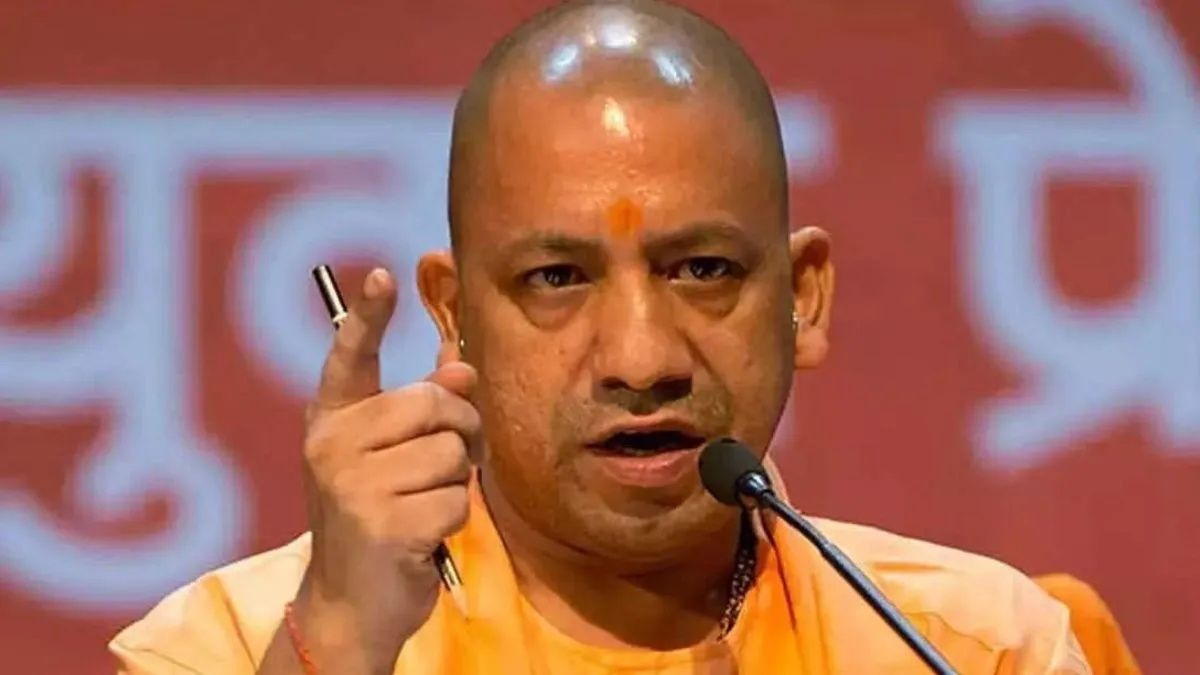
Uttar Pradesh Chief Minister Yogi Adityanath has issued a stern warning that attempts to undermine public confidence in religious institutions will not go unpunished, following the filing of the first formal complaint in the Shri Ram Janmabhoomi Teerth Kshetra donation controversy. Speaking at a public event in Deoria on Friday while inaugurating development projects, the Chief Minister signalled that his administration intends to pursue the matter with rigour once a Special Investigation Team submits its findings.
The donation case has stirred significant controversy across northern India, touching directly on one of Hinduism's most sacred sites and raising questions about financial management at major pilgrimage destinations. Ayodhya's Ram temple, which opened to the public in January 2024 following decades of legal battles, has become central to India's contemporary religious and political landscape. The alleged irregularities in donation handling therefore carry implications far beyond ordinary financial management, affecting the credibility of a site that commands deep emotional attachment among hundreds of millions of devotees across South Asia.
Adityanath framed the investigation's progress as evidence of governmental commitment to separating legitimate concerns from what he described as malicious allegations. His statement that "whoever tampers with the faith of the people will have to face the consequences" indicated his administration views the matter not merely as potential financial impropriety but as a test of institutional integrity at a religiously significant site. The Chief Minister's emphasis on distinguishing between truth and falsehood suggested awareness that the case carries reputational stakes beyond the specific allegations under examination.
The political dimensions of the controversy loomed large in Adityanath's remarks, as he directly targeted the Indian National Congress and Samajwadi Party for what he characterized as a pattern of undermining Hindu religious sentiments and institutions. By invoking historical grievances—including alleged firing on Ram Navami devotees, restrictions on Krishna Janmashtami celebrations, and interference with the Kanwar Yatra pilgrimage—Adityanath sought to reframe opposition parties as inherently hostile to Hindu religious expression. This rhetorical strategy attempted to shift scrutiny away from the donation case itself and towards broader questions of whose hands should be trusted with managing India's religious affairs.
For Malaysian readers following Indian politics and Hindu-majority nation dynamics, this episode illustrates the intersection between financial accountability and religious nationalism in contemporary India. The case demonstrates how allegations of institutional misconduct at major temples become entangled with partisan political competition, particularly in states governed by the Bharatiya Janata Party. Understanding these dynamics proves relevant to Southeast Asian Hindu communities and those monitoring India's approach to religious institutions, as similar tensions between transparency and religious sentiment exist across the region.
Adityanath's appeal for cooperation with the investigative team while simultaneously attacking opposition parties created an implicit tension in his messaging. On one hand, he demanded that political actors cease making allegations without evidence; on the other, he himself made sweeping political allegations rooted in historical grievances. This apparent contradiction reflected the difficulty of maintaining investigative neutrality when major religious sites become focal points for partisan disputation. The Chief Minister's dual approach—demanding political quiet while engaging in aggressive political rhetoric—underscored the challenge of conducting impartial inquiries into institutions saturated with ideological significance.
The timing of the controversy, occurring less than a year after the temple's opening, has raised questions about institutional oversight mechanisms at India's most prominent new pilgrimage destination. Devotees from across India and the diaspora have contributed substantial sums to the temple's development and operations, making questions of financial stewardship particularly acute. For temples across South Asia operating within similar gift-based economies, the case signals potential risks of inadequate administrative systems and the importance of transparent accounting practices that balance religious solemnity with modern governance standards.
Adityanath's invocation of the Ram Janmabhoomi movement's history—the decades-long dispute that preceded the temple's construction—reflected awareness that this site carries layered significance beyond its contemporary religious function. The movement shaped modern Hindu political mobilization across India and sustained investment of both symbolic and material resources from supporters who view the temple as vindication of their historical struggle. Any scandal touching the temple therefore risks disappointing constituencies who experienced the movement as a defining moment in Hindu identity assertion within India's secular democratic framework.
The Special Investigation Team's role assumes particular importance given the charged context in which it operates. For the investigation to gain public credibility, it must navigate between demonstrating genuine scrutiny of potential misconduct and avoiding appearance of pursuing politically motivated prosecution. Malaysian observers familiar with managing religious institutions amid political sensitivity will recognize the institutional challenges involved. Southeast Asian temples, mosques, churches, and other places of worship frequently face similar pressures to maintain both financial propriety and public confidence, requiring careful separation of administrative processes from partisan competition.
The Chief Minister's closing appeal—calling upon those with evidence to cooperate with investigators and those without evidence to cease allegations—attempted to establish ground rules for the controversy's continuation. Yet his simultaneous attack on opposition parties' historical conduct suggested these rules would apply selectively. This asymmetry raises broader questions about whether institutions can investigate themselves effectively when senior political leadership maintains partisan stakes in the outcomes. For Southeast Asian democracies wrestling with similar tensions between institutional independence and political accountability, the Indian case offers cautionary lessons about the difficulty of maintaining investigative credibility under conditions of high political polarization.
Looking forward, the case's resolution will likely test whether Indian institutions can address financial irregularities at major temples without the process becoming instrumentalized for partisan advantage. The donation scandal at Ayodhya thus transcends a single incident of alleged mismanagement, representing a broader struggle over how Hindu-majority India balances religious sentiment with institutional accountability, administrative transparency with devotional reverence, and investigative integrity with political legitimacy. For regional observers, the outcome may offer insights into how religious nationalism and democratic governance negotiate their competing demands.

