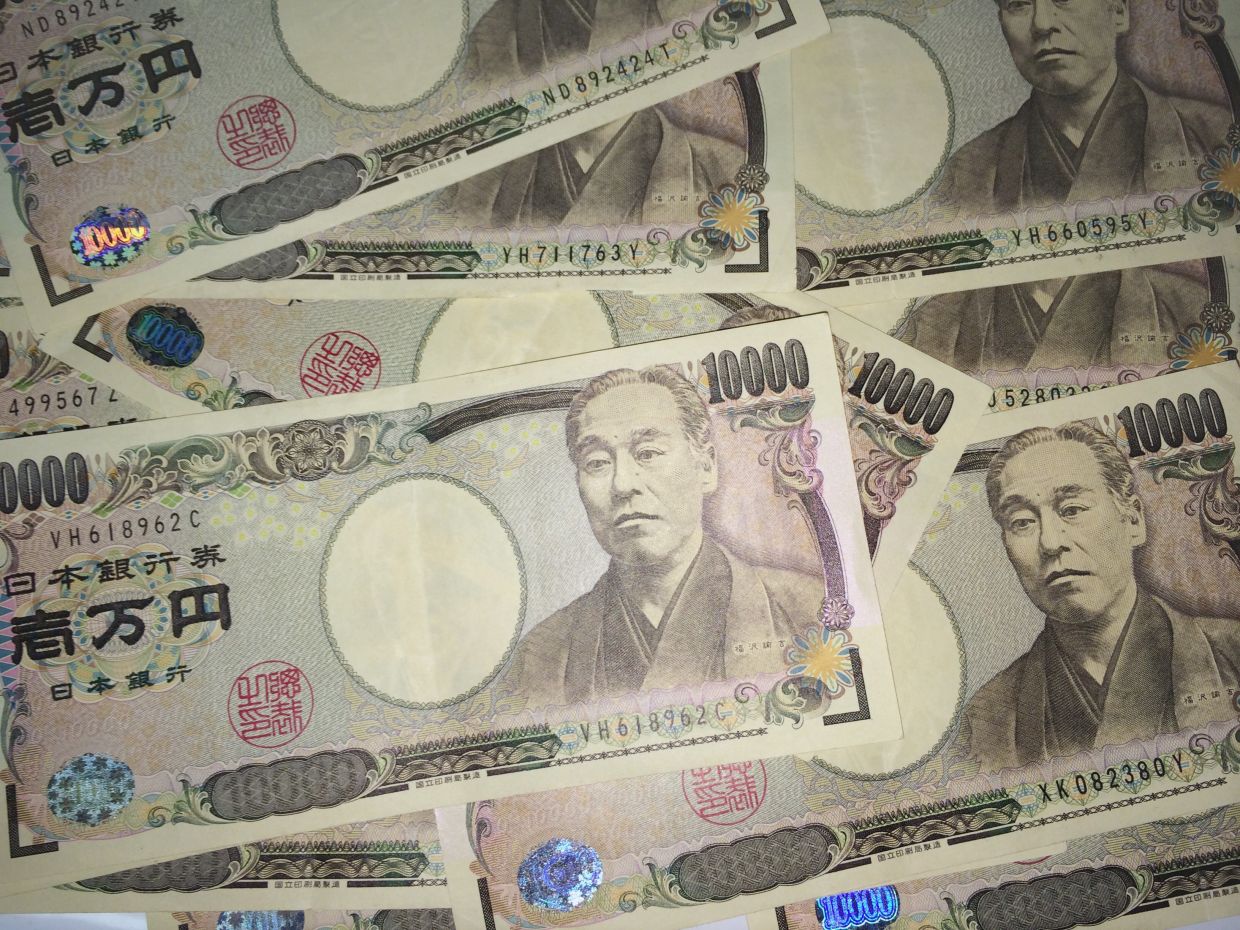
The Japanese yen is languishing at its weakest level in four decades, a troubling development that persists even after aggressive policy measures from Japan's authorities. Trading near 161.205 against the U.S. dollar on Friday, the currency found only modest stability after sliding to fresh two-year lows the previous day. Despite a recent rate increase by the Bank of Japan and earlier emergency intervention by Japan's Ministry of Finance, the yen has proven remarkably resistant to recovery, signalling deeper structural challenges confronting the world's third-largest economy.
The persistence of yen weakness despite conventional policy tools has placed currency markets on heightened alert for further official action. Geopolitical developments, including the signing of a U.S.-Iran peace deal earlier in the week, initially buoyed broader market sentiment and normalised shipping through the Strait of Hormuz. However, these positive developments failed to provide meaningful relief for Japanese currency holders. Thin liquidity across Asian markets and U.S. trading floors, due to holiday closures in multiple jurisdictions, prevented any decisive repricing of the yen's fundamental value.
Analysts tracking the situation suggest that Japan's Ministry of Finance will take a defensive posture at key technical levels. According to Tony Sycamore, market analyst at IG in Sydney, authorities are likely to mount resistance at the 161.95 yen-per-dollar mark, using intervention firepower comparable to what was deployed during April and May, which totalled approximately ¥11.7 trillion. This figure represents a substantial deployment of reserves, yet previous interventions have achieved only temporary respite. Should the yen breach this level multiple times, Sycamore noted, the Ministry of Finance would need to become far more selective with future interventions to preserve both flexibility and market credibility, effectively limiting the volume of ammunition available for future defence.
The calculation underlying this cautious approach reflects an uncomfortable reality for Japanese policymakers. Using roughly 11 to 12 per cent of total foreign reserves in a relatively compressed timeframe to achieve minimal lasting impact would be a costly strategy to sustain indefinitely. This constraint may ultimately force authorities to accept higher yen weakness if the underlying economic fundamentals do not improve, or to pursue more targeted, strategic interventions designed to maximise market psychology rather than sheer volume.
Investor confidence in Japan has been further undermined by concerns surrounding the spending and policy direction of Prime Minister Sanae Takaichi. Her administration's fiscal intentions have generated uncertainty about the government's medium-term economic priorities, creating headwinds that no single interest rate adjustment can easily overcome. The Bank of Japan's decision last week to raise interest rates to a 31-year high represented a significant tightening step, yet the measure failed to arrest the yen's decline, suggesting that market participants are deeply sceptical about Japan's ability to sustain higher rates without economic damage.
Core inflation data released Friday underscores the precarious balance Japan's central bank must navigate. Annual core inflation remained below the Bank of Japan's 2 per cent target for the fourth consecutive month in May, even as fuel subsidies implemented by the government masked underlying price pressures stemming from elevated raw material costs linked to Middle East tensions. This disjuncture between headline inflation suppression and core price momentum creates analytical complications for policymakers attempting to calibrate rate decisions.
Capital Economics researchers offered a cautionary outlook on this inflation trajectory. While government fuel price caps have successfully prevented consumer price spirals to date, these officials predicted that the pass-through of higher energy costs to utility bills and other goods and services will likely lift inflation toward approximately 3.5 per cent by early 2027. This forecast suggests that current rate levels may prove insufficient to maintain price stability without further tightening, placing additional pressure on the yen as investors anticipate further monetary policy adjustment cycles ahead.
Minutes from the Bank of Japan's April meeting, released Friday, revealed that some board members advocated for more rapid interest rate increases should Middle East conflict tensions persist and threaten to drive underlying inflation above target. Bank of Japan Deputy Governor Ryozo Himino reinforced this hawkish perspective on Friday, indicating that the central bank will proceed with additional rate increases while carefully monitoring the risk of underlying inflation overshooting its 2 per cent objective. This forward guidance, while theoretically supportive of yen strength, has failed to move currency markets decisively, perhaps because investors question whether Japan's economic structure can tolerate substantially higher rates without triggering recession risks.
Other major currency pairs remained relatively subdued during Asian trading on Friday. The U.S. dollar index, which measures the greenback's performance against a basket of six major currencies, held steady at 100.81 after climbing 0.5 per cent to a one-year high on Thursday. The British pound remained essentially flat at $1.3205, following the Bank of England's decision Thursday to hold interest rates steady at 3.75 per cent. Bank of England officials judged that rate increases would be premature given continuing uncertainty about the durability of inflation pressures in the British economy.
Political developments in Britain added another layer of complexity to currency market dynamics. Traders were monitoring a by-election contested by Greater Manchester mayor Andy Burnham, whose potential victory could trigger internal Labour Party leadership challenges against Prime Minister Keir Starmer. Such political turbulence could complicate the Bank of England's policy calculus if it creates additional uncertainty about the government's economic direction and fiscal stance.
Currency movements elsewhere in the Asia-Pacific region proved modest. The Australian dollar declined 0.1 per cent to $0.7011, while the New Zealand dollar held relatively stable at $0.5756. Cryptocurrency markets similarly remained subdued, with Bitcoin down 0.2 per cent at $62,868.18 and ether essentially unchanged at $1,708.98. These muted movements across asset classes reflected both the technical constraints of thin holiday-period trading and genuine uncertainty about the direction of global economic policy, particularly regarding whether rate cycles are poised to shift or stabilise at current levels.
For Malaysian and Southeast Asian observers, Japan's currency travails carry important implications. A persistently weak yen increases Japanese export competitiveness, potentially complicating regional trade dynamics as Japanese manufacturers gain pricing advantages. Simultaneously, it suggests that the Bank of Japan views economic headwinds as serious enough to constrain aggressive policy tightening, a signal that global growth momentum may be weakening more broadly than surface indicators suggest.