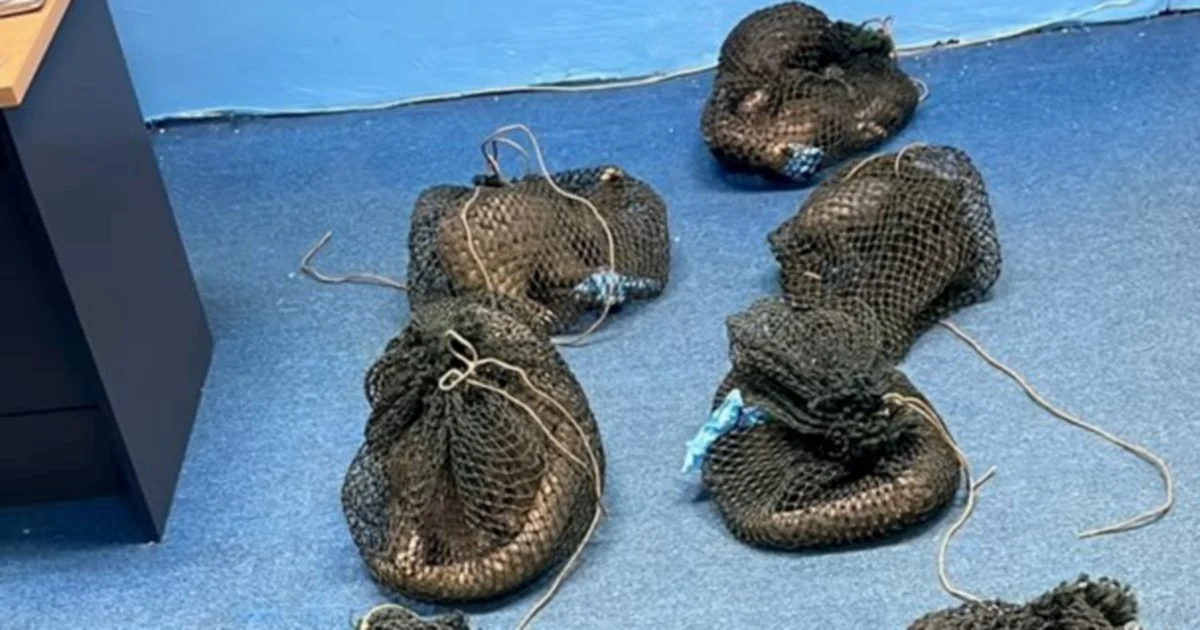
Wildlife enforcement officials in Sabah moved swiftly against poaching networks operating across the Sulu Sea when they apprehended a 27-year-old Filipino national discovered harbouring a substantial cache of protected animals at a plantation facility in Kampung Paris 3, Kinabatangan, yesterday. The discovery of 10 live pangolins alongside a confiscated elephant tusk points to systematic cross-border smuggling operations that have increasingly targeted Malaysia's remote eastern states as transit points for contraband destined for Asian black markets.
The raid represents a rare public success in interdicting the illicit wildlife trade at a critical juncture. Pangolins—scaly anteaters native to Southeast Asia—rank among the planet's most trafficked mammals, hunted relentlessly for their scales, which command premium prices in traditional medicine markets across China and Vietnam. The presence of an elephant tusk at the same location underscores the criminal sophistication of networks that deal simultaneously in multiple endangered species, coordinating procurement, storage, and distribution across porous borders that characterise the Mindanao-Sulu-Sabah corridor.
Sabah's geographic vulnerability to wildlife trafficking has long concerned conservation authorities and law enforcement. The state's shared maritime boundaries with the southern Philippines, combined with remote jungle terrain and numerous illegal landing points, create persistent enforcement challenges. Criminal syndicates exploit these vulnerabilities systematically, establishing holding stations and processing facilities in rural plantation areas where infrastructure remains sparse and oversight minimal. The Kinabatangan arrest suggests that authorities have developed improved intelligence gathering capabilities or heightened cooperation with local informants willing to report suspicious activities.
Pangolin trafficking emerged as a particular concern following the 2016 international ban on their commercial trade through CITES, the Convention on International Trade in Endangered Species. The restriction, intended to protect eight species from extinction, paradoxically intensified criminal demand by driving operations underground and increasing prices substantially. Malaysian enforcement agencies have recorded escalating seizures across Peninsular Malaysia, Sabah, and Sarawak over the past five years, with most animals destined for export rather than domestic consumption. The Philippines, similarly affected by trafficking networks, has struggled with enforcement capacity and judicial backlog, allowing smugglers considerable operational freedom.
The confiscated elephant tusk introduces additional dimensions to the investigation. African elephant poaching has dominated global headlines, but Asian elephant populations face equally severe threats. Malaysian enforcement authorities have documented cases involving tusks from both African and Asian elephants, suggesting international criminal procurement networks with supply chain flexibility. The presence of an elephant tusk alongside pangolins indicates either consolidation of multiple smuggling operations or a single criminal organisation diversifying across product lines to maximise profit per shipment and distribute enforcement risk.
The arrested individual's nationality provides insight into transnational criminal recruitment patterns. Filipino nationals have featured prominently in seizure records across Malaysia and regional intelligence reports, suggesting either that individuals from Mindanao possess particular access to smuggling infrastructure, or that criminal organisations deliberately employ foreign nationals to complicate cross-border investigation. Whether this suspect acted independently or as part of an organised network remains uncertain pending investigation, though the sophisticated arrangement of a plantation storage facility suggests at minimum some operational coordination and financial backing.
Malaysian wildlife authorities face mounting pressure from conservation groups and international partners to intensify enforcement. Pangolin seizures have increased threefold since 2018, indicating either growing trafficking volumes or improved detection capabilities—likely both. The volume of illicit trade, valued at an estimated $7 billion to $23 billion annually across Asia-Pacific, outpaces government resources allocated to interception and prosecution. Most nations in the region, including Malaysia, lack sufficient wildlife investigation specialisation, forensic capacity, and judicial expertise to process cases expeditiously. Perpetrators frequently face minimal sentences or administrative fines rather than imprisonment, reducing deterrent impact.
Regional cooperation has improved marginally in recent years through ASEAN-led initiatives and bilateral arrangements, but implementation remains inconsistent. Information-sharing protocols between Malaysian authorities and Philippine counterparts remain underdeveloped compared to security cooperation in other domains. Cross-border extradition of wildlife trafficking suspects proceeds haltingly due to jurisdictional complexity and diplomatic sensitivity. The Kinabatangan case will likely feature in regional enforcement discussions, potentially catalysing enhanced protocols for intelligence exchange and joint operations targeting smuggling networks that transcend national boundaries.
For Malaysian readers and policymakers, this arrest underscores the urgent necessity for substantially increased investment in ranger patrols, technology deployment, and inter-agency coordination mechanisms. Sabah's wildlife heritage, encompassing orang-utan populations, Sumatran rhinoceros, and countless endemic species, faces existential pressure from trafficking operations that remain vastly better resourced than conservation enforcement. Judicial reform ensuring meaningful penalties for wildlife trafficking—treating it equivalently to drug smuggling in severity—would markedly improve deterrent effects. International demand reduction campaigns targeting pangolin scale consumers remain underfunded relative to the scale of trafficking networks supplying those markets.
The disposition of the 10 confiscated pangolins will require specialised rehabilitation capacity, a capability Malaysian facilities possess but remain stretched meeting existing demands. The animals' physical condition, duration of captivity, and health status will determine whether reintroduction to protected habitats remains viable or whether rescue centres must provide permanent care. Such logistical challenges compound the enforcement burden, yet facilities like those operated by dedicated conservation organisations have demonstrated capacity to rehabilitate trafficked wildlife successfully.

