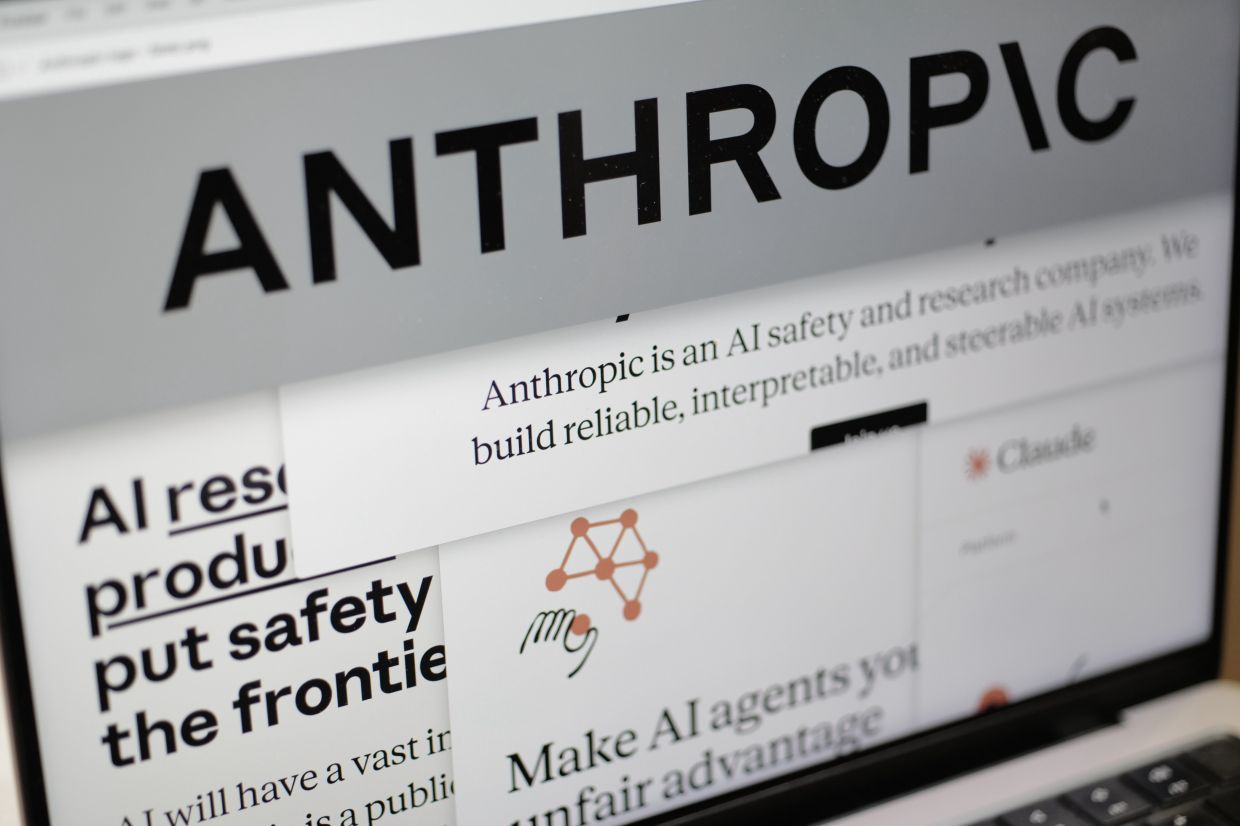
The rapid tightening of artificial intelligence governance in the United States has triggered its first significant legal challenge, with Legion, a software company specializing in legal technology, mounting a federal court case against the Trump administration over restrictions imposed on Anthropic's cutting-edge AI systems. The lawsuit, filed on June 23 in Washington federal court, represents an escalating tension between national security considerations and the commercial realities facing technology firms that depend on uninterrupted access to frontier AI capabilities.
Legion's grievance centres on an executive directive that prohibits Anthropic PBC, the creator of the Claude and Mythos AI systems, from granting access to its most advanced models—Fable 5 and Mythos 5—to foreign nationals working anywhere in the world, or from exporting these systems across US borders. The restriction emerged in a letter from Commerce Secretary Howard Lutnick to Anthropic Chief Executive Officer Dario Amodei, effectively requiring government permission before the company could distribute its most sophisticated AI tools internationally or to non-US citizens. For Legion, which maintains a development team that includes Canadian nationals working remotely from Canada, this directive proved catastrophic: within two weeks of the announcement, Anthropic withdrew access to Fable 5 entirely, eliminating what the company describes as the central technological foundation of its product development pipeline.
The timing of Legion's action underscores how rapidly AI export controls are reshaping the technology landscape. The company argues in its court filing that the loss of access to Fable 5 constitutes immediate and irreparable harm, going beyond conventional business disruption to threaten the company's fundamental viability. This framing reflects a deeper reality within the AI industry: the development cycles are so compressed and competition so fierce that even brief periods without access to state-of-the-art models can permanently diminish a company's competitive position. Competitors who maintain uninterrupted access continue advancing their capabilities, while restricted companies fall behind in ways that prove nearly impossible to remedy retroactively. Legion characterizes this as an existential threat, one that compounds daily as the directive remains in effect and the technological gap widens.
The lawsuit positions Legion's operational disruption as particularly acute given the geopolitical structure of modern technology development. Many US companies rely on international talent and distributed teams spanning multiple countries, making blanket restrictions on foreign national access logically problematic for companies that lack the infrastructure to instantly restructure their workforce. Legion's Canadian employees cannot simply be replaced or relocated without months of recruitment and onboarding, yet the order provides no transition period or accommodation for existing international staff arrangements. The company argues that this inflexibility produces cascading operational damage: engineers are sidelined, product development stalls, and market opportunities vanish in real time.
Anthropc's public response to the crisis reveals the delicate diplomatic position technology companies now occupy. Rather than defending Legion's legal challenge or criticizing the government's approach, Anthropic issued a statement expressing gratitude to the administration and emphasizing the company's commitment to working collaboratively with federal authorities toward shared objectives of protecting critical infrastructure and maintaining US technological leadership. This stance reflects Anthropic's strategic calculus: the company itself faces potential penalties or further restrictions if it appears to resist government directives, making formal public support for Legion's lawsuit untenable. The statement demonstrates how export controls create pressure on companies to align with government positions even when those positions harm their customers and partners.
Commerce Secretary Lutnick's position on AI export controls reflects a broader shift in how the Trump administration conceptualizes technology governance. Rather than managing AI competition through traditional trade mechanisms, the administration is deploying security classifications and foreign national restrictions as direct tools of technology control. This approach mirrors Cold War precedents but applies them to commercial AI systems, treating advanced models as strategically equivalent to nuclear weapons or military technologies. The Secretary's letter to Amodei was not a negotiation but a directive, establishing a permission-based regime for AI access that fundamentally reverses the presumption of commercial freedom that previously characterized the sector.
For Malaysian and Southeast Asian technology firms, Legion's lawsuit carries significant implications. If the court upholds the Trump administration's restrictions or if similar controls spread to other jurisdictions, companies across the region that rely on access to American AI systems may face comparable disruptions. Many regional startups and technology companies employ international teams or serve multinational client bases, making strict foreign national restrictions operationally challenging. The precedent set in this case could influence how other governments approach AI governance, particularly regarding whether they adopt security-based restrictions on foreign access or maintain more open commercial frameworks.
The competitive dimension of these controls also resonates throughout Asia's technology ecosystem. Chinese AI companies face US restrictions, but they have responded by developing domestic alternatives and deepening regional technology ties. If American companies like Legion become unable to maintain competitive capabilities due to internal restrictions, space opens for non-US AI systems to gain market share in Asia-Pacific markets. Southeast Asian companies may increasingly look toward alternative AI providers—whether Chinese, European, or regional developers—if accessing American systems becomes operationally impossible or legally uncertain.
The Commerce Department and White House have not yet responded to Legion's legal challenge, meaning the administration's formal defense and any potential appeals process remain unknown. Legion similarly provided no immediate comment on next steps, leaving the lawsuit's trajectory uncertain. However, the decision to litigate rather than negotiate or simply absorb the costs suggests that Legion views the restrictions as modifiable through legal pressure rather than permanent government policy. The coming months will reveal whether federal courts view AI export controls as matters of unquestionable executive prerogative or whether they consider the proportionality and necessity of restrictions that harm American companies' competitiveness.
The broader context of Anthropic's own position in this dispute adds complexity to Legion's case. Anthropic has positioned itself as a responsible AI developer aligned with government interests, making the company unlikely to publicly challenge restrictions even if they harm customers. Yet this alignment may itself be tested if restrictions proliferate to other models or if government demands continue escalating. The tension between Anthropic's stated commitment to assisting the government and its commercial interests in serving diverse customer bases remains unresolved, and Legion's lawsuit may force both the company and federal authorities to clarify where these boundaries lie.
Ultimately, Legion's case represents the collision between old security frameworks designed for different eras of technology and the contemporary reality of distributed, international AI development and deployment. Whether courts will compel the government to balance national security against commercial harm, or whether they will defer entirely to executive judgment on AI governance, will shape how the technology sector adapts to these new restrictions. The outcome carries implications extending far beyond Legion itself, affecting how American technology companies operate globally and how foreign companies and employees engage with American AI systems in the years ahead.

