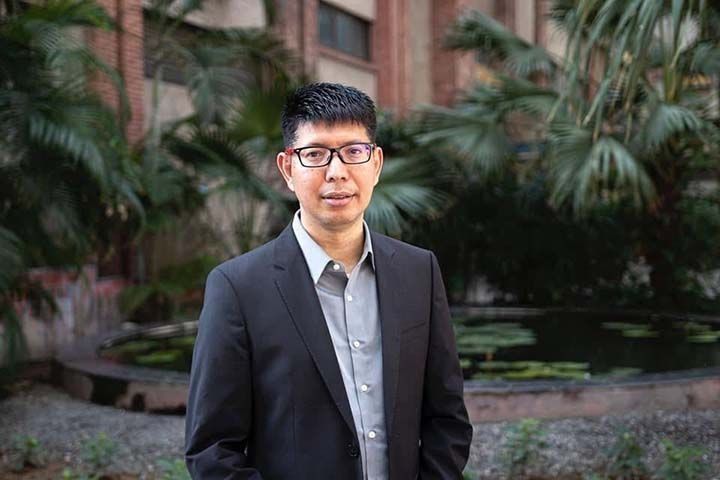
An American scholar of Myanmar detained in southwestern China in early June was travelling to attend an academic workshop, according to the think tank he established, which has issued an urgent call for his unconditional release. Min Zin, executive director of the Institute for Strategy and Policy (ISP) - Myanmar, was apprehended in Kunming on June 3, weeks before a scheduled state visit by Myanmar's junta chief Min Aung Hlaing. China's foreign ministry confirmed his arrest last week, alleging that he was suspected of espionage activities and endangering national security, charges that both the think tank and the United States have flatly rejected.
The timing of Min Zin's detention sits uncomfortably within the broader context of Myanmar's political trajectory and China's strategic interests in the region. Myanmar's military seized power in February 2021, ousting elected civilian leader Aung San Suu Kyi in a coup that galvanised widespread public resistance. What began as mass demonstrations has evolved into a sustained nationwide armed rebellion, with newly formed pro-democracy militia groups joining forces alongside longstanding ethnic armed organisations to challenge military control. Throughout this period of turmoil, China has remained one of Myanmar's most significant foreign allies, maintaining robust diplomatic and economic ties with the military regime despite international criticism.
Min Zin himself carries considerable symbolic weight in Myanmar's democracy movement. A veteran of the country's landmark 1988 pro-democracy uprising, he transitioned from student activism to scholarly work, ultimately obtaining formal training in political science at the University of California, Berkeley. Upon returning to Myanmar, he played a founding role in establishing ISP, which initially operated within the country before relocating overseas following the 2021 coup. The think tank's research agenda has concentrated on documenting the military conflict, analysing prospects for political transition, examining Myanmar's economic deterioration, and studying the country's complex relationship with China as a neighbour and trading partner.
The think tank released a carefully worded statement on Wednesday emphasising that Min Zin had travelled to Kunming exclusively to participate in an academic gathering. The organisation categorically rejected what it described as groundless allegations against one of its senior staff members, simultaneously highlighting the broader principle that research institutions must be able to operate freely without facing intimidation. This framing is significant, as it positions the detention not merely as an individual case but as a potential threat to academic freedom and international scholarly exchange in the region.
The United States State Department has lodged its own objection to Min Zin's detention, with a spokesperson confirming that the Department rejected the espionage accusations against the scholar. According to the State Department statement, American consular officers have already visited Min Zin in detention, and the department is actively engaged in negotiations with Chinese officials to secure his release while providing appropriate diplomatic support. This level of engagement underscores the significance American officials attach to the case and reflects broader concerns about the treatment of American citizens abroad.
China's foreign ministry, however, has maintained its position with characteristic firmness. In response to questions from international media, the ministry reiterated the espionage allegations and stated that the case would be handled according to Chinese law, providing little indication of flexibility or willingness to reconsider the charges. This formulaic response suggests that Beijing views the matter as settled from its perspective, at least publicly, and is unlikely to be swayed by diplomatic pressure from the United States or international human rights advocates.
For Malaysian observers and Southeast Asian analysts, this incident raises important questions about the fragility of scholarly exchange and academic freedom in an increasingly geopolitically contested region. The detention of a researcher engaged in legitimate academic work—particularly one whose research focuses on understanding Myanmar's political situation and its regional implications—suggests that Beijing may be sensitive to international scrutiny of its relationship with the Myanmar junta. The think tank's relocation overseas after the 2021 coup already indicated that researchers felt constrained operating within Myanmar itself; the detention of its director now raises concerns about operating even beyond Myanmar's borders.
The incident also highlights the precarious position of Myanmar's civil society actors and democracy advocates. Many fled the country after the coup, seeking safety in neighbouring nations and the wider world. Yet this case demonstrates that geography alone may not guarantee security for those engaged in politically sensitive research or commentary about Myanmar. For Malaysian-based organisations working on Myanmar issues, whether through media, civil society, or academic channels, the case serves as a cautionary reminder of the potential risks of engaging deeply with the country's political situation.
Furthermore, Min Zin's detention may reflect deeper anxieties within Beijing about the narrative surrounding Myanmar's military regime and international perceptions of China's support for it. Research examining the country's failing economy, the civil conflict, and bilateral relations with China could potentially undermine Beijing's preferred narrative about its benign influence and the stability of its strategic partnership with the junta. The timing of the detention, occurring just weeks before Min Aung Hlaing's scheduled visit to China, also suggests that Beijing may have been asserting control over narratives about Myanmar at a diplomatically sensitive moment.
The case underscores a broader tension within Southeast Asia between freedom of movement and expression for researchers and activists, and the increasing willingness of major powers to use detention and espionage charges as tools for controlling critical voices. For Malaysia, which hosts a growing number of Myanmar refugees and diaspora communities, and which maintains its own complex relationship with China, the implications are worth careful consideration. The detention sends a signal that research on sensitive regional topics can carry significant personal risk, potentially chilling academic inquiry and international collaboration on matters of genuine regional importance.

