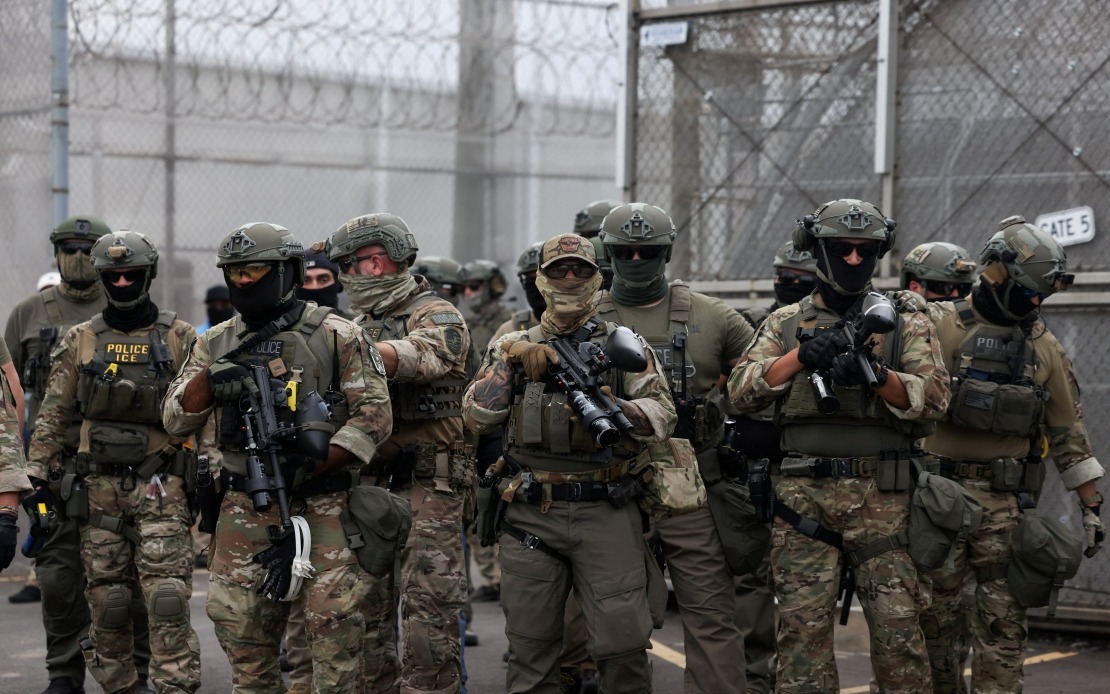
A federal judge in California has issued a nationwide injunction preventing United States Immigration and Customs Enforcement from conducting arrests of migrants within and around immigration courthouses, marking a significant legal setback for the Trump administration's aggressive deportation enforcement strategy. The court's decision effectively halts one of the more contentious tactics adopted since the start of the president's second term, striking down a practice that had allowed ICE officers to detain migrants even before their legal proceedings concluded.
Immigration courts across America handle complex deportation cases involving individuals whose legal status remains contested. The courtroom environment is meant to provide a neutral venue where migrants can present their cases before judges, with legal counsel assisting their defence. The ICE courthouse arrest practice that began expanding last year represented a significant departure from previous enforcement conventions, as critics argued it created an intimidating atmosphere that discouraged migrants from attending scheduled hearings.
The Trump administration introduced new guidelines at the beginning of its second term specifically emphasising the operational benefits of conducting arrests within courthouse premises. Agency officials framed the approach as a more efficient method of immigration enforcement, arguing that courthouse arrests allowed them to apprehend migrants already present and processed through the legal system. However, this logic failed to convince the California federal judge who reviewed the policy's legal foundation.
In his ruling, the judge determined that ICE had fundamentally failed to meet administrative law requirements by not adequately addressing the significant concerns raised about how the courthouse arrest policy would affect migrants' constitutional rights and access to due process. The agency provided no reasoned explanation for abandoning previous enforcement restraint at courthouses, essentially treating the policy shift as self-evidently justified without substantive justification. This analytical gap rendered the new practice legally vulnerable to challenge.
The concept of due process protection in immigration courthouses holds particular importance in the American legal system. When migrants avoid court appearances because they fear arrest, the entire immigration adjudication process becomes compromised. Judges cannot properly evaluate cases when defendants are absent, justice becomes impossible to administer, and the system itself loses legitimacy. Defence advocates had consistently warned that courthouse arrests would naturally suppress attendance, creating a perverse incentive structure where migrants attempting to exercise their legal rights faced apprehension.
For Malaysian readers and Southeast Asian observers, this judicial decision illuminates how democratic institutions can constrain executive enforcement actions, even within immigration policy contexts where governments typically enjoy broad discretionary powers. The case demonstrates that even in the United States, courts retain authority to scrutinise whether executive agencies have followed proper procedures and provided adequate legal justification for significant policy changes. This principle operates independently of whether one agrees with immigration restriction principles themselves.
The ruling also reflects broader tensions within American immigration enforcement between operational efficiency and constitutional safeguards. Security officials often argue that enforcement becomes more effective when constraints are loosened, yet courts increasingly recognise that legitimacy itself—not merely operational success—matters for long-term policy effectiveness. An enforcement system that discourages legal participation ultimately undermines its own sustainability.
Immigration policy remains deeply contested across the region, with Malaysia itself managing substantial migrant populations and maintaining complex enforcement frameworks. While Malaysian approaches differ from American constitutional structures, the underlying tension between enforcement imperatives and procedural fairness resonates across immigration systems globally. How nations balance these competing pressures shapes both actual enforcement outcomes and broader social trust in legal institutions.
The California judge's decision will likely face appeal from the Trump administration, potentially advancing the case through higher judicial levels. The Supreme Court would ultimately determine whether the injunction survives, though the lower court's logic—requiring agencies to justify significant policy changes with substantive reasoning rather than assertion—reflects established administrative law principles unlikely to be overturned completely. Even if the specific courthouse arrest prohibition is reversed, agencies would likely face requirements to provide more thorough legal justifications.
This particular clash between executive immigration enforcement and judicial oversight carries implications extending beyond American borders. Immigration remains a politically charged issue across Southeast Asia, with countries balancing security concerns against humanitarian considerations and labour market demands. The American court decision provides a reminder that even in enforcement-focused policy domains, procedural regularity and reasoned justification matter legally and politically.
The immediate effect of the ruling is that ICE officers nationwide must cease conducting courthouse arrests while the case proceeds through litigation. Migrants attending immigration hearings can now do so without immediate apprehension risk, potentially increasing courtroom attendance and enabling judges to conduct more complete proceedings. Whether this operational change significantly impacts overall deportation numbers remains uncertain, as enforcement activity typically continues through other mechanisms.

