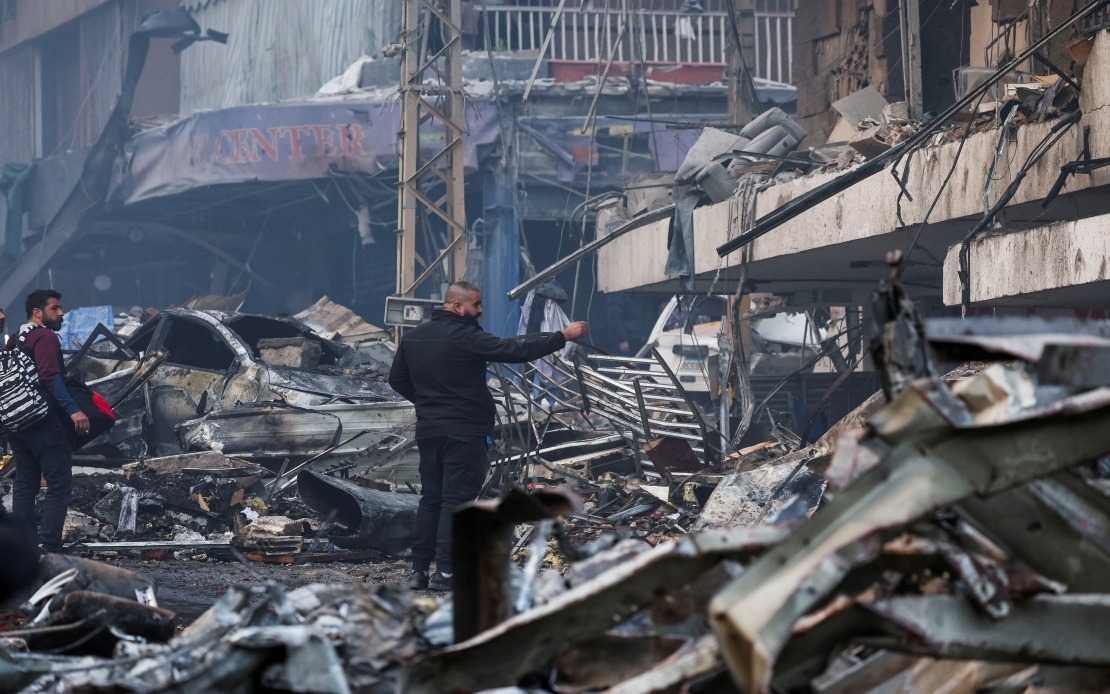
The United States has established a real-time monitoring mechanism through its military's Central Command to observe and document the ongoing conflict between Israel and Hezbollah in Lebanon, according to statements issued by American officials on Monday. The initiative represents a significant step in the Washington-led diplomatic effort to consolidate the ceasefire between the two parties and facilitate their movement toward a comprehensive peace agreement that addresses both security concerns and territorial sovereignty. The monitoring system will provide immediate visibility into military operations across the conflict zone, enabling rapid response to any violations or escalations that could undermine the fragile truce currently in place.
The decision to establish this tracking mechanism followed high-level telephone conversations held on Friday between US Secretary of State Marco Rubio and both Israeli Prime Minister Benjamin Netanyahu and Lebanese President Joseph Aoun. These discussions centred on reinforcing the existing ceasefire framework and preparing the groundwork for future bilateral negotiations aimed at achieving lasting stability in the region. A senior American official, speaking on condition of anonymity, emphasised that Washington views the resolution of this conflict as integral to broader regional peace efforts. The official stated that the shared objective among all parties is to break the cycle of violent escalation that has plagued the Lebanese-Israeli border for decades, allowing both nations to engage as independent sovereigns in pursuit of mutual security and development.
The timing of this announcement coincides with an intensive diplomatic push, as Israeli and Lebanese delegations were scheduled to arrive in Washington on June 23 for three days of direct negotiations mediated by American officials. These talks represent a rare opportunity for substantive dialogue between the two governments, with the potential to address underlying grievances and establish mechanisms for preventing future conflicts. The presence of both delegations in the US capital underscores the American commitment to facilitating a breakthrough, with officials promising that additional details regarding the monitoring mechanism and the broader diplomatic framework would be disclosed in the coming days. This diplomatic engagement reflects recognition among major powers that the Lebanon-Israel tensions, if left unchecked, could destabilise the entire eastern Mediterranean region and undermine efforts to address other pressing Middle Eastern crises.
Significantly, this bilateral American initiative operates in parallel with broader international efforts to establish a de-confliction framework in the region. Qatar and Pakistan, acting as mediators, released a joint statement on Sunday announcing that multiple parties had agreed to create a de-confliction cell that would include representation from the United States, Iran, and Lebanon. This tri-partite mechanism, facilitated through the mediation of Qatar and Pakistan, is designed to monitor compliance with the cessation of military operations in Lebanon as outlined in the Islamabad Memorandum of Understanding. The existence of multiple overlapping monitoring and mediation channels reflects the complex web of regional actors with stakes in Lebanon's stability, including Iran's influence through its support for Hezbollah and the Gulf states' competing interests in Lebanese political development.
The de-confliction arrangement emerged following the conclusion of direct talks between the United States and Iran held at the Burgenstock resort in Switzerland. These negotiations, which were conducted remotely, culminated in the signing of a memorandum of understanding that establishes a 60-day window for resolving outstanding disputes between Washington and Tehran. The scope of these negotiations extends beyond the immediate Lebanon situation, encompassing Iran's enriched uranium stockpile, the future trajectory of its nuclear programme, and other longstanding contentious issues that have poisoned relations between the two countries for more than four decades. The agreement to establish a de-confliction mechanism specific to Lebanon demonstrates Washington's recognition that de-escalation in that country requires coordination not only with local parties but also with major regional powers whose strategic interests and client relationships shape the political landscape.
The 14-point framework agreed upon between the US and Iran contains several provisions with direct implications for regional stability and international maritime commerce. Most notably, the understanding calls for an immediate and comprehensive cessation of all military operations across all fronts, with specific emphasis on ending hostilities in Lebanon where Hezbollah has engaged in sustained exchanges with Israeli forces. Additionally, the agreement provides for the removal of the American naval blockade on Iran, a measure that has severely constrained Iranian economic activity and contributed to internal political tensions. The memorandum also guarantees safe passage for commercial shipping through the Strait of Hormuz, one of the world's most critical maritime chokepoints through which approximately one-third of global sea-borne oil transits, making this provision crucial for global energy security and international commerce.
For Malaysian policymakers and observers, these developments carry significant implications for regional security architecture in Southeast Asia and beyond. The successful establishment of multiple monitoring mechanisms and de-confliction arrangements in the Middle East offers potential models for conflict prevention and crisis management in other regions where tensions between major powers and their allies threaten stability. Malaysia, as an active participant in regional forums and a voice for developing nations in international affairs, has long advocated for multilateral approaches to conflict resolution that respect the sovereignty and security concerns of all parties involved. The American-led initiative in Lebanon, coupled with the broader US-Iran dialogue framework, demonstrates how sustained diplomatic engagement can create conditions for de-escalation even in deeply polarised conflicts where direct communication between adversaries has been limited or non-existent.
The establishment of real-time monitoring capabilities also raises important questions about transparency, verification, and the effectiveness of international monitoring mechanisms in the modern era. The involvement of CENTCOM, Qatar, Pakistan, and various national governments in overlapping monitoring arrangements requires sophisticated coordination protocols to ensure that intelligence gathered by one entity is appropriately shared with others while respecting legitimate security concerns. This complexity reflects the reality that effective conflict management in the contemporary world requires unprecedented levels of international cooperation, technical sophistication, and political commitment from parties that may harbour competing strategic objectives. The willingness of the United States to share real-time military intelligence with Lebanon, a country where Hezbollah exercises considerable political influence, represents a calculated diplomatic gambit aimed at building confidence and demonstrating American commitment to Lebanese sovereignty and development.
Looking forward, the success or failure of these parallel diplomatic and monitoring initiatives will likely determine whether the ceasefire in Lebanon evolves into a durable peace settlement or whether the region faces renewed conflict within months. The 60-day negotiating window established through the US-Iran memorandum of understanding provides a defined timeframe within which substantive progress must be achieved on multiple fronts, creating incentives for all parties to engage seriously while maintaining the security arrangements currently in place. Should these negotiations succeed, the outcome could establish important precedents for managing other regional conflicts and could potentially reshape the strategic balance across the Middle East. Conversely, failure to achieve concrete results within the specified timeframe risks eroding confidence in multilateral diplomatic processes and potentially triggering renewed escalation cycles that could draw in external powers and destabilise the broader region. The international community, including Southeast Asian nations with important economic and strategic interests in Middle Eastern stability, will be monitoring these developments closely as indicators of the viability of multilateral conflict resolution in an increasingly multipolar world.

