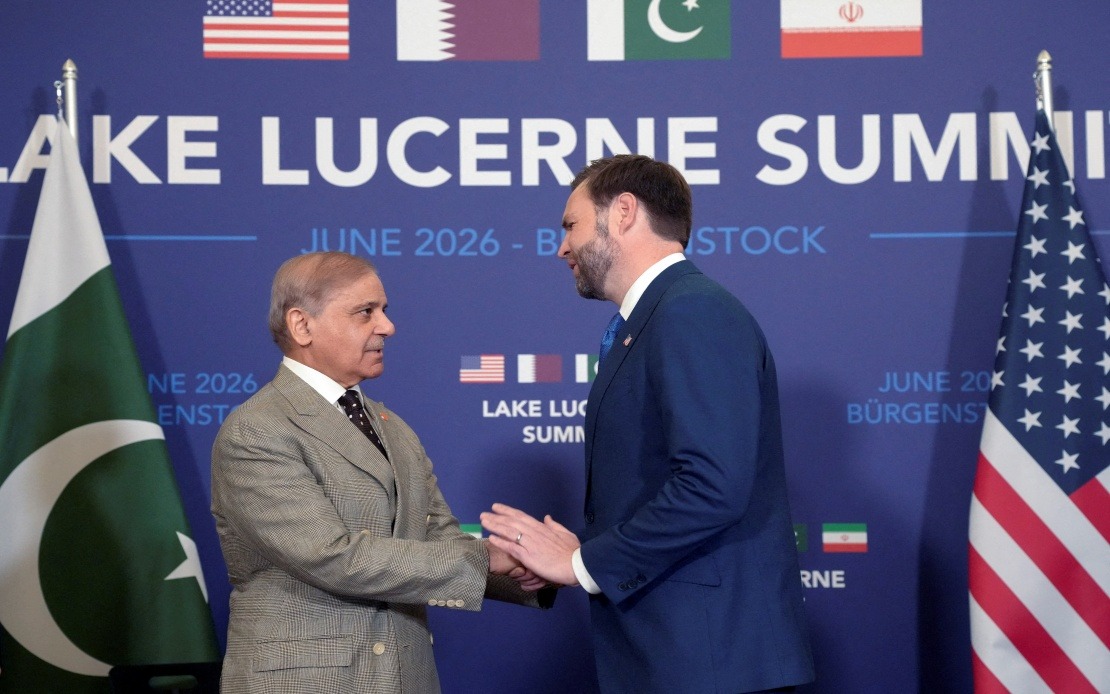
Diplomatic activity accelerated in Switzerland as Vice President JD Vance, alongside special envoys Steve Witkoff and Jared Kushner, commenced bilateral discussions with Pakistan's Prime Minister Shehbaz Sharif and Pakistan Army Chief Field Marshal Asim Munir at the Burgenstock resort on Sunday, June 21. The encounter took place on the periphery of more expansive nuclear negotiations between the United States and Iran, with Pakistan and Qatar serving as intermediary nations in the process.
The timing of this Pakistan-US engagement reveals Washington's broader strategic calculus in the region. By convening at Burgenstock simultaneously with Iran talks, the US administration signals to Islamabad that Pakistan's role as a mediator carries diplomatic weight and merits high-level engagement. For Pakistan, participation alongside Qatar positions it as a crucial player in restructuring Middle Eastern geopolitics—a status that carries both prestige and responsibility in navigating its complex relationships with both the US and Iran.
Underlying these discussions is a nascent framework for resolving US-Iran tensions that escalated dramatically on February 28. Just three days before the Burgenstock gathering, Washington and Tehran quietly executed a memorandum overnight into June 18, establishing the parameters for a military ceasefire. This document represents a substantial diplomatic breakthrough, transforming rhetoric into concrete timelines and commitments that both parties have begun implementing.
The agreement establishes specific mechanisms for de-escalation, particularly regarding the contested waters of the Strait of Hormuz. The US commits to removing its naval blockade—a significant constraint on Iranian maritime commerce—while Iran simultaneously agrees to restore shipping operations through this critical international waterway. For Southeast Asian nations including Malaysia, the Strait of Hormuz remains vital to regional trade flows; any disruption reverberates through global energy markets and shipping insurance costs that directly affect Malaysian importers and exporters.
Nuclear proliferation concerns form the centrepiece of the broader negotiation architecture. Iran has committed not to develop nuclear weapons, shifting the question from whether Tehran will pursue atomic armaments to how international verification mechanisms will ensure compliance. This distinction carries profound implications for regional stability. Malaysia and other Southeast Asian states benefit from frameworks that constrain nuclear weapons proliferation, as any escalation in the Middle East increases unpredictability affecting regional security partnerships.
The agreement establishes a 60-day window for substantive negotiations on Iran's nuclear programme, during which technical experts from all parties will thrash out details that the June 18 memorandum left deliberately vague. These technical-level talks commenced at Burgenstock on Sunday, conducted behind closed doors and mediated by both Pakistan and Qatar. The confidential nature reflects both the sensitivity of nuclear matters and the negotiators' desire to avoid domestic political interference that public proceedings might invite.
Sanctions represent the reciprocal incentive structure binding this agreement. For Tehran, the ultimate prize involves lifting comprehensive anti-Iran sanctions that have choked the country's economy for years. The petrochemical, aviation, and financial sectors particularly suffer under current restrictions. By linking sanctions relief to verifiable nuclear concessions, Washington creates measurable benchmarks against which compliance can be assessed—though regional analysts note that previous US administrations have sometimes reversed course on sanctions agreements, creating credibility challenges.
Pakistan's inclusion in these proceedings underscores its geographic and geopolitical significance. As a nuclear weapons state with substantial influence in Afghanistan and deep historical ties to both the US and Iran, Islamabad commands leverage in regional diplomacy that few other nations possess. Pakistan's participation signals to both Washington and Tehran that any durable regional arrangement requires buy-in from major stakeholders, not merely bilateral US-Iran accommodation. For Malaysian observers, this emphasizes how regional powers shape global negotiations affecting shared security concerns.
The diplomatic choreography evident in Burgenstock reflects nuanced sequencing. The ceasefire memorandum preceded technical negotiations, establishing the principle that military conflict would cease while experts addressed thorniest issues. By staging Pakistani-US talks alongside these negotiations, rather than before or after, Washington demonstrates commitment to stakeholder engagement rather than imposing settlements unilaterally. This approach differs markedly from previous US interventions in Middle Eastern affairs and may offer lessons for other regional disputes.
Implementation challenges loom prominently. The naval blockade removal and Strait of Hormuz shipping restoration require military-to-military coordination and verification mechanisms that prove more complex than documentary agreement. Iranian compliance with nuclear commitments depends on international inspection regimes that must navigate sovereignty concerns and mistrust accumulated over decades of hostility. Pakistan's role extending beyond mediation to active enforcement or verification capacity remains undefined but potentially consequential.
For Malaysia specifically, these developments carry several implications. The Strait of Hormuz stabilization reduces geopolitical risk premiums affecting energy prices and shipping costs that Malaysian businesses and consumers ultimately bear. Enhanced US-Iran engagement may reduce military buildups that destabilize regional maritime security, benefiting Southeast Asian nations dependent on freedom of navigation. Conversely, if negotiations falter, the return to confrontation could trigger regional realignment pressures affecting Malaysia's strategic partnerships and economic ties.
The Burgenstock talks represent an inflection point in Middle Eastern diplomacy, where military conflict shifts toward negotiated resolution through patient technical engagement. Whether this framework endures or becomes merely a diplomatic interregnum remains uncertain, but the participatory approach involving Pakistan and Qatar suggests a recognition that durable regional settlements require broad stakeholder involvement rather than narrow great power agreements.

