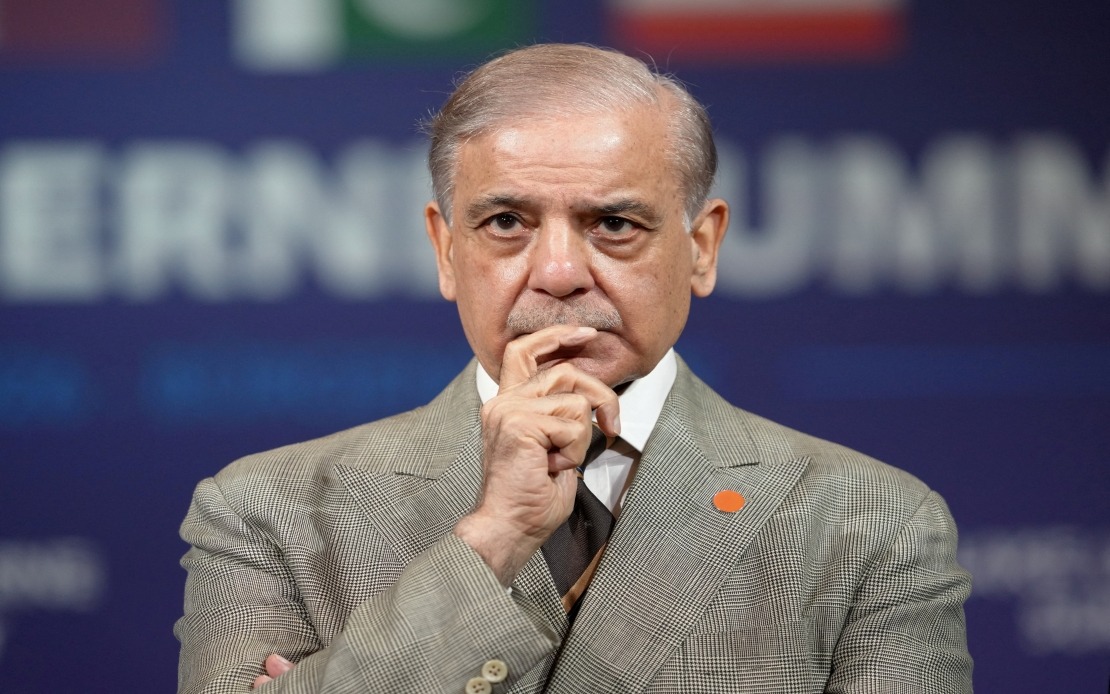
Pakistan's Prime Minister Shehbaz Sharif has signalled significant diplomatic momentum in the long-fractured relationship between the United States and Iran, announcing that both nations will undertake intensive technical-level negotiations within a 60-day window to address longstanding disputes over nuclear capabilities, missile programmes, and Iranian financial assets frozen abroad. Speaking to lawmakers in the National Assembly in Karachi on Tuesday, Sharif outlined an ambitious agenda that represents a potential turning point in one of the world's most intractable geopolitical conflicts.
The framework for these discussions emerged from talks held in Burgenstock, Switzerland, which concluded early Monday with both sides committing to a structured roadmap for future engagement. The negotiations operated under the Islamabad Memorandum of Understanding, which the US and Iran jointly signed on June 17, with Pakistan playing a formal mediating role alongside Qatar. Sharif characterised the progress achieved in Switzerland as historic, emphasising that the two adversarial powers have moved beyond preliminary discussions to outline concrete mechanisms for advancing toward a final comprehensive agreement.
Sharif's optimism centres on transforming the current memorandum into a durable, long-term accord within the 60-day timeframe. His statement to the National Assembly underscores Pakistan's strategic investment in regional stability, as protracted US-Iran tensions directly affect Pakistani interests across multiple domains including regional security architecture, international sanctions regimes, and cross-border dynamics. The decision to position Pakistan as an official mediator reflects Islamabad's diplomatic aspirations and its geographic position as a bridge between Middle Eastern and broader Asian geopolitical currents.
However, Tehran's immediate response introduces significant complications to the optimistic narrative. Iran's Foreign Ministry spokesman Esmaeil Baghaei on Tuesday categorically denied that ballistic missile capabilities featured in the Switzerland discussions, effectively signalling red lines that Tehran intends to maintain. This assertion carries substantial weight, as missile development has historically constituted one of the most contentious elements dividing Iran and the United States, particularly regarding Iran's regional power projection and the concerns of Israel and Gulf Arab states.
Baghaei's statements further clarified that Iran firmly opposes allowing International Atomic Energy Agency inspectors access to nuclear facilities that were targeted during military operations by the United States and Israel against Iranian installations. This position encapsulates Tehran's fundamental sovereignty concerns and its refusal to grant external monitoring regimes authority over defence infrastructure. The distinction between facilities attacked and those potentially subject to inspection represents a critical negotiating boundary that the IAEA and Western powers must navigate carefully during the upcoming 60-day period.
The frozen assets dimension of the negotiations addresses another long-standing grievance animating US-Iran tensions. Substantial Iranian financial resources have remained immobilised in international banking systems and foreign central banks, particularly following the implementation of comprehensive sanctions regimes. Resolving these asset disputes carries implications extending beyond bilateral relations, affecting Iran's capacity to participate in international commerce and its ability to address domestic economic challenges that have fuelled internal political pressures.
For Malaysia and Southeast Asia, these developments warrant careful attention for several reasons. Regional stability hinges partly on managing great power competition in the Middle East, as disruptions there reverberate through global energy markets, maritime security corridors, and broader geopolitical alignment patterns that affect Asian nations. Secondly, if substantive progress materialises, it could reshape international sanctions architecture and diplomatic precedents relevant to regional actors navigating comparable tensions with major powers. Malaysia's own experiences with nuclear diplomacy and mediation efforts position the nation as a stakeholder in successful conflict resolution methodologies.
The 60-day negotiating window represents neither a guarantee of success nor a sufficient timeframe for resolving disputes that have accumulated over decades. The structural complexity of these issues—involving nuclear inspections, ballistic missile capabilities, economic sanctions, and historical grievances—resists compression into such abbreviated timelines. Conversely, establishing interim agreements and mechanisms during this period could establish momentum for subsequent negotiating phases, even if comprehensive settlements remain elusive.
Pakistan's role as mediator carries both opportunity and risk. Success would enhance Islamabad's diplomatic credentials and influence in regional affairs, potentially positioning Pakistan as an indispensable broker for other contentious negotiations. Failure or perceived bias toward either party could damage Pakistan's carefully balanced regional positioning and its efforts to maintain strategic flexibility amid broader US-China-Russia triangulation affecting South Asian security environments.
The Switzerland talks' structured format—involving technical experts rather than high-level political figures—suggests both parties recognise the necessity of sustained engagement grounded in detailed problem-solving rather than symbolic gestures. This approach offers genuine diplomatic advantages, as technical discussions permit detailed exploration of verification mechanisms, implementation sequencing, and reciprocal confidence-building measures that political statements cannot address.
Yet the gap between what Sharif described as agreed outcomes and what Tehran is now claiming about the scope and content of negotiations indicates significant interpretation differences persisting even at this preliminary stage. These divergences must be resolved during the coming 60 days, as misaligned expectations regarding negotiating parameters could derail the entire process before substantive progress becomes possible.
The international community, including Southeast Asian observers, should monitor this negotiating sequence closely. Developments affecting US-Iran relations influence energy security, sanctions enforcement mechanisms applicable to other states, and the broader question of whether sustained diplomatic engagement can address deep-rooted international conflicts. Success here, however partial, could offer instructive lessons for addressing other regional disputes and for understanding the conditions enabling adversarial powers to engage constructively despite profound historical differences.

