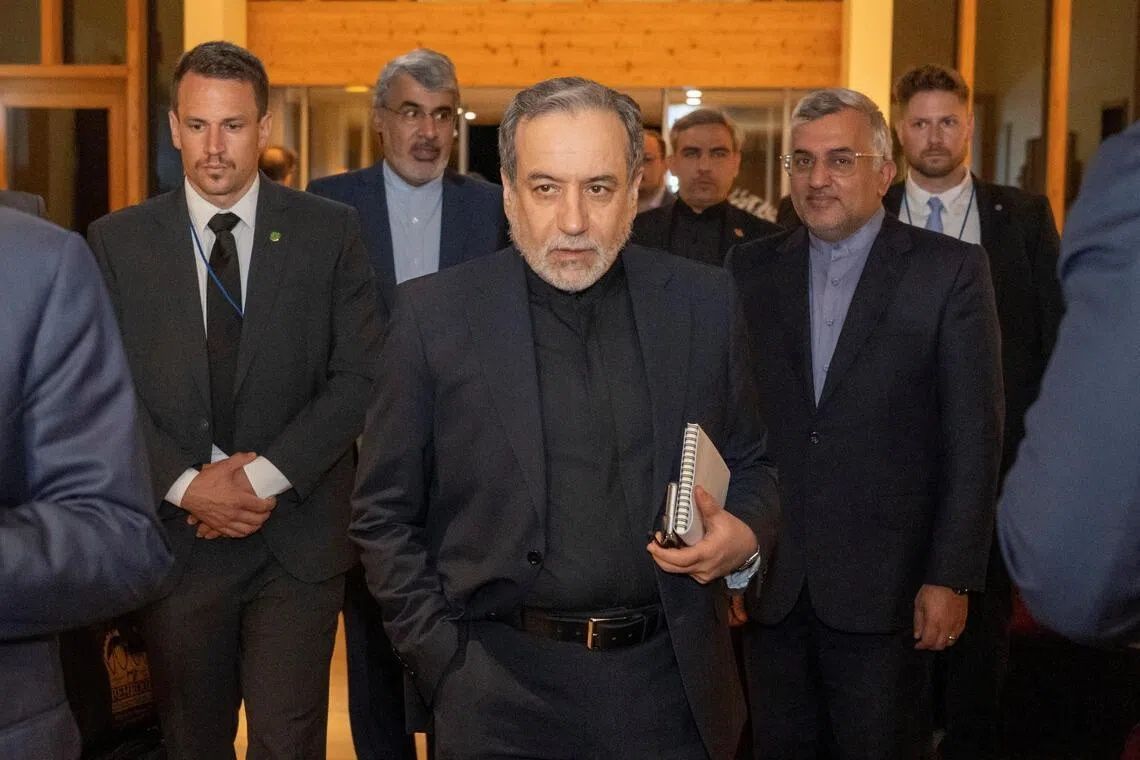
The highest-level diplomatic engagement between the United States and Iran in months has formally begun at the Buergenstock resort in Switzerland, marking a pivotal moment in efforts to end their four-month military confrontation. Vice President JD Vance arrived on Sunday morning to lead the American negotiating team, facing Iranian chief negotiator Mohammad Baqer Qalibaf across the table at the mountaintop facility, which sits nestled in the Swiss Alps behind multiple security checkpoints and armed guard posts. The two nuclear-armed nations have committed to a 60-day ceasefire to allow diplomats breathing room, though the first hours of talks have already been shadowed by sharp disagreements over whether Iran has genuinely closed the Strait of Hormuz and disputes surrounding the fragile Lebanon truce.
The geopolitical stakes extend far beyond bilateral US-Iran relations into the heart of global energy security and regional stability. Roughly one-fifth of the world's crude oil normally transits through the Strait of Hormuz, a chokepoint that connects Middle Eastern producers to international markets and remains critical to economies from South Korea to Singapore. On Saturday, Iran's Islamic Revolutionary Guard Corps issued declarations claiming the strait had been sealed in response to Israeli military operations in Lebanon, yet American military officials contradicted this assertion, noting that 55 commercial vessels successfully moved through the waterway carrying approximately 17 million barrels bound for global consumption. This fundamental disagreement about basic facts—whether a vital energy corridor remains open—underscores the deep mistrust poisoning negotiations and hints at the difficulty of verifying compliance even as both sides claim they want peace.
Vance had previously indicated optimism about the talks, telling reporters at Joint Base Andrews in Maryland that he expected progress on nuclear issues and the Lebanon ceasefire within a couple of days. However, the negotiating environment has deteriorated considerably since both Presidents Donald Trump and Masoud Pezeshkian signed an interim agreement brokered by Pakistan on Wednesday. Despite the announced ceasefire, Israeli military forces and the Iran-backed militant group Hezbollah exchanged fire repeatedly on Saturday, with Lebanese health ministry officials documenting 20 deaths from Israeli strikes in the hours immediately following the purported truce. This pattern of continued violence suggests that parties on the ground have not received clear orders to stand down, or that the ceasefire remains too ambiguous for military commanders to implement confidently.
Iranian officials have seized upon these violations to challenge American good faith and demand concrete implementation of the agreement's terms. Mohammad Mokhber, an adviser to Iran's supreme leader Ayatollah Mojtaba Khamenei, argued that the ceasefire remains merely ink on paper without genuine cessation of hostilities on all fronts. He contended that until the agreement's 14 provisions—including complete cessation of fighting in Lebanon—are genuinely observed, Iran will not permit the energy sector to resume normal operations, effectively making energy flows a bargaining chip in ongoing negotiations. This linkage between military compliance and economic reopening has profound implications for Malaysia and Southeast Asia, where economies remain vulnerable to petroleum price shocks originating from Middle Eastern supply disruptions.
President Trump has attempted to add another dimension to negotiations by declaring that any future toll for Strait of Hormuz passage would represent compensation for American military protection. In social media statements, he characterised American forces as the "Guardian Angel to the countries of the Middle East" and suggested that if peace negotiations fail, the United States might impose fees for naval convoy services—a prospect that would transform the strait from an internationally regulated passage into a privatised American revenue source. This rhetorical shift has alarmed energy-importing nations worldwide and added uncertainty about post-conflict arrangements, particularly for countries like Malaysia that depend on reliable, affordable oil supplies from the Gulf.
The composition of negotiating delegations reveals the intensity with which both capitals approach these discussions. The American team includes not merely Vance but also Trump's son-in-law Jared Kushner and special envoy Steve Witkoff, reflecting the administration's personal investment in achieving a settlement. Iran fielded Foreign Minister Abbas Araqchi alongside senior officials from the security apparatus, central bank, and oil ministry, signalling that economic and strategic considerations weigh equally with diplomatic protocol. Pakistan's Prime Minister Shehbaz Sharif and military chief Field Marshal Syed Asim Munir also travelled to Switzerland, emphasising the regional stakeholder role that Islamabad has cultivated through its mediation efforts. The Qatari ownership of the resort itself underscores the critical role Gulf state mediators continue to play in facilitating dialogue between adversaries.
Israeli public opinion presents an additional complication that neither American nor Iranian negotiators can ignore. A Hebrew University poll circulated to international media found that 92 percent of Israelis believe Iran secured superior advantages from the joint Israeli-American military campaign, while just 8 percent view Israel's outcome as victorious. Nearly 90 percent of Israeli respondents stated that war objectives remained unmet, and fewer than 30 percent credit Prime Minister Benjamin Netanyahu's claims of significant achievement. This domestic scepticism in Israel matters because the Israeli government, while not formally party to the US-Iran agreement, maintains the capacity to sabotage negotiations through continued military operations in occupied Lebanese territory. Netanyahu's government has declared it will not withdraw from captured Lebanese areas and reserves the right to respond to perceived threats, creating conditions where surprise Israeli strikes could unravel the ceasefire framework.
The humanitarian toll of the conflict, measured in Lebanese casualties, adds moral weight to demands for genuine implementation. Lebanese health authorities document 4,057 deaths since Israeli operations intensified on March 2, including medical personnel, women, and children, though the casualty classification between combatants and non-combatants remains disputed. Israeli authorities acknowledge at least 32 soldiers and four civilians killed in Hezbollah-related fighting, a vastly lower figure that reflects asymmetrical warfare dynamics. These human costs explain why Lebanese political factions, though absent from the Swiss negotiating table, maintain intense interest in ceasefire durability and why any appearance of continued Israeli military activity despite truce announcements generates immediate accusations of bad faith.
The nuclear dimension of these talks, which formed the original basis for American-Iranian hostilities, remains carefully compartmentalised from the immediate ceasefire negotiations. Vance mentioned progress on "the nuclear issue" as an objective of the Swiss talks, yet the agreement signed Wednesday appears to address war termination and Hormuz access rather than the underlying disagreement about Iranian nuclear enrichment that originally triggered American sanctions and military pressure. This suggests negotiators are attempting to create sufficient stability and trust through ceasefire implementation before tackling the more intractable question of nuclear programme constraints—a sequencing strategy that risks addressing symptoms while leaving root causes unresolved.
Iranian Oil Minister Mohsen Paknejad has dangled significant economic incentives, suggesting that hundreds of investment opportunities and contract opportunities await international partners willing to work with Tehran once peace stabilises. This signals Iranian interest in ending isolation and reintegrating into global energy markets, a powerful motivation that could incline Tehran toward honouring ceasefire commitments. However, the minister's conditional language—stipulating that "Western stakeholders" must adhere to the "spirit" of the pact—suggests Iran retains leverage it may exercise if perceived violations accumulate. For regional energy markets and economies dependent on Gulf stability, the critical test arrives within the 60-day window when both sides must demonstrate sufficient restraint and compliance to warrant broader normalisation.
The success or failure of negotiations will fundamentally reshape Middle Eastern geopolitics and reverberate through global energy markets affecting Malaysia and ASEAN partners. If the ceasefire holds and nuclear discussions yield compromise, the region could stabilise and oil production could resume at pre-conflict levels, reducing the risk premium embedded in crude prices. Conversely, if disputes over Hormuz access, Lebanese compliance, or nuclear commitments trigger renewed violence, the international community faces renewed supply disruptions and strategic instability. Malaysia's particular vulnerability stems from energy import dependence and regional security interests tied to freedom of navigation in Southeast Asian waters, where broader Middle Eastern conflicts create precedents for maritime coercion and passage restrictions that could eventually affect regional sea lanes.

