The United Kinabalu Progressive Organisation has crossed a significant political threshold in Sabah, gaining formal acceptance into the Gabungan Rakyat Sabah coalition following approval of its membership application. The development, confirmed in Kota Kinabalu on June 19, expands the state-based political bloc to six component parties and represents a consolidation of local Sabahan political interests under the administration of Chief Minister Datuk Seri Hajiji Noor.
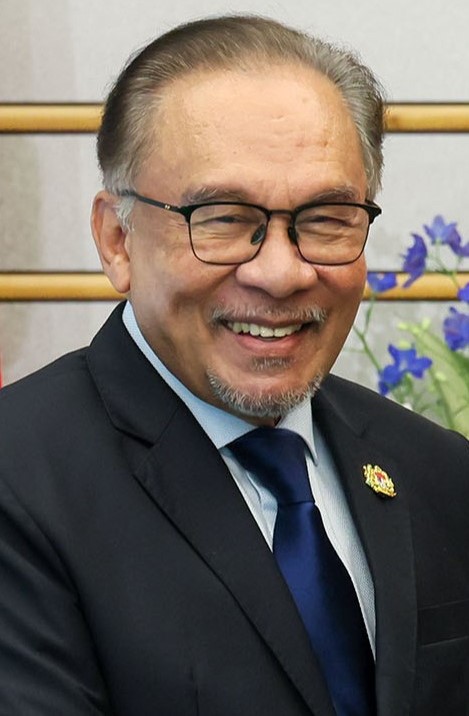
UPKO president and Sabah Deputy Chief Minister Datuk Ewon Benedick articulated the party's commitment to contributing resources and political capital toward strengthening the coalition's governance framework across the state. His statement underscored the party's intention to align its organisational machinery and policy objectives with the broader GRS agenda, which seeks to position locally-rooted parties as the primary vehicle for articulating Sabahan interests within Malaysia's federal system.
Ewon's framing of the coalition as the natural political home for Sabah-based organisations carries substantial symbolic weight. By characterising GRS as the singular coalition composed entirely of local parties, he positioned membership as more than transactional alliance-building, instead suggesting an ideological commitment to parties with organic roots in the state's political ecosystem. This distinction matters in Sabah's political context, where historical experiences with federal-level parties have sometimes generated tensions over resource allocation and policy autonomy.
The explicit invocation of the Malaysia Agreement 1963 in Ewon's remarks reflects a deliberate rhetorical strategy. The agreement, which established the terms under which Sabah joined the Malaysian federation, remains a foundational reference point for political discourse in the state. By tying UPKO's participation to the spirit of MA63, Ewon attempted to frame coalition membership as consistent with Sabahan constitutional interests and developmental sovereignty, rather than merely partisan positioning.
GRS now encompasses the United Kinabalu Progressive Organisation alongside Parti Gagasan Rakyat Sabah, Parti Bersatu Sabah, Parti Liberal Demokratik, Parti Harapan Rakyat Sabah, and Parti Cinta Sabah. This configuration creates a coalition of exclusively state-level parties, each with distinct organisational histories and constituencies. The expansion to six members suggests ongoing success in consolidating fragmented state-level political forces into a unified administrative vehicle.
The timing of UPKO's accession carries relevance for Malaysian federalism more broadly. Sabah has historically experienced volatile political alignment patterns, with party-switching and coalition realignments occurring with relative frequency. The consolidation of local parties within a single state-based framework potentially reduces the fluidity that has characterised recent decades of Sabah politics. Stability in state coalition structures can facilitate longer-term planning and implementation of developmental objectives.
Ewon's call for broader Sabahan unity around the GRS platform, organised under the aspirational slogan "Sabah First, Sabah Prosper, Sabah United," represents an attempt to transcend narrow partisan identity and appeal to a wider constituency mobilised by state-level interests. This rhetorical move, particularly the emphasis on "Sabah First," echoes longer historical narratives about state autonomy and development within the Malaysian federation.
For Malaysian observers, UPKO's integration into GRS illustrates an ongoing pattern of state-level coalition construction designed to contest federal-level influence. The coalition model, by aggregating multiple local parties under unified leadership, theoretically amplifies Sabah's collective negotiating power in federal forums and cabinet resource allocation. Chief Minister Hajiji's leadership of GRS thus potentially extends his influence beyond direct parliamentary numbers, incorporating the organisational structures of six separate political entities.
The Deputy Chief Minister's explicit appreciation toward Hajiji as GRS chairman and Supreme Council member suggests a formalisation of hierarchical authority structures within the coalition. UPKO's acceptance appears to have operated through vertical channels rather than horizontal negotiation, with leadership approval determining coalition membership. This centralised decision-making model may facilitate coordination but could also concentrate power in ways that affect longer-term coalition cohesion should leadership dynamics shift.
The expansion also reflects strategic calculations about electoral mathematics and representation. Each additional component party potentially brings distinct voter constituencies and geographic strongholds, broadening the coalition's reach across Sabah's diverse communities. For UPKO specifically, membership offers access to the administrative apparatus of state government and enhanced influence over policy implementation in areas where the party holds electoral presence.
Sabah's political trajectory over coming months will likely involve consolidation efforts designed to deepen GRS integration and prevent defections. The coalition model depends on member parties perceiving tangible benefits from continued association, whether through ministerial positions, development fund allocations, or enhanced legislative influence. How GRS manages internal resource distribution among six parties will substantially determine whether the coalition strengthens or eventually fractures.
The coalition arrangement also positions GRS as a potential model for political organisation in other Malaysian states with fragmented local party systems. The principle of aggregating state-level parties around a unifying administration and vision offers an alternative to dependence on federal-level party structures, though the model's sustainability remains contingent on sustained elite cohesion and effective governance delivery that justifies voter confidence in the unified framework.