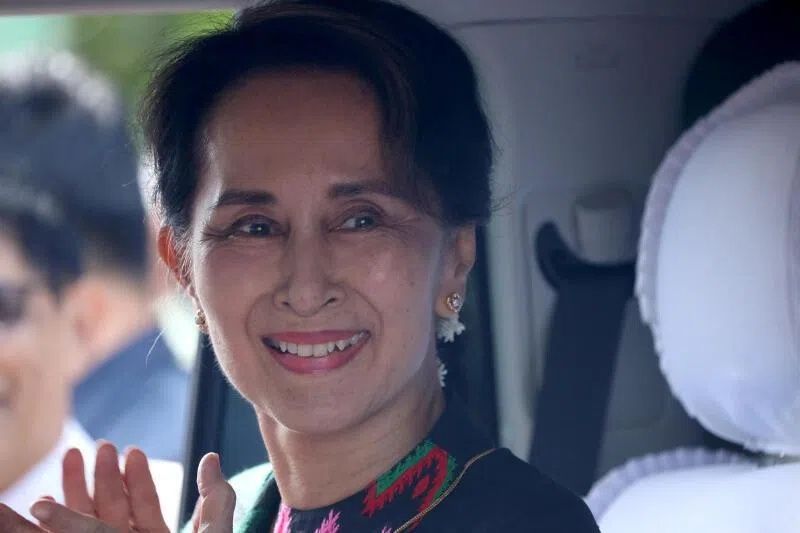
The United Nations special envoy for Myanmar has intensified diplomatic pressure for the release of democracy icon Aung San Suu Kyi, marking her 81st birthday while she remains imprisoned under military rule. Julie Bishop made the urgent appeal on Friday at UN headquarters in Washington, addressing member states just weeks after her fourth mission to the Southeast Asian nation. The timing of her intervention underscores growing international frustration with the detention of one of the world's most prominent political prisoners, whose confinement has persisted despite changing the format of her captivity from full incarceration to house arrest.
Bishop's statements highlighted the peculiar circumstances surrounding Suu Kyi's current status, which officially shifted in April when junta leader Min Aung Hlaing announced a transition to house arrest for the Nobel Peace Prize recipient. However, this administrative change has done little to clarify her actual whereabouts or living conditions. The special envoy's repeated visits to Myanmar's military-controlled government have yielded no substantial improvements or transparency regarding the former state counsellor's treatment. Her calls for immediate release reflected a broader international consensus that Suu Kyi's continued detention represents a fundamental obstacle to political reconciliation and democratic restoration in Myanmar.
The geopolitical significance of Suu Kyi's case extends beyond her individual circumstances. For Malaysian and regional observers, her imprisonment symbolises the fragility of democratic institutions and the ease with which military forces can dismantle elected governments in Southeast Asia. Suu Kyi's National League for Democracy swept the November 2020 elections by overwhelming margins, establishing a decisive popular mandate that the military subsequently annulled through force. The subsequent sentencing to more than 30 years in prison on various charges remains widely viewed internationally as politically motivated justice designed to prevent her political rehabilitation.
Bishop's assertion that she has received no independent verifiable reports about Suu Kyi's circumstances for years represents a significant diplomatic concern. The absence of transparent information about the condition and location of a detained world leader raises questions about the military junta's compliance with basic humanitarian standards. This informational void has prompted her son, Kim Aris, to publicly demand proof of his mother's survival, indicating that even family members lack reliable access to information about the 81-year-old's status. Such uncertainty amplifies concerns about her vulnerability and the potential for deterioration in her health without proper medical care or family contact.
The military takeover in February 2021 fundamentally altered Myanmar's political trajectory and sent shockwaves through a region increasingly concerned about democratic backsliding. The coup occurred despite widespread public opposition and international condemnation, demonstrating the armed forces' willingness to override civilian authority and electoral outcomes. Suu Kyi's government had pursued cautious reforms while maintaining military dominance in constitutional arrangements, yet this compromise proved insufficient to prevent the intervention. Her detention thus serves as a cautionary tale for other Southeast Asian democracies about the persistent influence of military establishments and the incomplete nature of democratic transitions in the region.
Bishop's framing of Suu Kyi's detention as an impediment to peace represents a crucial shift in international discourse. Rather than treating her case as solely a human rights issue, the special envoy positioned her release as essential for political progress and national reconciliation. This argument carries particular weight in diplomatic circles, where the restoration of democratic governance and civilian authority is increasingly recognized as prerequisite for stability. The Myanmar crisis has generated regional displacement, with hundreds of thousands seeking refuge in neighbouring countries including Thailand, Bangladesh, and Malaysia, creating humanitarian consequences that extend well beyond Myanmar's borders.
Regional powers and Southeast Asian nations face delicate diplomatic calculations regarding Myanmar. The Association of Southeast Asian Nations has maintained a policy of non-interference while simultaneously expressing concern about developments, creating tensions between diplomatic principles and humanitarian imperatives. Malaysia and other ASEAN members have refrained from imposing severe economic sanctions or deepening isolation, partly reflecting concerns about China's growing influence and Myanmar's strategic location. Suu Kyi's case has become increasingly entangled with these broader geopolitical considerations, though her personal circumstances remain distinct from interstate calculations.
The military junta's creation of elections that excluded the democratic opposition represented a calculated effort to establish legitimate veneer for authoritarian rule. Min Aung Hlaing's subsequent presidential assumption reflected this strategy of managing political processes while maintaining military control over fundamental power structures. This approach mirrors patterns observed elsewhere in Southeast Asia where formal democratic institutions coexist with deep military prerogatives. Suu Kyi's imprisonment ensures that the National League for Democracy remains unable to effectively mobilise opposition or challenge the junta's authority, effectively decapitating the most credible alternative to military governance.
Internationally, Suu Kyi's case has transcended her individual identity to become emblematic of broader struggles between democracy and authoritarianism. Her decades of political activism, personal sacrifices, and the global recognition represented by the Nobel Peace Prize have created a constituency for her release extending far beyond Myanmar. However, the military's apparent indifference to international pressure suggests that diplomatic appeals alone are unlikely to alter the junta's calculations. The absence of viable economic leverage, combined with Myanmar's strategic importance to regional powers, leaves external actors with limited tools to influence outcomes.
The humanitarian dimensions of Suu Kyi's detention extend to her family's situation and the broader population experiencing military rule. Her isolation from family members, including her son who resides abroad, represents a form of psychological punishment that compounds the physical constraints of her incarceration or house arrest. The broader population continues experiencing restrictions on freedoms, economic deterioration, and ongoing conflict in border regions, creating a compound crisis that affects tens of millions of Myanmar's inhabitants. Suu Kyi's status as a symbol of resistance and democratic hope means her continued imprisonment perpetuates broader narratives of hope suppression and authoritarian consolidation.

