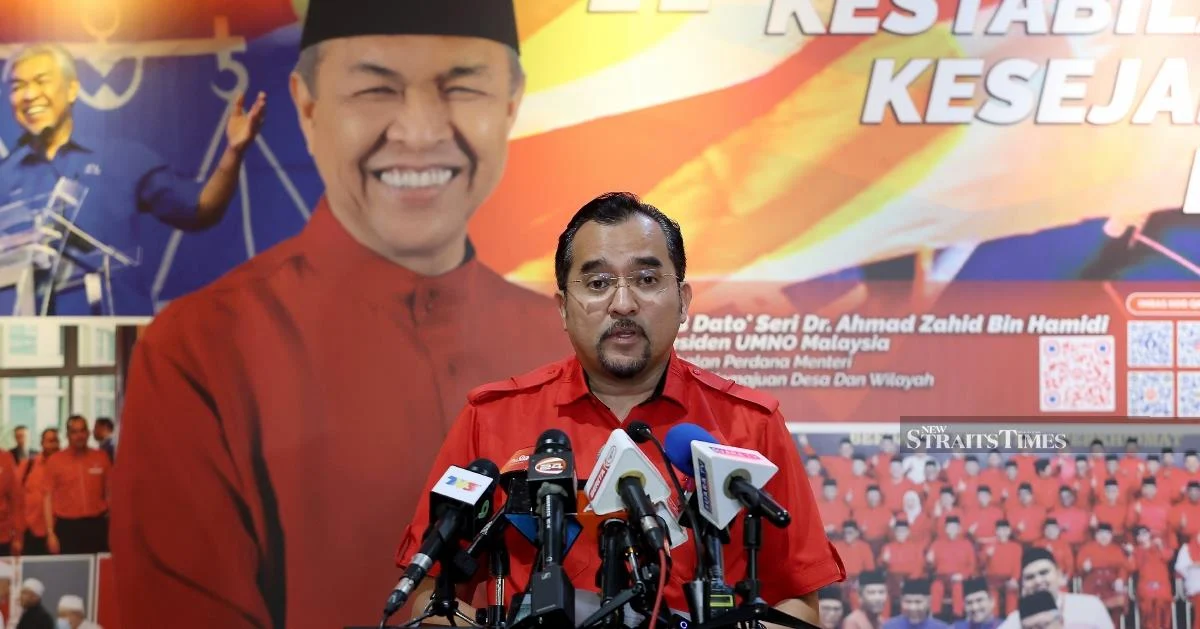
Umno will pursue campaigns grounded in substantive policy discussions rather than negative personal attacks in the forthcoming Johor and Negri Sembilan state elections, party secretary-general Datuk Dr Asyraf Wajdi Dusuki stated on Tuesday. The commitment represents an explicit pledge to maintain what the party leadership considers a more dignified and constructive approach to electioneering, shifting focus toward concrete proposals that address voter concerns across both states.
The announcement underscores a strategic repositioning by Umno as it prepares for simultaneous contests in these two significant peninsular states. By framing the electoral discourse around policy outcomes and tangible benefits for residents, the party is attempting to establish a distinction between its campaign methodology and what it may view as less principled approaches by rival political organisations. This framing particularly matters in Malaysian electoral politics, where voter sentiment has increasingly turned against perceived negativity and personal antagonism in public discourse.
For Johor, one of the nation's most developed states and historically a Umno stronghold, the party faces particular pressure to demonstrate effective governance and forward-thinking solutions. The state has experienced considerable economic expansion and infrastructure development, and voters are likely to measure candidates and parties against records of delivery. Similarly, Negri Sembilan, which encompasses diverse demographic groups and industrial sectors, requires tailored policy messaging that addresses localised economic opportunities and community priorities. Both states present distinct opportunities for Umno to showcase how its policy agenda aligns with regional development trajectories.
The pledge of clean campaigning arrives against a backdrop of Malaysian politics characterised by increasingly fractious inter-party competition and occasional recourse to inflammatory rhetoric. Political analysts have noted that Malaysian voters, particularly younger and better-educated cohorts, express greater receptiveness to candidates and parties that articulate detailed policy positions rather than engaging in character assassination or personal disparagement. By consciously distancing itself from mudslinging tactics, Umno may be attempting to capture this constituency sentiment and rebuild perceptions of the party as a serious custodian of effective governance.
Datuk Dr Asyraf Wajdi Dusuki's statement carries particular weight given his position as party secretary-general, the primary administrative officer responsible for organisational discipline and strategic direction. His pronouncement suggests that this commitment reflects leadership consensus rather than an isolated position, signalling to party cadres and grassroots activists across both states that the elected party leadership expects campaign conduct to conform to elevated standards. Implementation of such directives across sprawling organisational networks always presents challenges, yet the clarity of direction from the top echelon typically influences conduct throughout party structures.
The emphasis on policy offerings encompasses several potential dimensions that may feature prominently in Umno's campaign narratives across Johor and Negri Sembilan. Economic development initiatives, infrastructure projects, education advancement, healthcare accessibility, and social welfare programmes represent broad policy categories through which parties can differentiate themselves. Umno is likely to highlight existing achievements under its administration where it retains control and contrast these with its policy proposals for contested territories, demonstrating how voter support would translate into material improvements in living standards and economic opportunity.
For Malaysian voters observing these elections from neighbouring states and federal territories, the campaign approaches adopted by major parties carry significance beyond immediate state-level contests. Umno's electoral performance in Johor and Negri Sembilan will carry implications for broader perceptions of the party's viability and appeal heading toward future federal-level competitions. The manner in which these campaigns unfold will also likely influence political culture discussions at the national level, either reinforcing or challenging prevailing standards for acceptable political discourse.
The commitment to policy-focused campaigning also reflects wider international trends where electorates across democracies have demonstrated fatigue with personality-driven politics and negativity-centred campaign messaging. Political organisations globally have increasingly recognised that substantive policy articulation, particularly on economic matters, public services, and quality-of-life issues, resonates more powerfully with contemporary voters than personal attacks on opponents. Umno's adoption of this approach aligns it with emerging global best practices in electoral competition.
As preparations intensify for Johor and Negri Sembilan polling, the party machinery will need to translate this high-level commitment into concrete campaign materials, candidate training, grassroots messaging, and media strategies. The success of this pivot toward constructive policy discourse will ultimately be measured not merely by statements from party leadership but through observable campaign conduct across both states. Voters, civil society observers, and rival political organisations will scrutinise whether campaign activities on the ground align with the clean-campaign pledge emanating from Kuala Lumpur party headquarters, providing early indicators of whether Umno's commitment represents genuine strategic repositioning or rhetorical positioning.