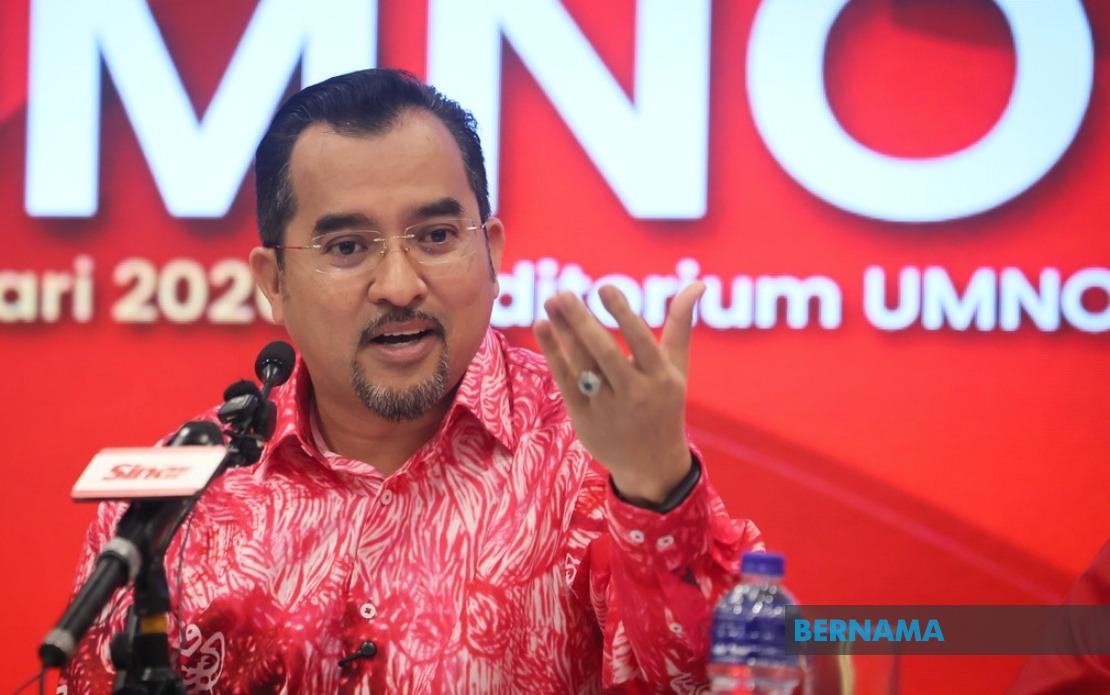
UMNO secretary-general Datuk Dr Asyraf Wajdi Dusuki has attributed the resignation of senior party member Datuk Dr Mohd Puad Zarkashi to frustration over candidate selection, specifically the decision not to field Mohd Puad's son for the Rengit state constituency. The revelation came in a lengthy Facebook statement that defended the party's nomination process and pushed back against what Asyraf Wajdi characterised as unfounded accusations concerning royal involvement in Johor politics.
Mohd Puad, a Supreme Council member, announced his departure from UMNO on June 25, declaring the move would grant him greater freedom to voice his opinions independently. His exit arrives at a sensitive juncture for the Umno-led coalition in Johor, with the State Legislative Assembly dissolved on June 1 and nomination day scheduled for June 27, with polling set for July 11. The timing has amplified attention on internal party tensions and the mechanics of how UMNO selects its electoral representatives.
According to Asyraf Wajdi's account, Mohd Puad had previously written to the secretary-general with explicit warnings that he would publicly criticise UMNO and abandon the party unless the leadership agreed to nominate his son for the Rengit seat. The secretary-general acknowledged that the younger Puad possesses youth and substantial potential as an emerging political figure, yet stressed that such personal considerations cannot override the broader criteria that the party applies when vetting candidates for state and federal elections. This distinction between individual merit and institutional selection standards forms the crux of Asyraf Wajdi's defence of the party's decision-making process.
The current controversy mirrors an earlier episode during Najib Tun Razak's tenure as UMNO president, when Mohd Puad allegedly made comparable threats to quit unless he received renomination as Member of Parliament for Batu Pahat. That prior incident suggests a pattern of internal friction whenever Mohd Puad's political ambitions or family interests encounter resistance from the party machinery. The parallel is significant because it indicates that disagreements over nominations may represent a longstanding source of tension rather than an isolated dispute.
Ashraf Wajdi took pains to reframe UMNO's identity and values in response to Mohd Puad's departure. He explicitly denied that the party operates as a hereditary institution where kinship ties to senior members secure positions of influence or electoral opportunities. The statement was calibrated to address what party leadership evidently views as a troubling perception that might gain traction if left unchallenged. By positioning UMNO as a meritocratic organisation committed to broader national and communal purposes, Asyraf Wajdi sought to insulate the party against accusations of nepotism or arbitrary decision-making.
A central element of Asyraf Wajdi's response targeted Mohd Puad's allegation that the Johor palace had orchestrated the dissolution of the State Legislative Assembly and wielded controlling influence over UMNO's state operations. The secretary-general branded these claims as slanderous, defending both the royal institution and party leadership against what he portrayed as baseless conspiracy theories. For Malaysian readers familiar with the sensitivities surrounding references to royal prerogatives and institutional authority, this rebuttal carries particular weight and suggests the party viewed Mohd Puad's insinuations as especially damaging to both palace and UMNO credibility.
The broader context of party discipline and candidate selection proves instructive for understanding factional dynamics within UMNO. National-level party organisations must balance competing pressures when determining their electoral slate: the aspirations of senior figures and their families, the electoral viability of individual candidates in specific constituencies, demographic and demographic shifts within voter populations, and the overarching strategic imperatives of the organisation itself. Asyraf Wajdi's statement implicitly acknowledges these complexities while arguing that UMNO's leadership has the prerogative and responsibility to make selections that serve collective interests rather than accommodate particular demands.
The philosophical foundation of Asyraf Wajdi's position rests on a conviction that political parties cannot function effectively if individual disappointments routinely translate into threats of departure or public denunciation. He argued that UMNO's institutional struggle transcends personal preferences and family considerations, invoking the party's decades-long contribution to Malaysian politics and governance. This appeal to party loyalty and historical significance carries rhetorical force within traditional UMNO circles, though it may ring hollow to those who view the party's recent performance and internal cohesion with scepticism.
From a broader Southeast Asian perspective, the Mohd Puad affair exemplifies tensions that afflict established political parties across the region as they navigate the competing demands of institutional integrity, factional management, and generational transition. The question of whether parties should prioritise the children and relatives of senior figures or instead apply uniform standards to all prospective candidates remains contested terrain in democracies with strong patronage networks and family-based political hierarchies. Malaysia's experience in this regard reflects patterns visible in neighbouring countries grappling with similar inheritance-based political dynamics.
The Johor state election scheduled for July 11 will provide voters with an early assessment of whether UMNO's internal travails translate into measurable electoral consequences. The defection of a Supreme Council member during campaign season might suggest underlying organisational weaknesses, or it might prove a minor episode quickly overshadowed by the campaign itself. The composition of UMNO's eventual candidate list and the party's performance at the ballot will test whether the selection methodology that Asyraf Wajdi defended reflects genuine institutional strength or conceals deeper fractures within Malaysia's historically dominant political force.
For Malaysian observers, the Puad case underscores enduring questions about how major political organisations balance meritocratic principles against the gravitational pull of internal patronage networks. Asyraf Wajdi's insistence that UMNO applies consistent standards to all candidates, regardless of family connections or seniority, represents an aspirational statement of institutional values. Whether such values consistently guide actual practice remains a separate and more contentious question that shapes public perceptions of UMNO's integrity and fairness.

