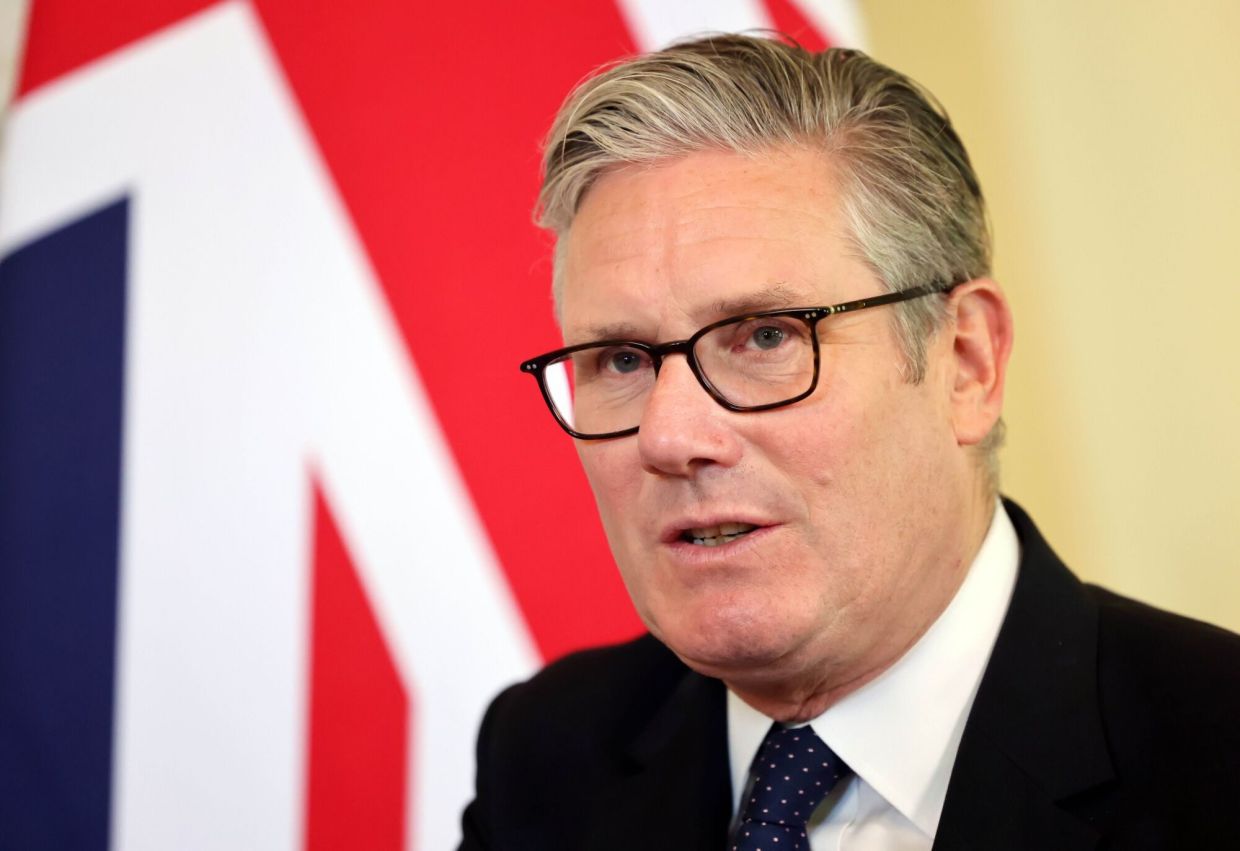
Prime Minister Keir Starmer will use Monday's announcement of a comprehensive package restricting teenage access to social media platforms to demonstrate his government's commitment to online safety, positioning himself as a defender of families against digital threats. The restrictions will include an outright prohibition on under-16s accessing major social media services, coupled with additional measures targeting older teenagers and artificial intelligence chatbots. Following this major policy announcement, Starmer will travel to the Group of Seven summit at Évian-les-Bains, France, where he faces a political minefield that threatens to undermine any positive messaging from his domestic agenda.
The government's approach to safeguarding young people online represents a more aggressive stance than comparable democracies have adopted. Australia's social media ban for teenagers, which commenced last year, serves as the nearest international precedent, yet the UK's expanded package—encompassing restrictions on chatbots and certain online gaming services—ventures into territory that goes beyond the Australian model. The breadth of the proposed restrictions reflects growing public concern about youth mental health and online exploitation, issues that resonate across Malaysian and Southeast Asian societies grappling with similar digital risks to their young populations.
Public opinion has coalesced around the concept of limiting teenage social media access, despite legitimate questions about implementation and enforcement. The Labour administration appears confident that the political benefits of appearing proactive on child protection outweigh the practical complexities of policing a global internet. This calculation carries particular weight given recent tragedies that have intensified parental anxiety. Ian Russell, whose teenage daughter died by suicide in 2017 after encountering harmful online material, publicly expressed dismay at the timing of the announcement, warning that rushing through policy without careful deliberation would be "deplorable" and potentially dishonour his daughter's memory.
The timing of Starmer's announcement raises uncomfortable questions about whether the policy initiative serves genuine public protection or primarily serves political interests. A public consultation on youth online safety concluded less than three weeks before the announcement, affording minimal time for detailed analysis and refinement of the proposals. Several cabinet members privately acknowledge that the decision to implement a full ban for those under 16 was accelerated beyond normal policymaking timelines, with the government's domestic political calendar driving the urgency rather than the findings of consultation.
The opposition Liberal Democrats have seized upon perceived weaknesses in the government's process, characterising the social media restrictions as hastily assembled measures designed principally to secure political legacy points before looming internal challenges destabilise the government. This criticism carries weight given the extraordinary political pressure Starmer now confronts. Andy Burnham, mayor of Greater Manchester, is widely expected to claim a parliamentary seat in Thursday's Makerfield by-election in northwest England. Should Burnham succeed, particularly if he defeats the populist Reform UK party, he will position himself to challenge Starmer for the party leadership, potentially triggering a summer succession battle that could fracture Labour's fragile parliamentary majority.
Starmer's position weakened considerably following last week's ministerial resignations. Defence Secretary John Healey departed, citing the Prime Minister's failure to secure adequate military funding increases despite mounting security threats from Russia and other adversaries. Junior Defence Minister Al Carns and two additional ministerial aides also resigned, signalling deeper discontent within the government concerning defence spending priorities. These departures exposed fissures in the administration just as international security concerns intensify across Europe and beyond.
The defence budget controversy sits at the heart of Starmer's immediate difficulties. His government had pledged NATO allies a substantial increase in military expenditure, commitments that now appear difficult to honour. The resignation of Healey, a senior cabinet figure, provided public evidence of these tensions and handed opposition parties ammunition to question governmental competence and coherence. For Malaysia and other Southeast Asian nations watching regional security dynamics, the UK's apparent difficulty in marshalling resources for defence carries implications for broader Western strategic capabilities and alliance commitments.
Responding to the defence spending crisis, Culture Secretary Lisa Nandy suggested Sunday that negotiations over additional budgetary resources remain active across government departments. She indicated that Starmer has instructed officials to identify savings from other administrative areas that might be redirected to defence, effectively reopening budget discussions that were thought settled. Such negotiations, if successful, might provide Starmer breathing room to honour military spending commitments without appearing to capitulate to Healey's concerns. However, any substantial budget reallocation announced after a defence secretary's resignation invites accusations of another policy reversal, further damaging the Prime Minister's credibility for decisive leadership.
The convergence of these pressures—the Makerfield by-election, internal party tensions, defence budget uncertainties, and now an ambitious social media restriction policy—creates an exceptionally precarious political week for Starmer. The social media announcement, while potentially popular with voters anxious about youth safety, cannot obscure the underlying institutional weaknesses that Healey's resignation exposed. International observers, including those in Malaysia and across ASEAN nations, will be watching to assess whether Starmer can navigate these accumulated challenges without fracturing his government further.
The G7 summit compounds these difficulties. Starmer will encounter allied leaders expecting clarity on British defence commitments precisely when his government appears uncertain about its own resource allocation and political direction. Questions about military spending, NATO burden-sharing, and Britain's strategic role will feature prominently in discussions. Arriving in France after a week of ministerial departures and facing an imminent party challenge, Starmer cannot project the authority and stability that major international forums demand.
For regional observers, Starmer's difficulties underscore broader patterns affecting Western governance and alliance-building. The UK's apparent struggle to balance domestic political survival with international commitments reflects pressures facing democratic governments across developed economies. Whether Starmer can stabilise his premiership through policy announcements and international engagement, or whether internal Labour divisions ultimately prove irresolvable, will influence Britain's capacity to maintain strategic partnerships and international influence—consequences that extend beyond Westminster and touch upon the broader architecture of global security and economic cooperation that frames Southeast Asia's strategic environment.
%22%2F%3E%3C%2Fpattern%3E%3C%2Fdefs%3E%3Crect%20width%3D%22100%25%22%20height%3D%22100%25%22%20fill%3D%22url(%23ph10aqng)%22%2F%3E%3Crect%20width%3D%22100%25%22%20height%3D%22100%25%22%20fill%3D%22url(%23ph10aqnp)%22%2F%3E%3Ctext%20x%3D%2250%25%22%20y%3D%2250%25%22%20text-anchor%3D%22middle%22%20dominant-baseline%3D%22central%22%20fill%3D%22rgba(255%2C255%2C255%2C0.95)%22%20font-family%3D%22Georgia%2C%20'Times%20New%20Roman'%2C%20serif%22%20font-weight%3D%22700%22%20font-size%3D%22170%22%20letter-spacing%3D%22-0.02em%22%3EObserved%3C%2Ftext%3E%3C%2Fsvg%3E)
%22%2F%3E%3C%2Fpattern%3E%3C%2Fdefs%3E%3Crect%20width%3D%22100%25%22%20height%3D%22100%25%22%20fill%3D%22url(%23ph58aebg)%22%2F%3E%3Crect%20width%3D%22100%25%22%20height%3D%22100%25%22%20fill%3D%22url(%23ph58aebp)%22%2F%3E%3Ctext%20x%3D%2250%25%22%20y%3D%2250%25%22%20text-anchor%3D%22middle%22%20dominant-baseline%3D%22central%22%20fill%3D%22rgba(255%2C255%2C255%2C0.95)%22%20font-family%3D%22Georgia%2C%20'Times%20New%20Roman'%2C%20serif%22%20font-weight%3D%22700%22%20font-size%3D%22170%22%20letter-spacing%3D%22-0.02em%22%3EObserver%3C%2Ftext%3E%3C%2Fsvg%3E)
%22%2F%3E%3C%2Fpattern%3E%3C%2Fdefs%3E%3Crect%20width%3D%22100%25%22%20height%3D%22100%25%22%20fill%3D%22url(%23ph4zgheg)%22%2F%3E%3Crect%20width%3D%22100%25%22%20height%3D%22100%25%22%20fill%3D%22url(%23ph4zghep)%22%2F%3E%3Ctext%20x%3D%2250%25%22%20y%3D%2250%25%22%20text-anchor%3D%22middle%22%20dominant-baseline%3D%22central%22%20fill%3D%22rgba(255%2C255%2C255%2C0.95)%22%20font-family%3D%22Georgia%2C%20'Times%20New%20Roman'%2C%20serif%22%20font-weight%3D%22700%22%20font-size%3D%22170%22%20letter-spacing%3D%22-0.02em%22%3EObserver%3C%2Ftext%3E%3C%2Fsvg%3E)