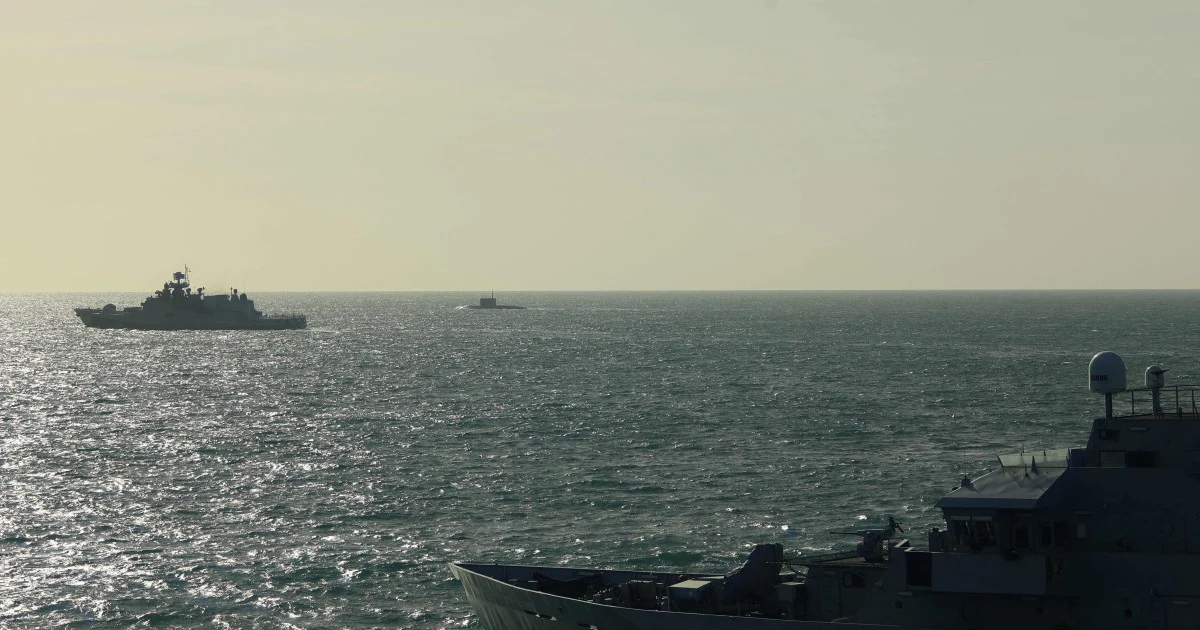
British Prime Minister Keir Starmer characterized the firing of warning shots by a Russian warship near a civilian yacht in the English Channel as "reckless" conduct rather than a calculated move to escalate tensions, marking London's latest attempt to balance diplomatic rhetoric with security concerns during a period of heightened UK-Russia friction at sea.
The incident represents the continuation of an unsettling pattern of naval encounters between British and Russian forces in waters that have historically served as a flashpoint for geopolitical rivalry. By describing the action as "reckless" instead of "sinister", Starmer appeared to signal that while Britain takes such incidents seriously, it does not view them as part of a coordinated strategy to provoke military confrontation. This distinction matters significantly for how the incident will shape broader UK-Russia relations and influence Britain's naval posture in the region moving forward.
The English Channel remains one of the world's busiest shipping lanes, with thousands of vessels transiting its waters daily. The presence of Russian military assets in these congested waters introduces an unpredictable element that threatens not only British interests but also the safety of international maritime commerce. Civilian vessels, including yachts and merchant ships, face genuine risks when military operations occur in civilian spaces, a reality that underscores why even "reckless" actions demand serious attention from maritime authorities.
Such incidents have become increasingly frequent as Russia expands its naval operations in European waters, particularly in the context of broader geopolitical tensions stemming from the Ukraine conflict and NATO's strengthened presence along Russia's borders. For Southeast Asian observers, these UK-Russia naval flashpoints offer insights into how established naval powers manage maritime disputes and maintain crisis communication channels when military forces operate in close proximity.
Starmer's framing suggests the UK government seeks to avoid escalatory language that might spiral tensions beyond their current level. By refusing to characterize the incident as "sinister" or part of a deliberate provocation strategy, Starmer leaves diplomatic space for the situation to de-escalate without loss of face on either side. This approach reflects lessons learned from Cold War-era naval incidents, where miscalculation during tense moments led to dangerous consequences.
The incident highlights vulnerabilities in maritime safety protocols when military vessels from adversarial nations operate in shared waters. Establishing clearer rules of engagement and communication systems becomes essential, particularly in congested waterways where civilian traffic cannot simply be redirected. The English Channel's status as international waters means no single nation can fully control activity there, creating inherent management challenges.
For Malaysia and other Southeast Asian nations that depend on international maritime freedoms and safe passage through shared waters, the UK-Russia situation offers cautionary lessons. The South China Sea, for instance, sees similar tensions where military vessels from various nations operate in proximity to civilian shipping. Understanding how developed naval powers handle such situations—through restrained rhetoric, diplomatic channels, and adherence to maritime conventions—provides valuable context for regional stability efforts.
The distinction between "reckless" and "sinister" carries profound implications for how nations interpret each other's military actions. Recklessness suggests poor judgment or lack of proper training, whereas sinister conduct implies malicious intent. Starmer's choice to emphasize recklessness over intent potentially offers the Russian side a way to explain the incident as procedural error rather than deliberate provocation, though it simultaneously holds Russia accountable for maintaining professional standards.
Britain's response will likely influence how other NATO allies frame similar incidents. If the UK normalizes such encounters as merely "reckless" rather than threat indicators, other nations might adopt similar language, potentially creating a concerning pattern where dangerous maritime conduct becomes accepted as routine friction rather than grounds for serious diplomatic intervention. Conversely, overly aggressive British rhetoric could trigger reciprocal escalation from Moscow.
The broader context includes Russian naval modernization efforts and increased Arctic operations as climate change opens new shipping routes and resource opportunities. Britain's naval presence in these regions remains part of its efforts to maintain global maritime security commitments, but encounters with Russian forces will likely continue as both nations assert their interests in contested or shared waters.
Moving forward, establishing and maintaining communication protocols becomes crucial. The UK and Russia maintain various channels for military-to-military dialogue, though Ukraine tensions have strained these relationships considerably. The fact that warning shots were fired at all suggests breakdown in communication or deliberate testing of British responses, making the incident a signal about Russian naval assertiveness.
Starmer's measured language reflects broader British strategy to avoid unnecessary escalation with Russia while maintaining deterrence. By refusing to sensationalize the incident, the UK government demonstrates confidence in its ability to manage such encounters professionally, though the continuing frequency of such incidents suggests deeper structural problems in UK-Russia relations that rhetoric alone cannot resolve. The real test will be whether Britain and Russia can eventually establish sustainable protocols for their naval interactions, transforming these dangerous encounters into manageable diplomatic matters.