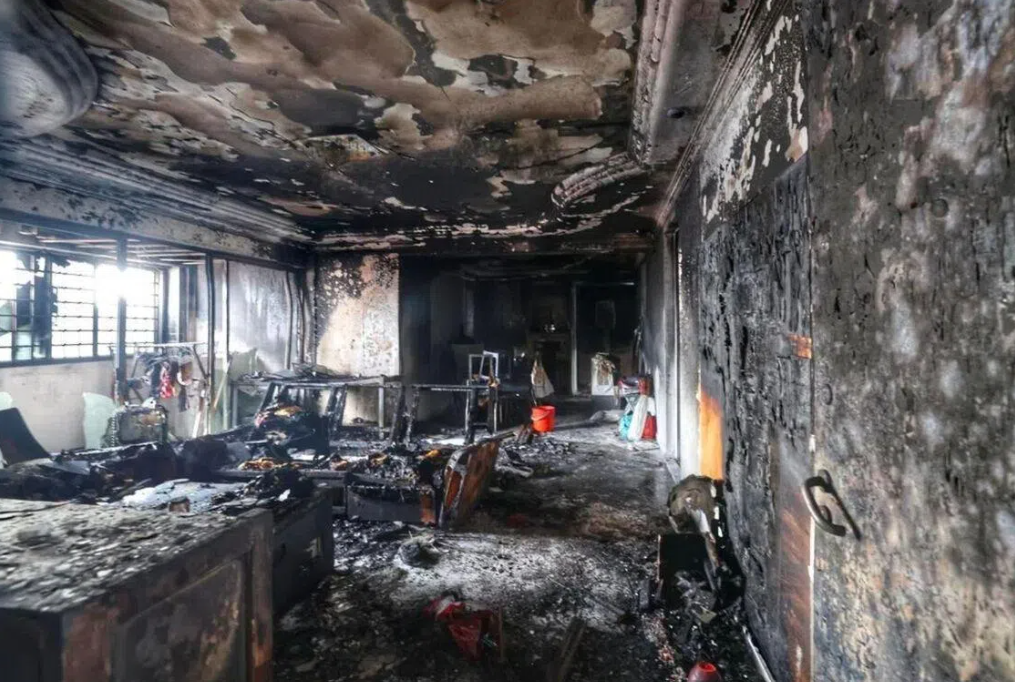
A predawn fire that engulfed a living room in Block 842 Jurong West Street 81 on June 17 prompted a swift rescue operation by the Singapore Civil Defence Force, which arrived at the scene within minutes of being alerted at approximately 3.35am. Two residents were extracted from the 13th-storey unit and taken to Singapore General Hospital along with two other family members, while roughly 40 neighbouring residents were moved to safety as a precautionary step. The incident underscores the persistent risk posed by domestic electrical hazards in high-rise residential buildings across Singapore and the wider region.
When SCDF personnel arrived at the burning flat, they discovered flames consuming the living room while thick smoke filled the confined space. Firefighters immediately entered the compromised unit and brought the blaze under control using a water jet, preventing it from spreading to adjacent units. Initial examination of the fire scene revealed that the blaze likely originated from faulty or overloaded electrical equipment positioned in the living room, a finding consistent with the growing pattern of electrically-triggered residential fires in urban apartment complexes throughout Southeast Asia.
Accounts from nearby residents paint a vivid picture of how quickly the situation escalated during the early morning hours when most residents remained asleep. An 18-year-old neighbour living directly above the affected unit became an unlikely hero in the unfolding drama. While passing time playing games in the early hours, he detected smoke seeping into his own space and noticed it drifting from the windows of the unit below. Rather than ignoring the signs, he immediately descended to investigate and found the door to the burning flat dangerously hot to the touch.
Recognizing the gravity of the situation, the young resident began forcefully knocking on doors throughout the corridor to rouse sleeping neighbours and alert them to evacuate. His actions bought precious time for families to gather their belongings and exit the building before the fire could spread. After ensuring neighbours received the warning, he rushed back to his own unit to alert his family members to flee. His mother subsequently contacted emergency services, setting the professional rescue operation in motion.
The student's account of conditions inside the burning unit provides insight into the trauma experienced by those caught in the fire. He observed a young woman from the affected household appearing at his family's door requesting towels to address injuries. Her appearance bore stark evidence of the fire's ferocity—her hair was visibly singed and her face darkened by soot. Moments later, he witnessed a male resident whose back and arms displayed the vivid red colouration characteristic of severe thermal burns, a detail that highlights how quickly such fires can inflict serious injuries on occupants.
The scale of the emergency response demonstrates the resources required to manage residential fire incidents in densely populated public housing estates. A neighbouring resident on the 12th floor reported observing at least five fire engines positioned around the building's perimeter, suggesting that SCDF mobilized significant personnel and equipment to contain the situation and prevent it from threatening adjacent structures. The concentrated presence of emergency vehicles would have drawn the attention of other residents in the precinct, many of whom may have been unaware of the danger occurring in their own building.
Visual inspection of the property hours after the incident revealed the extensive damage inflicted by the fire. When reporters from Lianhe Zaobao visited the site around 4pm that same day, the unit's interior presented a scene of devastation. Walls and ceiling surfaces had been thoroughly blackened by soot and flames, while the windows had shattered from the intense heat, leaving the living space completely exposed and uninhabitable. The damage pattern concentrated in the living room corroborated the preliminary assessment that electrical equipment malfunction had sparked the initial ignition.
The broader context of this incident reflects a concerning trend in residential fire statistics across Singapore. According to data released by the SCDF in February, the total number of fires increased by 3 per cent, rising from 1,990 incidents in 2024 to 2,050 in 2025. Residential buildings accounted for more than half of these incidents, with 1,051 fires occurring in homes. This trajectory suggests that electrical fires remain a persistent challenge in urban residential environments, particularly in older public housing stock where maintenance and electrical system upgrades may not have kept pace with modern demand.
In response to the growing incidence of electrically-triggered residential fires, SCDF has intensified public education campaigns emphasizing practical safety measures. The agency strongly advises residents against overloading electrical outlets, particularly in older buildings where wiring infrastructure may not accommodate contemporary consumption levels. Equipment should be switched off when not actively in use, a simple practice that eliminates standby power draw and reduces fire risk. Additionally, residents should prioritize appliances and electrical plugs that bear the Safety Mark certification, a designation issued by Singapore's Consumer Product Safety Office to products meeting rigorous safety standards.
The importance of avoiding unattended charging of batteries and electronic devices has become increasingly relevant as consumers accumulate larger numbers of high-capacity portable devices. Charging these items overnight or for extended periods without supervision significantly elevates fire risk, particularly if chargers are substandard or faulty. The convergence of deteriorating electrical infrastructure in older residential buildings, higher appliance density per household, and overnight charging practices creates an environment where electrical fires can spread rapidly from initial ignition to full-scale emergencies.
For Malaysian readers, this incident carries particular relevance given similar patterns of residential fire incidents across Malaysian cities where high-rise apartment living is increasingly common. The importance of electrical safety in shared residential environments—whether public housing estates or private condominiums—applies equally across both nations. The role of alert neighbours in detecting fires early and raising alarms demonstrates how community vigilance can save lives when professional emergency services, though responsive, require several minutes to arrive at the scene.
The Jurong West fire also illustrates the cascading nature of residential emergencies in high-density housing. A single unit fire can displace dozens of families temporarily, cause significant property damage, and place considerable strain on emergency services that must simultaneously rescue trapped occupants, suppress flames, and manage evacuations. Prevention through rigorous electrical safety practices, regular maintenance of building infrastructure, and resident awareness of fire hazards represents the most effective approach to reducing residential fire incidents throughout urban Southeast Asia.