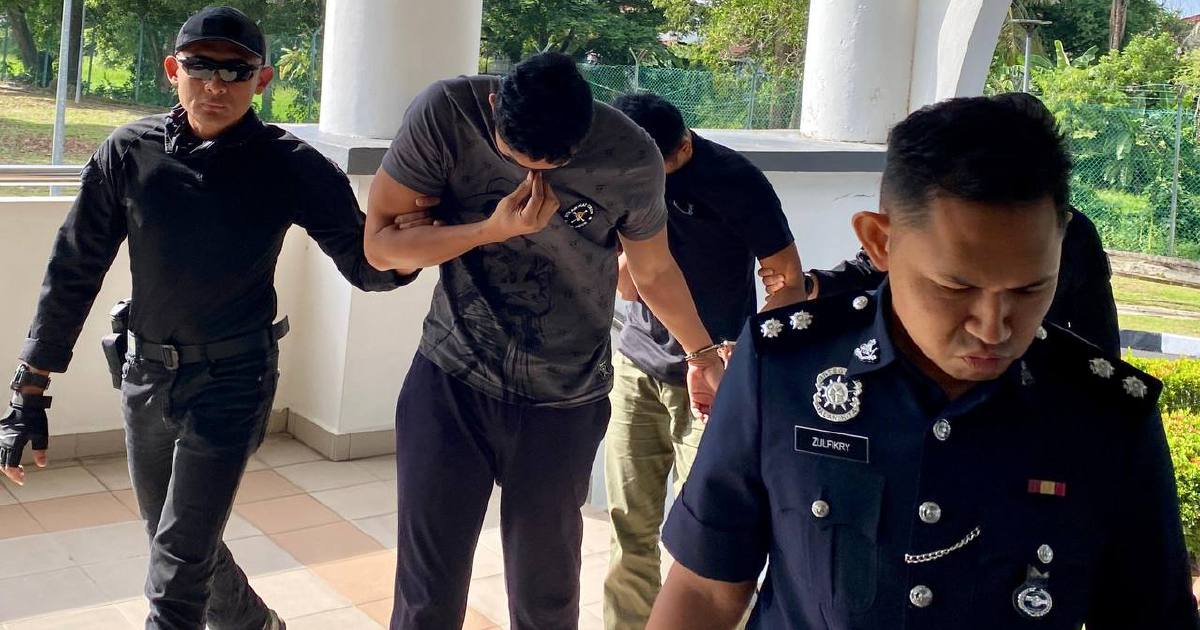
Two Malaysian soldiers appeared before the Sessions Court in Alor Star today, facing charges related to the unauthorised movement of three Myanmar nationals across the Malaysia-Thailand border during the previous month. The charges underscore the persistent challenge of human trafficking and migrant smuggling operations that continue to plague the porous frontier zone separating Malaysia and Thailand, an area that remains a critical point of vulnerability despite ongoing enforcement efforts.
The involvement of uniformed personnel in such operations points to deeper structural concerns within border security frameworks across Southeast Asia. Military and paramilitary forces stationed at international boundaries occupy positions of significant trust and responsibility, yet cases involving members of these institutions in smuggling networks reveal how criminal syndicates successfully exploit the authority and access that armed personnel command. These individuals are positioned precisely where they can circumvent standard checkpoint procedures and leverage their knowledge of patrol patterns to facilitate illegal crossings.
The Malaysia-Thailand border region has long served as a crucial transit corridor for irregular migration flows. Myanmar nationals, fleeing economic hardship, persecution, and ongoing conflict situations, frequently seek passage through this corridor toward Malaysia, where employment opportunities and established migrant communities provide initial footholds. The three individuals involved in this particular incident represent a fraction of the thousands who attempt such crossings annually, many of whom fall victim to exploitative trafficking networks that profit from their desperation.
The criminal liability of soldiers engaged in smuggling operations introduces complex questions about institutional accountability and vetting procedures within the armed forces. When service members become complicit in trafficking networks, they not only violate military codes of conduct but also breach the public trust essential for border security operations. Investigations into such cases typically extend beyond individual perpetrators to examine whether systematic vulnerabilities enabled these activities or whether organised criminal groups deliberately targeted servicemen for recruitment into their networks.
Border communities along the Malaysia-Thailand frontier experience amplified exposure to smuggling operations due to geographical proximity and the constant movement of people and goods across demarcation lines. Local residents frequently encounter evidence of trafficking activities and irregular crossings, creating security concerns and straining community relations. The involvement of military personnel intensifies these tensions, as it suggests that even ostensible authorities responsible for maintaining border integrity may have compromised their positions through criminal engagement.
From a regional perspective, such incidents illustrate the limitations of unilateral enforcement approaches. Effective border security requires sustained coordination between Malaysian and Thai authorities, intelligence sharing regarding trafficking networks, and harmonised legal frameworks addressing migrant smuggling. When cases involve uniformed personnel, diplomatic sensitivities sometimes complicate cross-border cooperation, requiring careful navigation to maintain operational relationships while addressing criminal accountability.
The broader context of Myanmar's internal displacement crisis amplifies the pressures driving irregular migration through Southeast Asian borders. Ongoing political instability, military operations in ethnic areas, and deteriorating economic conditions have displaced hundreds of thousands of citizens, many of whom undertake hazardous journeys seeking safety and livelihood elsewhere. This humanitarian dimension coexists with criminal elements that exploit vulnerable migrants, creating layered challenges for enforcement agencies attempting to distinguish between humanitarian crises and criminal activities.
Prosecution of smuggling cases involving military personnel serves both immediate justice objectives and broader deterrent functions. Convictions signal to other servicemen that complicity in trafficking networks carries serious consequences and to criminal syndicates that recruiting uniformed personnel involves heightened legal exposure. Malaysia's Sessions Court system applies consistent standards across offence categories, ensuring that military status does not shield defendants from accountability.
The smuggling of Myanmar nationals typically involves complex networks incorporating transportation providers, accommodation facilitators, document processors, and payment handlers. Soldiers charged in such operations usually occupy specific roles within these networks, often leveraging their position for checkpoint passage rather than managing comprehensive trafficking logistics. Understanding the structural role of these individuals within larger organisations helps authorities identify and target network organisers rather than focusing exclusively on peripheral operatives.
Law enforcement responses to border smuggling have intensified across Malaysia and Thailand, incorporating enhanced checkpoint protocols, intelligence-led operations, and targeted investigations into organised trafficking syndicates. However, the inclusion of military personnel in criminal networks necessitates parallel scrutiny within defence institutions, including internal security reviews, enhanced vetting of border-posted personnel, and establishment of robust whistleblower protection mechanisms encouraging personnel to report suspicious activities.
The resolution of this case will establish important precedent regarding prosecutorial standards applied to servicemen engaged in smuggling operations. Courts increasingly recognise that border security integrity depends upon maintaining rigorous accountability for personnel entrusted with enforcement responsibilities. Malaysia's commitment to addressing corruption and criminal involvement within security forces has strengthened considerably in recent years, with specialised bodies investigating and prosecuting complex cases involving institutional personnel.
For Malaysia's relationship with neighbouring Thailand, managing cases involving both countries' nationals and regional security challenges remains essential. Bilateral mechanisms addressing transnational crime, including smuggling operations and human trafficking, continue to develop through formal diplomatic channels and operational cooperation between relevant agencies. Individual prosecutions contribute to broader confidence-building processes necessary for effective regional security architecture.