The southern Thai provinces of Yala and Pattani experienced coordinated violence on Friday, June 19, when two distinct bombing incidents within three hours targeted uniformed police personnel, leaving 11 officers injured and raising fresh concerns about militant activity in one of Southeast Asia's most contested regions. The attacks underscore the persistent instability that has plagued Thailand's deep south for nearly two decades, despite ongoing peace negotiations and military operations.
The first explosion detonated at 8:10am near the Ban Pulo Saniyae–Ban Sakai road in Thanto district, Yala province, where border patrol officers from a teacher protection unit were conducting operations. The blast injured six personnel, with two sustaining critical injuries requiring emergency intervention. Corporal Kittisak Saksang absorbed shrapnel wounds to his face, while his colleague Corporal Poraphat Wongruaydee suffered severe chest trauma, leaving him temporarily immobile though conscious at the scene. The remaining four officers sustained less serious injuries but were nonetheless transported for medical evaluation at Thanto Hospital.
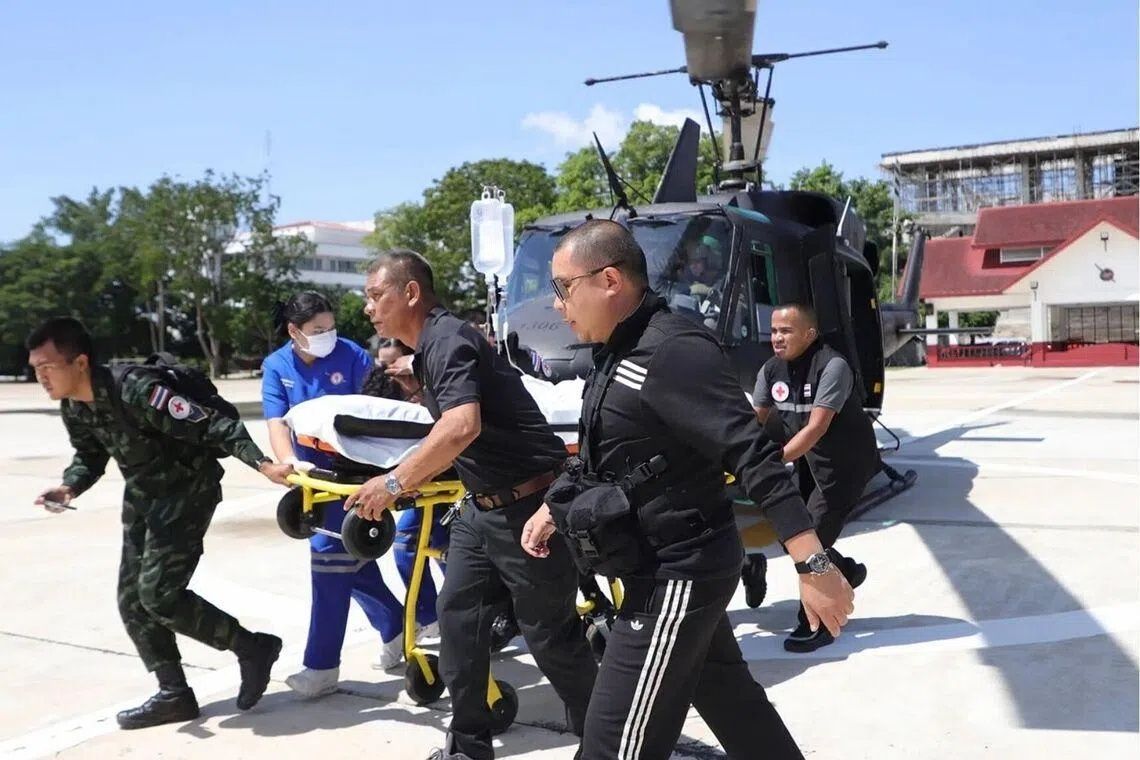
The severity of Wongruaydee's condition necessitated urgent helicopter evacuation to Yala Hospital, where medical teams determined he required immediate surgical intervention. Doctors identified accumulated blood in his pleural cavity threatening his respiratory function and determined that surgical repair of lung tissue was essential to prevent life-threatening complications. The hospital subsequently issued an emergency appeal for blood donors of all types, signalling the gravity of his condition and the intensive medical resources required for his recovery. This dramatic response highlighted how such attacks strain the medical infrastructure of smaller provincial hospitals in Thailand's southern tier.
Less than three hours after the Yala incident, a second bombing struck at 11:30am in Pattani province's Mayo district, targeting members of the Pattani Police Special Operations unit stationed at Ban Khuan Yi. The officers had just completed establishing a security checkpoint in the vicinity and were returning to their position when the device detonated. This attack wounded five additional personnel—Sergeants Anuchit, Bunyawat, Wisitphon, Aphisit and Sumit—all of whom reported chest injuries consistent with blast trauma and were hospitalised at Mayo Hospital for observation and treatment.
The timing and coordination of the two incidents, occurring in separate provinces but within a compressed timeframe, suggests either a calculated operational strategy or a simultaneous response to police activity across the southern region. Both attacks deliberately targeted security forces engaged in protective operations, with the Yala incident focusing on officers assigned to safeguard teachers—a historically vulnerable population in the conflict—while the Pattani attack struck at a regular security checkpoint. This pattern indicates sophisticated knowledge of police deployment patterns and operational schedules.
Thailand's three southernmost provinces—Yala, Pattani, and Narathiwat—have endured chronic violence since the early 2000s, stemming from a complex blend of ethno-religious grievances, historical territorial disputes, and competing nationalist narratives. The insurgency has claimed thousands of lives and displaced numerous communities, creating an environment of persistent insecurity despite the Thai military's counterinsurgency campaigns. The recurrence of coordinated attacks suggests that militant groups retain operational capacity and organisational coherence despite years of targeted enforcement.
Authorities responded swiftly to both incidents, with explosive ordnance disposal teams and forensic investigators securing the scenes and collecting evidence. Security forces cordoned off the areas to prevent secondary attacks and to allow technical specialists to document the blast patterns and collect materials for analysis. Police leadership initiated manhunt operations aimed at identifying and apprehending those responsible, though such investigations in the south often face challenges including sympathetic civilian populations, difficult terrain, and cross-border dimensions that complicate law enforcement efforts.
For Malaysian readers and regional observers, these incidents carry particular significance given Malaysia's geographic proximity to the affected zones and the presence of Malaysian nationals and businesses throughout southern Thailand. The volatility in Yala, Pattani, and Narathiwat has periodically affected cross-border commerce and tourism, while security incidents occasionally necessitate temporary travel advisories affecting Malaysian visitors and investors. Additionally, the conflict's persistence raises questions about the effectiveness of various peace initiatives and military strategies pursued over the past two decades.
The attacks also arrive during a period when Thai authorities have been experimenting with different counterinsurgency approaches, ranging from military operations to dialogue initiatives with separatist groups. That bombings continue at this intensity suggests considerable factions remain committed to violent resistance and sceptical of negotiated settlements. The targeting of police—particularly those protecting educators—reflects insurgent priorities around undermining state presence in Muslim-majority areas and challenging the centralised education system viewed by some as instruments of cultural assimilation.
Medical facilities in the southern provinces, already stretched by chronic violence, face renewed pressure as multiple casualties require simultaneous treatment and ongoing care. The emergency blood donation appeal exemplifies how security incidents generate cascading effects through civilian infrastructure and society. Healthcare workers in these regions operate under extraordinary pressure, managing both trauma cases and routine medical demands while themselves potentially at risk from violence.
The incidents underscore why the southern Thai conflict remains a critical regional security concern. Despite international attention and various peace processes, the combination of historical grievances, militant operational capacity, and political deadlock perpetuates cycles of violence affecting civilians, security forces, and economic development. For Southeast Asia broadly, the persistence of instability in Thailand's south represents a significant security challenge requiring sustained diplomatic and humanitarian attention alongside security responses.

