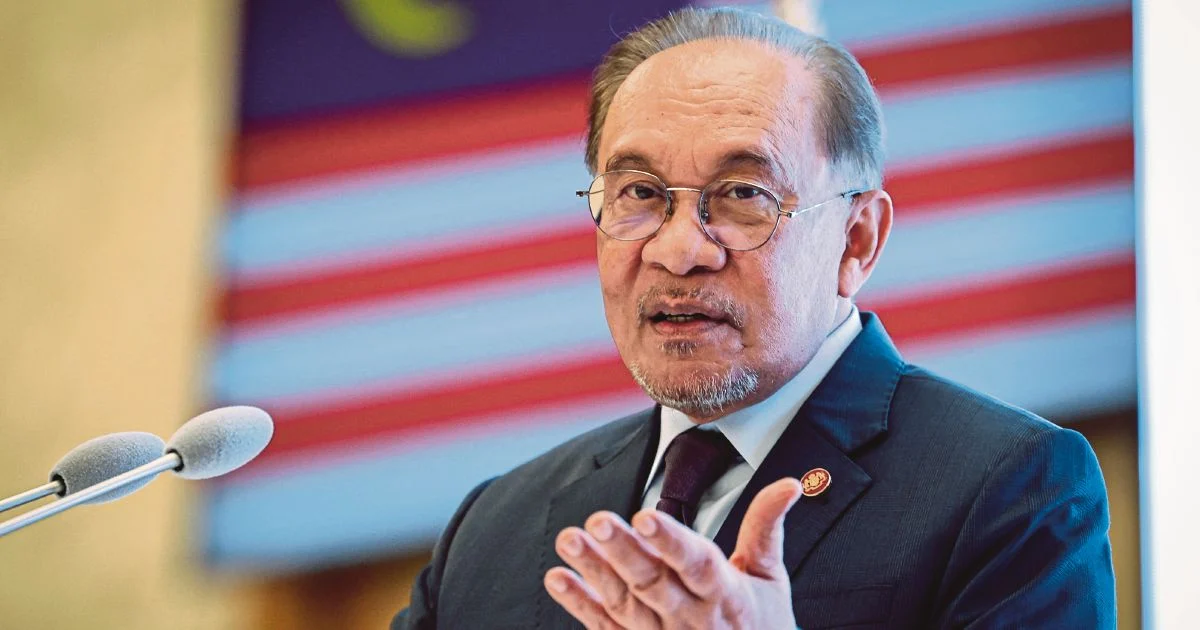
Turkmenistan's recent decision to grant Petroliam Nasional Bhd (Petronas) a stake in one of the world's largest gas fields represents far more than a routine energy transaction—it signals robust international confidence in Malaysia's institutional resilience and economic fundamentals, according to Prime Minister Datuk Seri Anwar Ibrahim. Speaking in Batu Kawan, the Premier highlighted how the acquisition underscores the credibility Malaysia has rebuilt in global markets, positioning the nation as a reliable partner for major resource development initiatives that span continents and decades.
The significance of this deal extends beyond the immediate commercial value to Petronas. Multinational energy corporations and sovereign wealth funds typically conduct extensive due diligence before committing capital to long-term projects, particularly in countries navigating political transitions or economic uncertainty. Turkmenistan's willingness to entrust Malaysia's national oil company with a stake in a critical energy asset suggests that international investors view the country's governance structures, policy continuity, and technical expertise as trustworthy. This perception matters substantially in an era when geopolitical fragmentation and supply chain insecurity dominate energy sector decision-making.
Petronas itself has evolved into a sophisticated global operator with deep expertise in complex oil and gas development, particularly in deepwater and frontier regions. The company's track record managing projects across Southeast Asia, Africa, and beyond has established its reputation as a technically capable and commercially disciplined player. By choosing Petronas, Turkmenistan—a Central Asian producer seeking to diversify its partnerships and reduce dependency on traditional partners—was betting on Malaysian professionalism and institutional stability. This choice implicitly validates the governance reforms and economic restructuring initiatives undertaken by successive Malaysian administrations.
Anwar Ibrahim's framing of the deal as a confidence vote in Malaysian unity carries particular weight given the nation's recent political and social complexities. Malaysia has navigated parliamentary transitions, racial and religious sensitivities, and economic pressures over the past decade, yet has avoided the state fragmentation or institutional collapse that has afflicted some peer nations. The Central Asian republic's decision to partner with Petronas therefore implicitly endorses the trajectory Malaysia is charting—a judgment that carries diplomatic and economic implications far beyond the energy sector itself.
The asset in question ranks among the world's most substantial untapped gas reserves, making it strategically valuable for both immediate production and long-term energy security planning. For Malaysia, gaining operational or commercial involvement in such a resource offers multiple benefits: access to hydrocarbon reserves that can supply both domestic energy needs and regional markets, opportunities for technology transfer and technical learning, and enhanced geopolitical standing in global energy governance. These factors combine to strengthen Malaysia's position as an energy hub within Asia, complementing its existing petroleum and liquefied natural gas operations.
The timing of this agreement also reflects broader shifts in global energy markets and investment flows. As traditional Western investors face pressure to limit fossil fuel exposure, capital from Asia-Pacific nations—including Malaysian and other regional entities—has stepped into major energy projects. Turkmenistan, situated between Russia, China, and Iran, faces genuine constraints in diversifying its customer base and technological partnerships. Malaysia, by contrast, presents an acceptable alternative: a Muslim-majority nation with no geopolitical axes to grind in Central Asia, a track record of commercial competence, and capital sufficient to undertake substantial projects.
For the Malaysian economy, energy sector investments and operational success translate into sustained employment, foreign exchange earnings, technological advancement, and downstream industrial development. The natural gas and petroleum sectors remain cornerstones of Malaysia's industrial base, supporting petrochemical manufacturing, power generation, and export-oriented industries. Deepening involvement in Central Asian projects preserves and potentially expands this economic foundation as global energy transitions gather pace. The deal thus insulates Malaysia against some of the headwinds facing fossil fuel exporters by securing access to world-class reserves and maintaining technical relevance in energy operations.
Regionally, Malaysia's strengthened position in Central Asian energy markets carries implications for Southeast Asian energy security and cooperation frameworks. As Association of Southeast Asian Nations (ASEAN) members collectively grapple with energy transition challenges, including the intermittency of renewable power and demand growth from rapid industrialisation, access to reliable gas supplies becomes strategically critical. Petronas's expanded footprint in Turkmenistan potentially benefits not only Malaysia but the broader region through supply chain integration and knowledge-sharing across regional operators.
The deal also reinforces Malaysia's positioning as a bridge between Asia's Muslim-majority populations and global capital markets. Turkmenistan, despite its geographic location in Central Asia, maintains strong ties with Southeast Asian Islamic institutions and governance frameworks. Malaysia's successful navigation of complex energy projects while maintaining Islamic identity and governance principles creates a model that Central Asian states find attractive. This positioning offers Malaysia soft power advantages and diplomatic leverage that extend beyond energy transactions into broader relationship-building with Middle Eastern and Central Asian counterparts.
Future implications of the Turkmenistan partnership will likely unfold across multiple dimensions. Operationally, Petronas will need to manage the technical complexities of producing from a world-class but potentially challenging resource base in a region with underdeveloped infrastructure. Commercially, the company must navigate fluctuating global gas prices and the accelerating energy transition that threatens long-term demand growth for hydrocarbon exports. Diplomatically, Malaysia's enhanced role in Central Asian energy markets positions the country as a player in great power competition for regional influence, requiring careful calibration of relationships with Russia, China, and Western powers.
Anwar Ibrahim's characterisation of the deal as a reflection of global confidence in Malaysian stability fundamentally captures how resource-rich nations build and maintain their position in international competition. Petronas secured this opportunity not through geopolitical coercion or undercutting competitors on price, but through the accumulated reputation for institutional competence and political reliability that Malaysia has painstakingly constructed. Whether Malaysia can convert this diplomatic and commercial opportunity into sustained prosperity and regional leadership depends on execution excellence and continued political commitment to the stability and unity that Turkmenistan's trust implicitly recognises.

