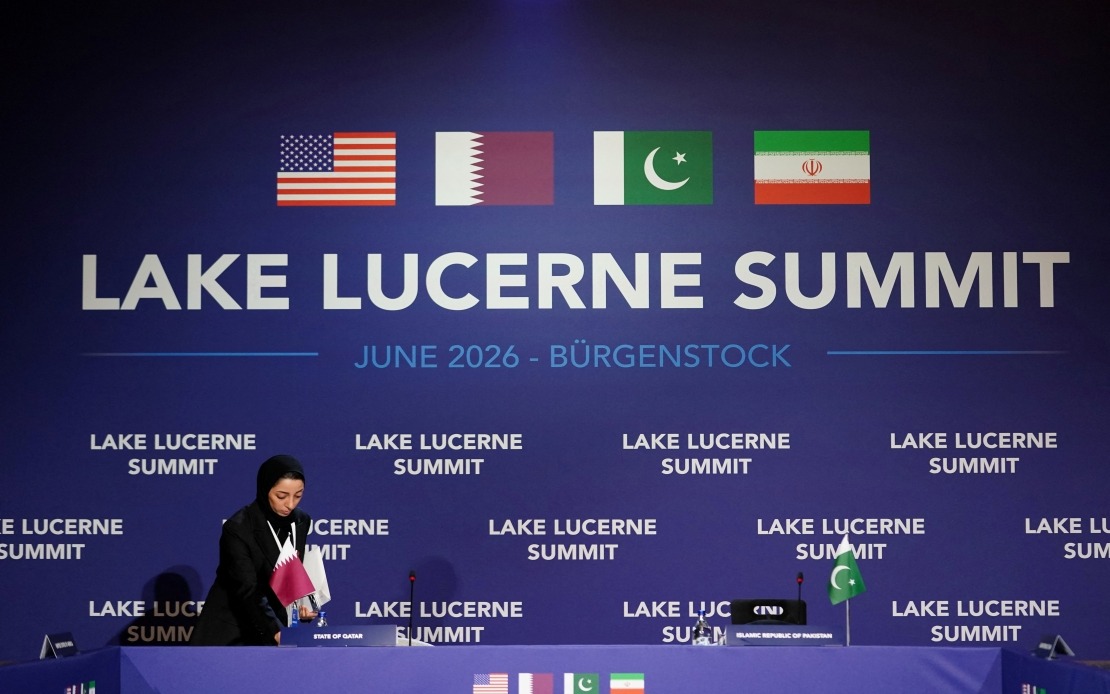
Four major regional powers have thrown their collective weight behind a newly signed agreement between the United States and Iran, signalling broad diplomatic support for efforts to reduce tensions in West Asia. The foreign ministers of Türkiye, Egypt, Pakistan and Saudi Arabia issued a joint statement on Sunday endorsing the Islamabad Memorandum of Understanding, which they characterised as a significant de-escalation measure addressing conflicts that threaten both regional security and critical global infrastructure.
The four nations' statement, released by the Turkish Foreign Ministry following consultations in Cairo, underscores the growing consensus among Middle Eastern and South Asian powers that the US-Iran tensions have created cascading risks extending far beyond bilateral disputes. The ministers explicitly highlighted how unresolved conflict between Washington and Tehran threatens to disrupt international maritime routes, energy markets, and global supply chains—concerns that resonate particularly strongly with Southeast Asian nations dependent on stable oil supplies and unimpeded sea lanes through the region.
Pakistan's diplomatic orchestration of the negotiation process received particular recognition from the four foreign ministers, reflecting Islamabad's strategic positioning as a bridge between Western and Islamic worlds. The statement also acknowledged Qatar's supporting role in facilitating discussions, demonstrating how smaller nations can exercise outsized influence through patient mediation and trusted relationships with multiple parties.
Beyond immediate de-escalation, the joint statement emphasises the necessity of advancing toward comprehensive, long-term settlements that address underlying grievances. The ministers called for rapid progression to subsequent negotiation phases designed to achieve a durable, verifiable agreement that proves mutually satisfactory to all parties involved. This staged approach signals recognition that immediate memoranda must serve as foundations for deeper confidence-building measures rather than substitutes for addressing fundamental disputes.
Crucially, the four nations tied any future agreements to explicit consideration of Gulf state security interests and concerns of Levantine countries. This formulation reflects the broader Middle Eastern calculation that US-Iran tensions inevitably affect the entire region, and that any resolution must account for the security architecture that has evolved across the Gulf Cooperation Council states. For Malaysian observers, this principle parallels how Southeast Asian nations insist on regional consultation regarding major power agreements affecting the South China Sea.
The statement devoted substantial attention to the Israeli-Palestinian conflict, reflecting these nations' conviction that West Asian stability cannot be achieved without addressing this longstanding dispute. The ministers reaffirmed their commitment to establishing an independent Palestinian state based on 1967 borders, with East Jerusalem serving as its capital, consistent with United Nations resolutions. This emphasis suggests that signatory nations view Palestinian resolution not merely as a humanitarian imperative but as a prerequisite for the region-wide peace architecture they are attempting to construct.
The convergence of these four diverse nations—spanning different religious traditions, geopolitical alignments, and development levels—around a common statement demonstrates the broad appeal of de-escalation over continued confrontation. Türkiye brings NATO membership and historical Ottoman ties to the region; Egypt commands influence through its geographic position and Arab leadership; Pakistan represents South Asian perspectives on West Asian security; and Saudi Arabia articulates Gulf interests and Islamic authority. Their unified voice carries weight precisely because they represent no monolithic bloc yet share core interests in regional stability.
For Southeast Asian countries, this multilateral endorsement carries implications for how major power rivalries might be managed within similar regional frameworks. The willingness of these four nations to publicly support de-escalation measures, despite their different strategic relationships with the US and Iran, suggests that middle powers can construct cooperative spaces even amid great power competition. Malaysia and other ASEAN members engaged with both Washington and Tehran may find instructive lessons in how the signatory nations have balanced their relationships while advocating for conflict reduction.
The emphasis on energy market stability and maritime security in the joint statement reflects economic rather than purely ideological motivations. Nations across the Muslim world recognise that protracted US-Iran tension inflates oil prices and creates uncertainty affecting their own economic planning and development priorities. This economic dimension provides a durable foundation for continued diplomatic pressure toward resolution, independent of shifting political winds in individual capitals.
The timing of the statement, released following consultations in Cairo rather than at a separate summit venue, suggests coordinated but perhaps informal coordination among these nations. This approach allows for joint action while maintaining each nation's independent decision-making space—a model that may reflect wider diplomatic practice across non-aligned and occasionally rival states seeking to amplify their collective voice without surrendering individual agency.

