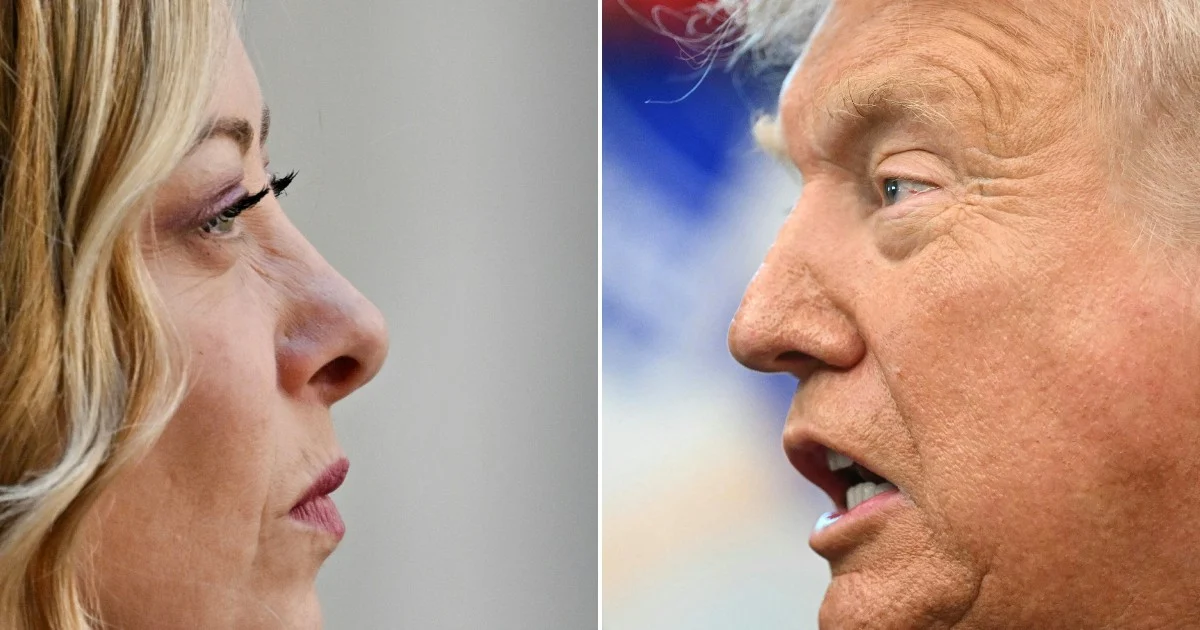
The relationship between US President Donald Trump and Italian Prime Minister Giorgia Meloni took another contentious turn on Saturday when Trump publicly escalated their ongoing dispute, moving beyond the original disagreement over a photograph request to encompass deeper strategic divisions between the two Western allies. The American leader's renewed criticism signals that tensions between Washington and Rome extend well beyond surface-level protocol disputes, reflecting underlying discord on significant international policy matters that could complicate coordination within Western alliances.
At the heart of the immediate controversy lies a claim by Trump that Meloni repeatedly sought to pose with him during recent meetings, particularly around events such as the G7 summit. Rather than treating this as a minor social protocol matter, Trump connected the episode to his broader frustration with Italian positions on key geopolitical issues. His willingness to air this grievance publicly and repeatedly underscores how personal dynamics between world leaders can become entangled with substantive policy disagreements, potentially affecting bilateral relations and collective Western decision-making.
The expansion of this quarrel into discussions about Iran policy and NATO obligations reveals the true source of friction between the two governments. Trump has long maintained that European allies, including Italy, fall short on defence spending commitments and do not sufficiently support his administration's approach to constraining Iranian regional influence. By linking the photograph dispute to these weightier matters, Trump appears to be using the personal conflict as a vehicle to express deeper disappointment with Italian strategic alignment. This rhetorical maneuver transforms what began as a protocol disagreement into a statement about broader transatlantic tensions.
Meloni's government, despite maintaining generally favourable relations with the Trump administration compared to some other European capitals, finds itself navigating a delicate position. Italy balances its traditional NATO alliance commitments with growing geopolitical interests in the Mediterranean and Middle East regions, where Iranian activities directly affect security dynamics. Rome's measured approach to Iran sanctions and its focus on diplomatic channels alongside pressure tactics reflects calculations about regional stability that do not always align perfectly with Washington's more confrontational posture. This fundamental difference in threat assessment and response strategy provides context for why Trump's criticism, while framed around a photograph, actually signals disagreement on strategy.
The timing of Trump's escalation matters significantly for understanding the diplomatic landscape. Within the Western alliance, disagreements over how to manage relations with Iran have become increasingly complex as various powers pursue different objectives. The European Union, including Italy, has attempted to preserve the Joint Comprehensive Plan of Action framework or at minimum maintain channels for diplomacy, while the Trump administration has taken a harder line. Italy's geographic proximity to the Mediterranean and Middle East means its government cannot ignore the consequences of rapid escalation that might result from policies perceived as overly aggressive toward Tehran.
NATO burden-sharing disputes have become a perennial source of tension between Trump and various European governments, including Italy. While Rome has increased defence spending in recent years, the figures remain below levels Trump considers adequate. The American president uses these financial criticisms to leverage broader policy alignment, pressuring European NATO members to adopt positions closer to his own vision on regional security matters. By connecting the photograph controversy to NATO obligations, Trump employs a negotiating tactic that links personal standing to financial and strategic commitments.
For observers of transatlantic relations from a Southeast Asian perspective, this escalating dispute offers instructive lessons about alliance management and the perils of personal tensions between leaders affecting institutional relationships. In a region where multiple powers maintain bilateral relationships with both American and European partners, understanding how Western alliances function internally carries strategic importance. The willingness of a major power leader to conduct diplomatic disputes through public recriminations suggests a shift in how alliance relationships operate, moving away from private resolution mechanisms toward public pressure campaigns.
Meloni's position as Italy's prime minister adds another layer to this analysis. As a leader from a nationalist-leaning background, her relationship with the multilateral systems that underpin the Western alliance has historically been subject to scrutiny. However, her government has generally sought to strengthen rather than weaken NATO and EU commitments. Trump's public campaign against her therefore creates awkward positioning for a leader trying to maintain both alliance solidarity and constructive relations with Washington. The dispute demonstrates how Trump's personalised approach to foreign policy can create complications even with leaders who might otherwise share ideological affinities with his anti-globalist rhetoric.
The photograph disagreement, regardless of its factual merits, serves as a symbol of underlying frustrations rather than the true source of conflict. Western leaders frequently seek photographic opportunities at summits; such requests represent standard diplomatic protocol rather than unusual behaviour. That Trump elevated this into a public dispute reflects his method of conducting foreign relations through direct confrontation and personalised grievances. For Italy and other European allies, navigating this approach requires balancing firmness on core interests while managing the unpredictability of leader-to-leader dynamics.
Looking forward, the escalation threatens to create complications for Western coordination on pressing international issues. When leading allies resort to public recriminations over perceived slights, the diplomatic infrastructure required for addressing complex problems like Iran's regional activities, cybersecurity threats, and trade relationships suffers degradation. Italy's government will need to carefully assess how to respond to Trump's criticism without either capitulating on strategic principles or further antagonising Washington. The outcome of this dispute will likely influence how other European nations calculate their own approaches to managing relationship dynamics with the Trump administration.
The broader implications extend to alliance cohesion and strategic messaging. Visible cracks in Western unity, whether stemming from photographs or policy disputes, invite opportunistic responses from rival powers. Nations watching these transatlantic tensions will draw conclusions about the durability of Western commitments and the reliability of alliance frameworks. For regional actors from Southeast Asia to the Middle East, evidence that Western partners quarrel openly over leadership preferences may affect assessments of Western alignment and staying power in various geopolitical competitions.

