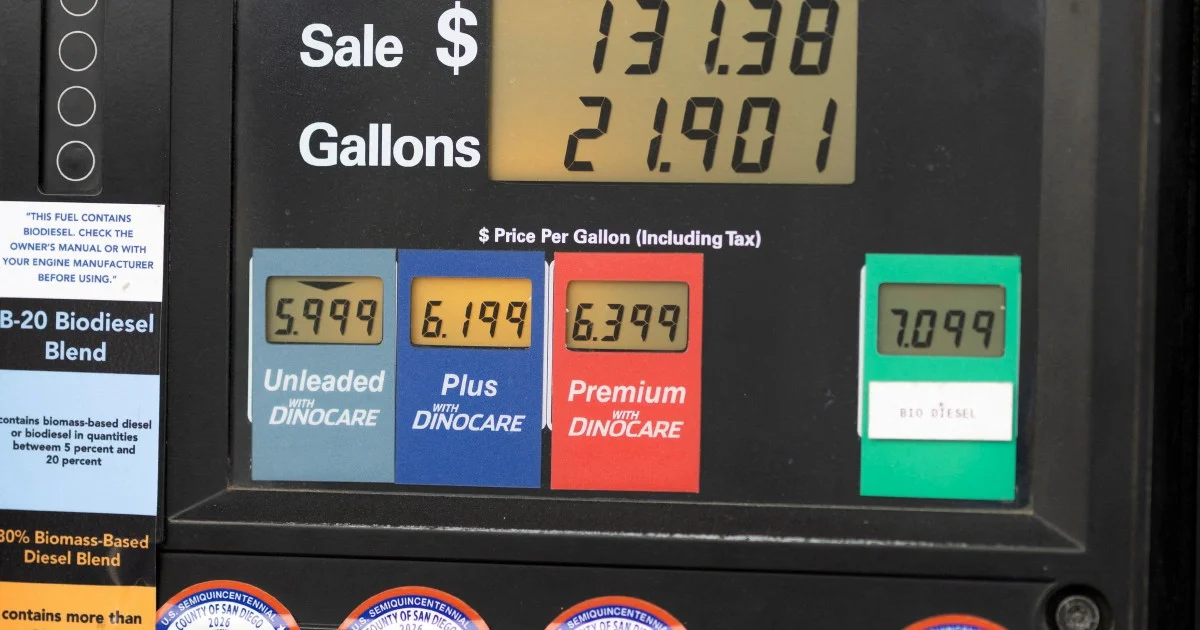
The Trump administration has launched a formal investigation into leading American petroleum firms, citing concerns about sustained petrol price levels that have failed to decline as rapidly as administration officials anticipated. The move comes as Donald Trump faces mounting political criticism over the economic consequences of Middle Eastern geopolitical tensions, which have kept energy markets volatile and consumer fuel costs elevated across the nation.
The decision to probe major oil corporations represents an attempt by the administration to demonstrate responsiveness to voter concerns about household energy costs, a politically sensitive issue heading into coming electoral cycles. By publicly directing scrutiny toward the petroleum industry, Trump seeks to deflect blame for fuel price volatility away from government policy and toward corporate practices, suggesting that oil firms themselves may be restricting supply or maintaining excessive profit margins.
For Malaysian observers, this American policy response carries broader significance given the global nature of energy markets and the Middle East's critical role in international crude oil supplies. Any investigation that affects American petroleum companies' operations or profit strategies could potentially influence global energy market dynamics, with ripple effects on regional Southeast Asian economies that depend heavily on stable energy costs for manufacturing competitiveness and transport sector viability.
The timing of Trump's investigation reflects the persistent disconnect between the administration's expectations for energy price movements and actual market behaviour. Despite various policy statements and international diplomatic efforts aimed at stabilising the Middle East, crude prices have remained influenced by genuine geopolitical risk premiums associated with regional conflicts. These structural factors limiting downward price pressure have proven resistant to political messaging, leaving the administration struggling to meet public expectations.
Geopolitical tensions in the Middle East have created sustained upward pressure on global energy prices through multiple transmission mechanisms. Uncertainty about supply disruptions, potential shipping route complications, and broader regional instability have caused international crude markets to price in risk premiums that persist even when actual supply disruptions remain limited. This dynamic means that even if American domestic production increases or consumption decreases, global oil benchmarks remain influenced by Middle Eastern risk factors beyond Washington's direct control.
The investigation into oil majors may explore various dimensions of company operations, from crude acquisition and refining strategies to distribution networks and retail pricing decisions. Regulators typically examine whether corporate practices constitute illegal collusion, whether market manipulation occurs, or whether companies are hoarding supplies to artificially support prices. However, proving such violations requires demonstrating clear intent and coordinated action rather than parallel profit-maximising behaviour by competing firms.
For energy-dependent economies across Southeast Asia, American energy policy outcomes hold material significance. Malaysia, with its own petroleum sector interests and energy security considerations, watches American policy developments carefully as they establish precedents for energy market governance. The investigation's findings and any resulting policy adjustments could influence how other major energy-consuming nations approach similar concerns about oil company conduct and market dynamics.
The petroleum industry has historically resisted characterizations of supply restriction or margin expansion as deliberate corporate strategy, instead attributing prices to global supply-demand fundamentals and geopolitical risk premiums. Companies argue that competitive market pressures prevent sustained profiteering and that investment decisions respond to perceived long-term demand and price trajectories. This ideological disagreement between policymakers and industry creates persistent friction.
American gasoline prices remain highly visible to consumers and intensely scrutinised by political leadership because fuel costs directly affect household purchasing power and consumer sentiment. Unlike many other commodity prices, petrol costs influence voting behaviour significantly because they represent unavoidable expenses for the driving population. This political sensitivity explains why administrations across the political spectrum face pressure to address energy prices, even when the underlying causes remain largely beyond direct government control.
The investigation also reflects broader tensions within American energy policy between promoting domestic oil production and consumer concerns about elevated prices. The administration supports increased drilling and reduced environmental regulations for fossil fuel extraction, positioning this as beneficial for energy independence and price moderation. However, this supply-side focus does not automatically translate to lower consumer prices if global market forces continue driving benchmark crude costs upward.
Regional implications for Southeast Asia extend beyond simple energy price effects. The investigation may signal American willingness to pursue more activist energy market governance, potentially affecting multinational petroleum companies' regional operations and investment decisions. These firms operate extensively across Southeast Asia, and changes to their American regulatory environment or profit expectations could influence their capital allocation decisions in the region.
Moving forward, the investigation's conclusions and any resulting enforcement actions will establish important precedents for how major energy-consuming nations approach petroleum company oversight during periods of elevated global prices. Whether regulatory authorities identify genuine violations or conclude that high prices reflect legitimate market forces will significantly shape energy policy debates internationally and influence investor confidence in petroleum sector stability across various jurisdictions, including Southeast Asian economies dependent on energy sector investments.

