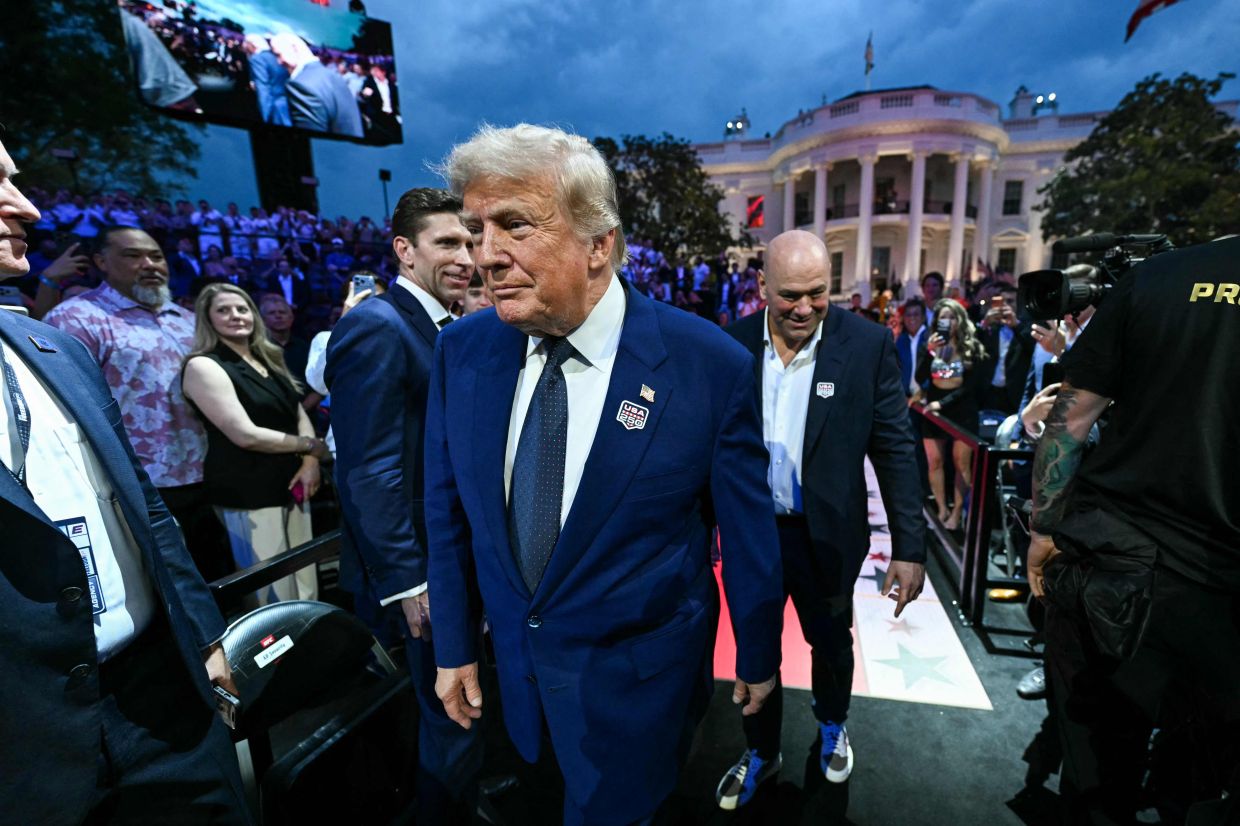
Donald Trump marked his 80th birthday with an unprecedented sporting spectacle, hosting the Ultimate Fighting Championship on the White House South Lawn before departing for France to meet with Group of Seven leaders. The event, which kicked off just before 8:30pm on Sunday evening, represents a striking departure from the staid ceremonial traditions typically observed on the presidential grounds, signalling both Trump's personal preferences and his administration's deliberate cultivation of the UFC audience that proved decisive in his 2024 electoral victory.
The White House transformation for what organisers branded UFC Freedom 250 reflects the deep alignment between the Trump administration and combat sports. UFC President Dana White, a longtime Trump ally, orchestrated the event at the president's behest, bringing together fighters, celebrities, and government officials under a nearly 100-foot-tall structure nicknamed the Claw, which dwarfs the White House itself in scale. The arena, which housed 4,300 seats, was only the beginning; an additional 120,000 spectators were distributed free tickets through lottery to watch proceedings on the Ellipse, the oval park adjacent to the presidential residence.
The guest list underscored the event's significance as a convergence of technology, finance, entertainment, and political power. Mark Zuckerberg, CEO of Meta Platforms Inc., attended alongside David Ellison, chief executive of Paramount Skydance Corp., Treasury Secretary Scott Bessent, and various Trump family members. Podcast host Joe Rogan provided commentary throughout the matches, his presence particularly symbolic given his outsized influence among the young male demographic that constituted a critical voting bloc for Trump's 2024 campaign. Military servicemembers filled seats throughout the venue, with the broadcast cutting to watch parties at military bases globally, including in Okinawa, Japan, extending the patriotic framing of the occasion.
The financial architecture underpinning the event reveals the increasingly blurred lines between corporate sponsorship and governmental resources. UFC reportedly spent over US$60 million to stage the Sunday fights, though company executives disputed whether the expenditure would ultimately prove profitable. More strikingly, more than seven federal agencies allocated what court filings characterised as significant resources and manpower to execute the event. The administration has maintained that UFC covered all direct costs and managed sponsorship arrangements, yet the scale of federal involvement raises questions about resource allocation during a period when the government continues managing multiple international crises.
Cryptocurrency platform Crypto.com and automotive brand Dodge's Ram division appeared among the event's prominent sponsors, reflecting the commercial ecosystem increasingly orbiting Trump. The Trump family's cryptocurrency venture, World Liberty Financial, contributed an additional US$250,000 bonus pool for the top two fighters, further entangling family business interests with official presidential activities. These sponsorship arrangements attracted legal scrutiny, with the Public Integrity Project filing suit to characterise the event as a concentrated manifestation of governmental corruption, though courts ultimately declined to halt proceedings.
Trump's orchestration of this spectacle serves multiple overlapping objectives beyond personal celebration. The UFC Freedom 250 branding situates combat sports within the broader commemorative framework surrounding the 250th anniversary of American independence, a theme the administration intends to amplify throughout 2025 with a massive National Mall fair and an IndyCar race through Washington's streets in August. By positioning the UFC event as patriotic spectacle, Trump legitimises the association between violent entertainment and national identity, transforming a birthday celebration into a statement about his vision for American culture and presidential prerogative.
Yet public sentiment tells a markedly different story. A YouGov poll released on June 5 found that 51 percent of Americans surveyed disapproved of the White House fights, compared with merely 27 percent expressing approval. This significant disapproval reflects broader unease about the militarisation of presidential spaces and the transformation of the South Lawn—traditionally reserved for family-oriented events like the Easter Egg Roll and the Congressional Picnic—into a combat arena. The temporary ice rink erected by former President Joe Biden suddenly seems quaint by comparison to the architectural audacity of the Claw.
The fighters themselves engaged in the event's patriotic mythology. During a pre-fight news conference held at the Lincoln Memorial—itself a choice of historic venue with evident symbolic weight—competitors predicted victories and insulted opponents with characteristic combativeness. Michael Chandler spoke of presenting the best version of himself on the White House lawn for America's birthday, articulating how the event conscripted individual athletic ambitions into larger narratives about national greatness and presidential endorsement.
Logistical details further illustrate the event's scope. Locker rooms were established throughout the White House grounds, utilising the Indian Treaty Room, an official space ordinarily reserved for diplomatic and governmental functions. The scale of disruption to normal presidential operations underscores Trump's prioritisation of this celebration, even as his administration contends with significant international obligations, including the imminent France meeting where geopolitical tensions require presidential attention.
Trump's public musing about permanently maintaining the Claw structure—comparing it to the Eiffel Tower in a TikTok video—demonstrates his investment in the event's symbolic permanence, though he later claimed to be joking. Court filings indicate the structure will be disassembled beginning at 10am Monday, by which time the president will have departed for France, apparently in possession of a UFC championship belt as a souvenir from the evening's entertainment. This detail, minor in isolation, encapsulates the blending of personal rewards and presidential prerogative that characterises Trump's approach to executive power.
For Southeast Asian observers, particularly Malaysian readers, the spectacle offers instructive lessons about the increasingly personalised nature of presidential authority and the instrumental use of entertainment for political mobilisation. Trump's cultivation of the UFC audience demonstrates how modern political campaigns leverage cultural preferences and demographic targeting to build electoral coalitions, then translate that support into policy arrangements and ceremonial validation. The alignment between cryptocurrency sponsors, automotive brands, and the presidential residence suggests emerging patterns in how commercial interests colonise governmental spaces and how entertainment increasingly substitutes for traditional political discourse in shaping contemporary politics.