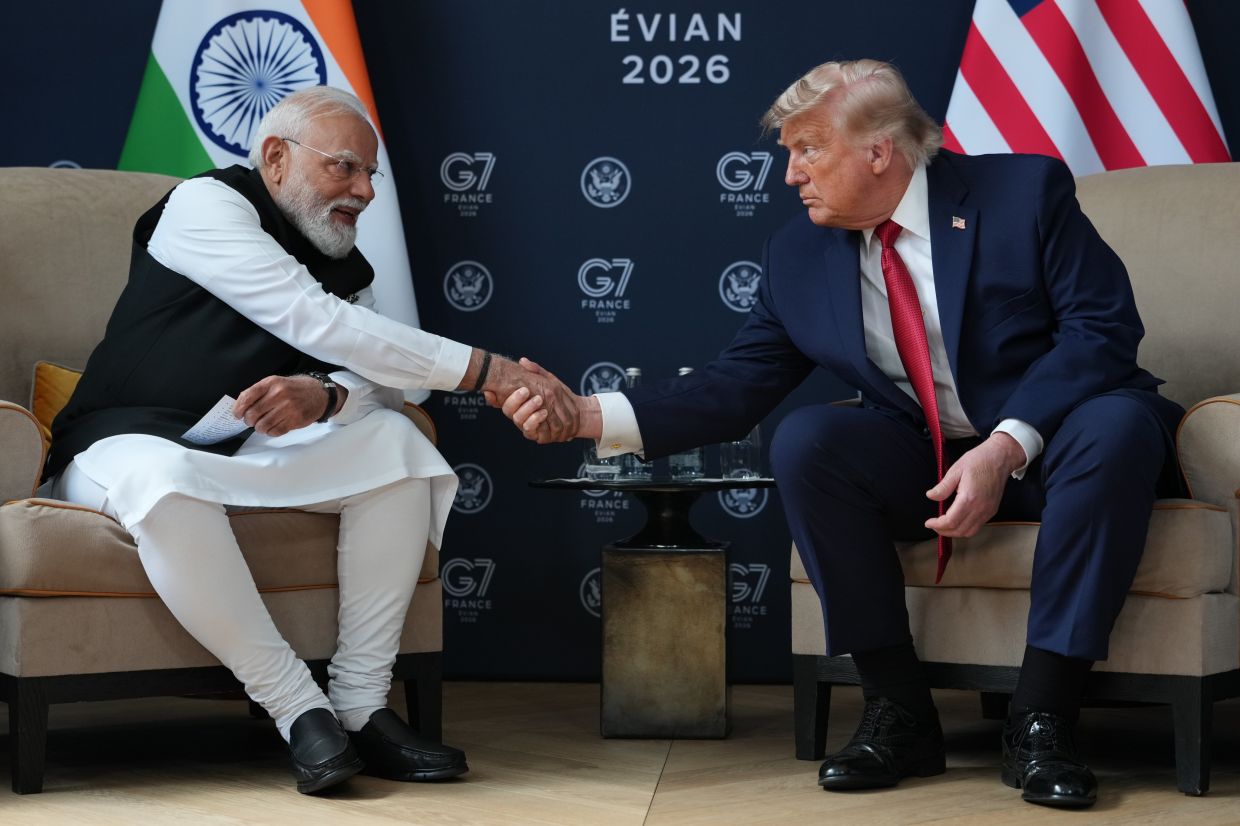
President Trump has faced sharp backlash after offering no apology or expression of sympathy for the deaths of three Indian nationals killed when United States military forces attacked a commercial shipping vessel in the Persian Gulf, instead characterizing maritime operations as an inherently hazardous occupation during his inaugural bilateral meeting with Indian Prime Minister Narendra Modi since taking office in 2025.
When confronted by journalists about the incident immediately following their formal discussions, Trump acknowledged awareness of the deaths but offered neither condolences nor regret. "I heard about that," he remarked, before pivoting to broader claims about cooperation between the two nations. He framed the fatalities within a historical context, suggesting such tragedies have "been happening throughout time," while emphasising that both governments intend to "work together" on maritime security matters. His characterisation of commercial seafaring as "a rough profession" appeared designed to normalise the casualties as an expected consequence of the industry rather than a serious diplomatic incident.
The diplomatic tension originated from a contentious military operation in which American forces launched missiles at the MT Settebello, a vessel flying the Palau flag but carrying Indian crew members, in the Strait of Hormuz region near Iranian waters. US Central Command justified the strike by asserting the vessel had violated America's self-imposed blockade against Iranian ports and was engaged in illicit oil transportation. Beyond this incident, American forces also targeted two additional commercial ships crewed by Indian nationals for similar alleged breaches of the blockade, escalating concerns about the safety of maritime workers navigating these strategically critical waterways.
Indian Foreign Minister Subrahmanyam Jaishankar lodged a formal "strong protest" through diplomatic channels following the attack, yet the State Department's official account of their conversation revealed the extent of underlying friction. Rather than acknowledging Indian grievances, the American side doubled down on its enforcement position, with officials emphasizing that "violations of the US blockade and the illicit transport of Iranian oil will not be tolerated." This unyielding stance suggested Washington viewed the matter primarily through the lens of Iran policy rather than as a humanitarian concern affecting allied nationals.
The incident triggered considerable public anger throughout India, manifesting in spontaneous protests against American policy. Footage circulated showing autorickshaw drivers in Delhi actively removing and destroying promotional banners featuring Trump's image that had been installed by the US embassy as part of diplomatic outreach efforts. These posters, displaying birthday greetings for America alongside Trump's photograph, became symbols of perceived American disrespect toward Indian lives, transformed by ordinary citizens into objects of protest. The scene reflected genuine popular resentment at what many Indians viewed as cavalier American indifference to the deaths.
Indian opposition politicians seized the moment to criticise Prime Minister Modi's handling of the crisis. Opposition Congress party leader Rahul Gandhi explicitly attacked the government for its muted response, characterising Modi as "compromised" and describing his administration as listening "like an obedient servant" to American demands. Gandhi's intervention introduced a significant domestic political dimension, suggesting the incident had weakened Modi's standing among those who expect stronger assertion of national sovereignty. The criticism highlighted tensions between the government's strategic alignment with Washington and public expectations of firmness in defending Indian interests.
Despite these tensions, Trump sought to emphasise the warmth of his personal relationship with Modi and the strategic closeness between the nations. "We cannot be any closer," he declared, suggesting that personal rapport between leaders could transcend individual diplomatic incidents. He referenced the absence of any formal defence commitment between the countries but suggested that implicit mutual support existed. His comments attempted to reframe the sailor deaths as an isolated issue separate from the broader bilateral relationship, though this framing proved unconvincing to Indian observers sceptical of American reliability.
The bilateral relationship has been progressing along multiple commercial and strategic tracks. Trump and Modi previously met in February 2025 in Washington, where discussions began on finalising a comprehensive trade agreement, positioning India among the first nations to enter formal trade negotiations with the new American administration. This accelerated engagement reflected shared strategic interests, particularly concerns about Chinese influence in the Indo-Pacific region. However, commercial negotiations have proceeded slowly, with talks focused on an interim trade deal framework whilst broader issues remain unresolved.
The involvement of US Secretary of State Marco Rubio in subsequent Indian diplomatic engagement suggested efforts to compartmentalise the shipping incident from strategic partnership development. Rubio visited India following the incident and characterised the nation as one of Washington's "most important strategic partners," language designed to reassure Indian leadership of American commitment despite the maritime casualties. His public statements appeared calibrated to limit diplomatic damage and maintain momentum on trade and security discussions that both governments prioritise.
Trump's characterisation of Modi as a "tough trader" and "great guy" during the press conference further illustrated attempts to emphasise personal rapport and shared pragmatism. His mention of plans to visit India "sometime in the future" signalled intentions to deepen engagement, though the absence of specificity left questions about American commitment. The comments represented an effort to move past the deaths of the three sailors and refocus international attention on the commercial and strategic dimensions of the relationship.
For Malaysian observers, the incident carries significant implications. As a Southeast Asian maritime nation dependent on safe passage through regional chokepoints including the Strait of Hormuz, Malaysia has vested interests in freedom of navigation and proportionate responses to alleged violations. The case raises questions about how powerful nations justify military action against commercial shipping and whether Malaysian vessels might face similar risks if caught in great power enforcement operations. The episode also underscores the challenges faced by nations attempting to balance strategic partnerships with major powers against domestic public expectations of protection for their citizens engaged in legitimate commercial activities.

