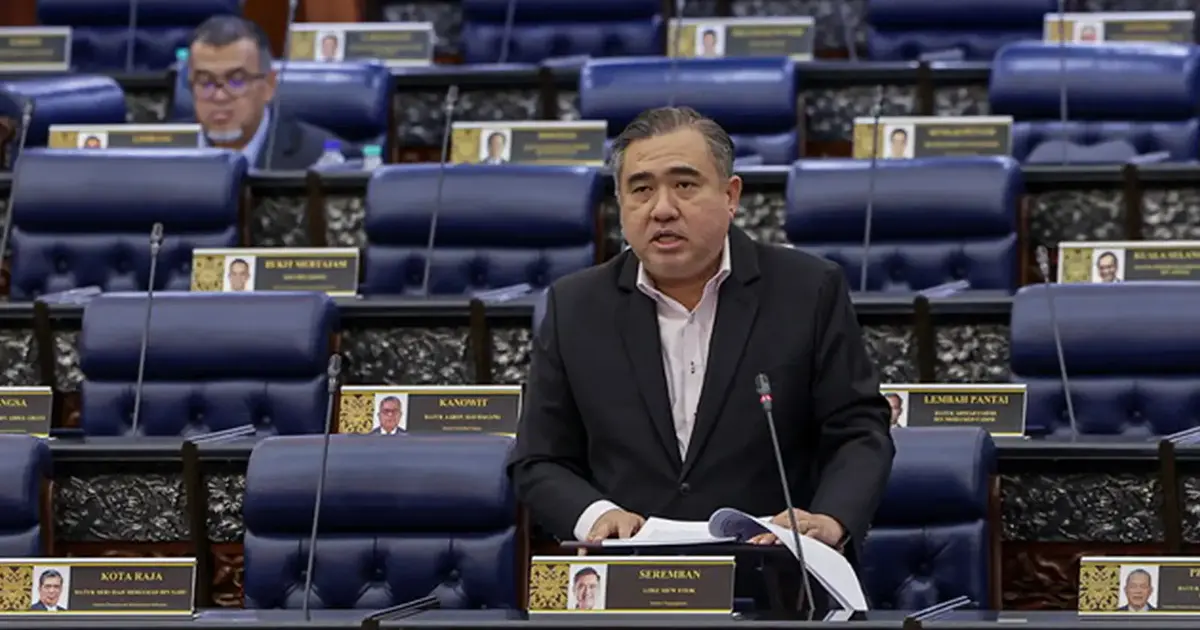
Malaysia's Transport Minister has characterised the upward revision of traffic compound ceilings as fundamentally an educational initiative aimed at reforming motorist behaviour rather than extracting revenue through punitive measures. The clarification comes as the Road Transport Department (JPJ) implements the elevated penalty structure, addressing concerns among the driving public about the steeper fines now available to enforcement officers.
The framework underpinning the adjusted compound system retains meaningful flexibility for JPJ personnel, who continue to exercise professional discretion when determining the actual fine amount imposed for any given traffic violation. This discretionary power means that offenders cannot assume they will automatically face the maximum permissible compound; instead, enforcement officers can calibrate the penalty according to the specific circumstances and severity of each breach. For minor infractions or first-time violations, this allows for more proportionate outcomes that reflect the actual transgression rather than applying a one-size-fits-all approach across all traffic violations.
A significant feature designed to incentivise voluntary compliance and reduce recidivism involves offering substantial reductions for prompt settlement. Motorists who choose to settle their compounds early—rather than contesting or delaying payment—become eligible for a 50 per cent discount on the imposed fine. This mechanism effectively creates a two-tier pricing structure that rewards responsible and expeditious behaviour while maintaining proportionality for those who engage with the system constructively. The discount framework serves simultaneously as both an incentive and a gentle nudge toward acceptance of culpability.
The elevation of compound ceilings represents a broader policy shift across Southeast Asian transport authorities seeking to improve road safety through consequences that carry meaningful weight in the eyes of motorists. Previous research on traffic enforcement effectiveness suggests that penalties perceived as trivial often fail to deter repeat violations or foster behavioural change. By increasing the potential financial impact while maintaining discretion and providing early-payment incentives, the revised structure attempts to occupy a middle ground between deterrence and proportionality.
For Malaysian drivers, the practical implications involve greater variability in outcomes depending on the specific offence, their driving history, and their response to the citation. A motorist caught speeding moderately in a residential zone faces a different scenario from one engaged in dangerous overtaking on a highway. The discretionary system theoretically allows enforcement to differentiate between these situations rather than imposing identical consequences. However, the effectiveness of such systems depends heavily on training, consistency, and accountability mechanisms ensuring that discretion is applied fairly across different officers and regions.
The 50 per cent early-payment reduction fundamentally alters the financial calculus for traffic offenders. A driver presented with a compound notice now has a clear financial incentive to accept responsibility and settle promptly rather than contest or ignore the citation. This approach mirrors strategies adopted in other Commonwealth jurisdictions where early plea discounts or prompt-payment incentives have demonstrated measurable reductions in court backlogs and administrative burden. For JPJ, widespread uptake of early payment could translate into faster processing of cases and more immediate consequences for offenders, reinforcing the connection between violation and penalty.
The distinction between education and punishment carries important nuance in the Malaysian context, where public perception of traffic enforcement has sometimes reflected frustration over perceived inconsistency or excessive zealousness by enforcement personnel. By framing the higher ceiling as educational rather than punitive, authorities appear to be emphasising road safety outcomes rather than revenue generation. This messaging matters considerably for public acceptance and voluntary compliance, as drivers who perceive enforcement as primarily revenue-driven often experience reduced motivation to conform, whereas those viewing enforcement as safety-focused demonstrate greater responsiveness.
Implementation success will depend substantially on how JPJ communicates the rationale and mechanics of the new system to the driving public. Many Malaysian motorists may remain unaware of either the increased ceiling or the early-payment discount opportunity, potentially missing the chance to reduce their liability. Targeted public education campaigns explaining the structure, the discretionary element, and the financial incentive for prompt settlement could materially improve compliance and broaden understanding that the policy aims at behaviour modification rather than punishment.
The discretionary framework also creates opportunity for differentiation between categories of violations. Jaywalking or minor parking infractions merit fundamentally different approaches than dangerous driving or traffic violations endangering other road users. An educated enforcement system theoretically would apply proportionately lower compounds to technical breaches while reserving the elevated ceiling for egregious or safety-compromising conduct. Such calibration requires training and institutional culture supporting nuanced enforcement rather than mechanistic application of maximum penalties.
For drivers in Malaysia and across the region, understanding the educational intent behind higher compounds alongside the mechanics of discretion and early-payment reduction becomes crucial for navigating the revised enforcement landscape. The combination of a higher ceiling, retained discretion, and a substantial discount for early payment creates a system that theoretically rewards responsible behaviour while maintaining capacity for meaningful deterrence. Whether these mechanisms achieve their intended purpose of improved road safety and reduced recidivism will depend on consistent implementation, transparent communication, and genuine commitment to educational objectives rather than financial targets.

