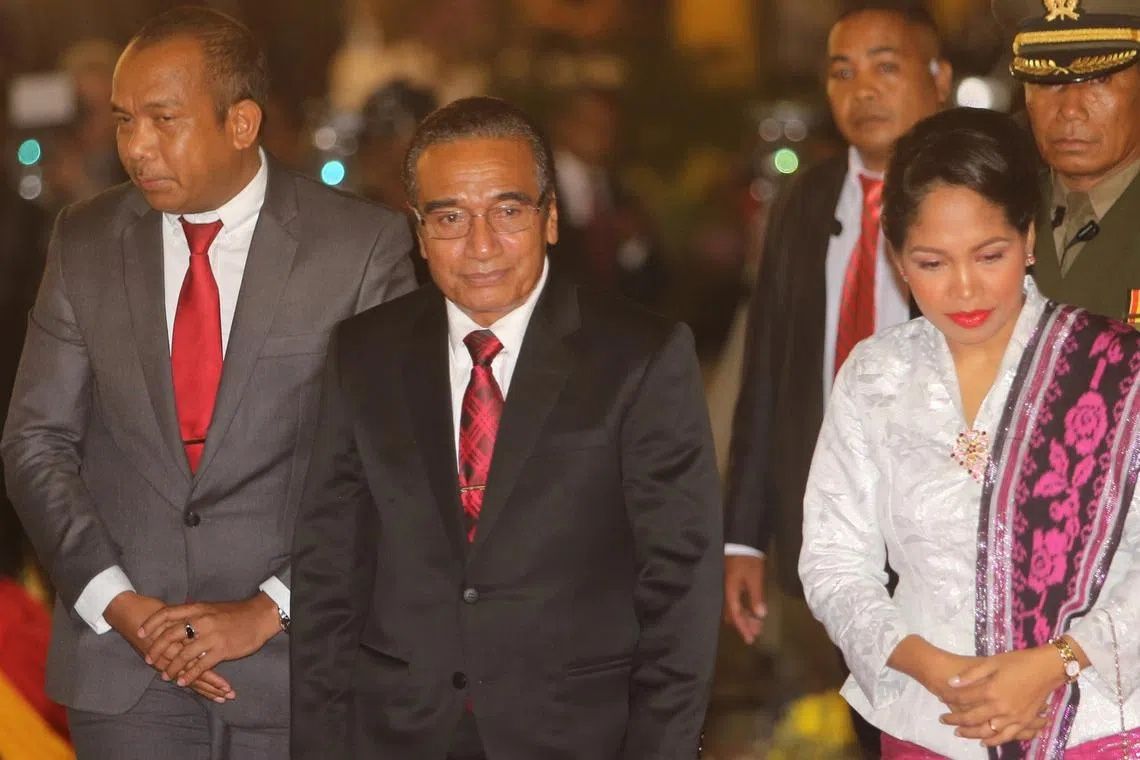
Timor-Leste has declared a period of national mourning following the death of former president Francisco "Lu-Olo" Guterres, who passed away at a Malaysian hospital over the weekend at the age of 71. The announcement on June 22 marks a solemn moment for the Southeast Asian nation, which has lost one of its most prominent figures in the struggle for independence and democratic nation-building. Guterres, whose lifelong commitment to Timorese sovereignty shaped the country's modern political landscape, will be remembered as a defining personality of his generation whose influence extended across both the armed resistance and civilian administration of the young state.
The government has enacted formal protocols befitting a departed statesman of Guterres's stature. National flags are being lowered to half-mast across all public institutions, diplomatic missions, embassies, and consulates in observance of the mourning period. These symbolic gestures underscore the reverence with which the government and broader population regard his contributions to national independence and subsequent governance. The solemnity of the state response reflects Guterres's unique position as a bridge between Timor-Leste's turbulent past and its ongoing democratic consolidation.
Guterres's earthly remains are anticipated to arrive in Dili, the capital, on Tuesday, according to his brother Domingos Guterres, who disclosed that detailed funeral arrangements remain under development. The return of the former leader's body will likely trigger spontaneous gatherings and formal tributes from citizens and officials alike, creating an occasion for collective reflection on his legacy. The logistics of repatriating a distinguished figure and preparing appropriate ceremonial observances demand careful coordination between family members and state authorities during what remains an emotionally charged time.
Current president Jose Ramos-Horta, who vanquished Guterres in the 2022 presidential runoff, set aside any lingering political rivalry to acknowledge the deceased as a "great patriot" whose departure represents "a significant loss for the nation." This gracious tribute highlights how even political opponents in Timor-Leste recognize the foundational role Guterres played in securing and defending national independence. Ramos-Horta's statement demonstrates the maturity of the nation's political culture, where leaders can honour predecessors despite electoral contests. The government extended formal condolences to Guterres's immediate family, the Fretilin party that he previously headed, and the entire Timorese population.
Guterres's trajectory embodied the extraordinary sacrifices demanded of Timor-Leste's liberation generation. Rising from modest circumstances, he devoted decades to armed and political struggle against Indonesian occupation, which lasted brutally for nearly a quarter-century until independence was achieved in 2002. His evolution from guerrilla fighter to elected statesman mirrored the broader transformation of Timorese society from colonial subjugation to sovereign nationhood. This dual identity—simultaneously revolutionary and democrat—made him an influential voice in shaping post-independence institutions and constitutional frameworks.
Electoral success crowned his political ascent when Guterres secured the presidency in 2017 with commanding support exceeding 57 percent of the ballot. This convincing mandate reflected widespread public confidence in his vision for the nation's development and international positioning. His five-year term from 2017 to 2022 marked the sixth presidency in the nation's short existence, a period during which he worked to consolidate democratic institutions and advance national development priorities. Yet the 2022 electoral cycle proved more competitive, pitting the veteran freedom fighter against Ramos-Horta, the Nobel Peace Prize laureate whose international stature and diplomatic credentials appealed to voters seeking new leadership.
The presidential runoff in 2022 demonstrated democratic vitality but also signaled generational transition within Timor-Leste's political elite. Ramos-Horta's victory, while decisive, did not diminish broader societal appreciation for Guterres's foundational contributions. The peaceful transfer of power illustrated how electoral competition and regime change could occur without threatening national stability or institutional continuity. Guterres's acceptance of the result and transition of authority underscored his commitment to democratic principles, even when personally disappointing.
Regional leaders have expressed condolences befitting a significant political figure. Malaysian Prime Minister Datuk Seri Anwar Ibrahim conveyed his sorrow at Guterres's passing and extended sympathies to both his family and the Timorese nation. Anwar's statement acknowledged Malaysia's stake in Timor-Leste's stability and prosperity, reflecting bilateral ties that extend across security, trade, and diplomatic cooperation. The Malaysian premier's words—framing Guterres as deserving of "respect and affection"—situate the deceased within a broader regional community of Southeast Asian leaders and nations bound by shared geopolitical interests and ASEAN fraternity.
Guterres's family has requested privacy and respect during their period of grief, even as the broader population engages in public mourning and commemoration. This balance between private sorrow and national recognition reflects the dual nature of his life as both a devoted family member and a towering public figure whose actions shaped millions. The family's plea for discretion, combined with their acknowledgment of his legacy and service, frames the coming days as an opportunity for Timorese society to honour memory while maintaining appropriate boundaries around personal loss. The week of mourning will allow formal institutions, civil society organizations, and ordinary citizens to process the departure of a leader whose voice and example influenced crucial moments in the nation's emergence.
Guterres's death arrives at a moment when Timor-Leste continues navigating the complex challenges facing young, post-conflict democracies in Southeast Asia. Questions of economic development, institutional strengthening, and regional integration remain pressing, requiring sustained national effort and political leadership. While Guterres is no longer present to contribute directly to these endeavors, his legacy—both as independence struggle icon and democratic statesman—provides inspiration and cautionary lessons for subsequent generations of Timorese leaders tasked with fulfilling the promises of sovereignty achieved through sacrifice. The week of mourning thus becomes not merely an occasion for grief, but an opportunity for national stock-taking and recommitment to the principles of justice, dignity, and self-determination that motivated his lifelong service.

