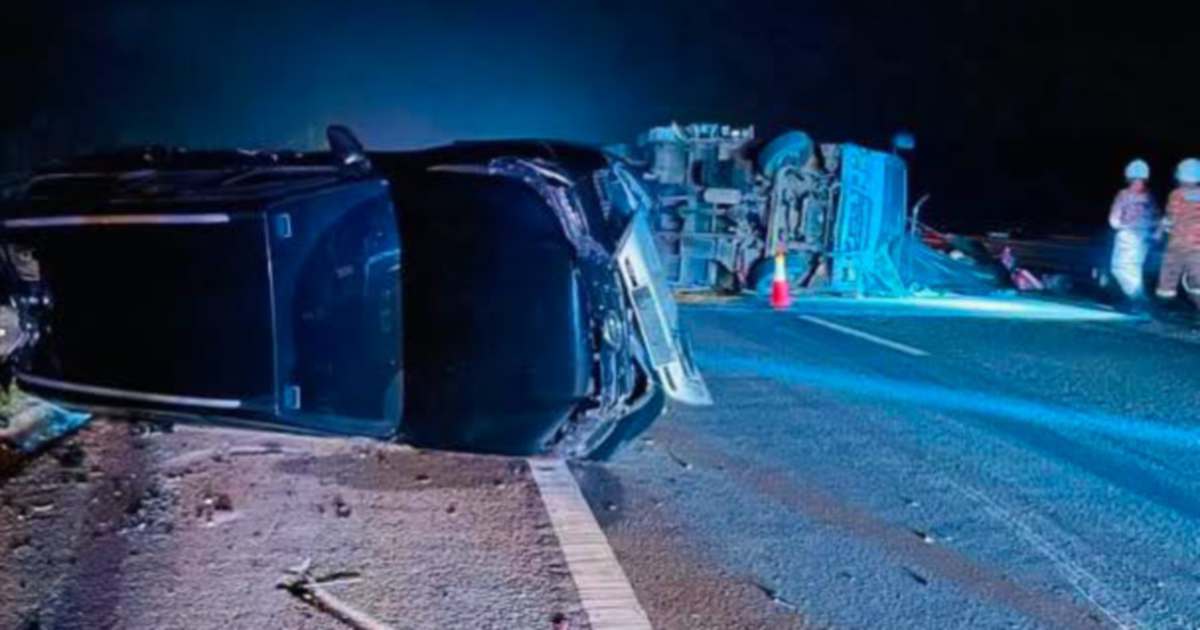
Three media officers attached to Deputy Prime Minister Datuk Seri Dr Ahmad Zahid Hamidi were fortunate to avoid serious harm when they became caught up in a three-vehicle collision on the East Coast Expressway near Maran in the early hours of today. The crash left a total of seven individuals injured, prompting emergency response teams to rush to the scene at Km144 of the expressway to provide immediate assistance and conduct recovery operations.
The East Coast Expressway serves as a critical arterial highway connecting major population centres across the east coast of Peninsular Malaysia. This stretch of road near Maran in Pahang regularly witnesses substantial traffic volumes, particularly during peak travel periods and holidays when commuters and long-distance travellers use the route to move between northern and southern regions. The involvement of a Deputy Prime Minister's staff in the incident underscores the frequency and scale of road accidents that occur on Malaysia's expressway network, regardless of who occupies the vehicles.
While the three media officers assigned to the DPM's office sustained injuries in the collision, authorities confirmed that none of the injuries reached the threshold of severity that would require extended hospitalization or result in long-term medical complications. The exact nature and extent of the injuries sustained by these officers were not immediately detailed in preliminary reports, though emergency responders determined that their conditions did not pose immediate threats to their safety. This fortunate outcome reflects both the protective engineering features of modern vehicles and the rapid deployment of rescue personnel to the accident scene.
The broader collision involved seven injured parties spread across the three vehicles participating in the crash. The circumstances that led to the initial contact between vehicles, whether related to weather conditions, visibility concerns, mechanical failure, or driver error, formed the focus of ongoing investigations by highway authorities and traffic enforcement agencies. Understanding the root cause would be essential for determining preventative measures and assessing whether any violations of traffic regulations had contributed to the incident.
Accidents along major expressways in Malaysia have remained a persistent public safety concern, claiming numerous lives and injuring thousands annually. The East Coast Expressway, despite its modern infrastructure and safety features, is not immune to such occurrences. Traffic patterns on the route are influenced by seasonal factors, with increased congestion during festive periods and school holidays creating conditions that can elevate accident risks when drivers become fatigued or inattentive after prolonged journeys.
The deployment of emergency services to Km144 demonstrated the readiness of rescue and medical personnel stationed along major expressway corridors. Response times and coordination between police traffic units, fire and rescue services, and ambulance crews remain critical variables in determining outcomes for accident victims. The proximity of emergency facilities in Maran likely facilitated rapid evacuation of the injured to nearby medical centres for comprehensive assessment and treatment.
For Malaysia's motorway network managers and road safety authorities, incidents involving high-profile government officials and their staff generate additional scrutiny and public attention. Such accidents often prompt reviews of specific sections of expressway infrastructure, signage, lane marking systems, and enforcement operations. The involvement of a DPM's personnel may also lead to heightened monitoring of that particular stretch of road and evaluation of whether additional safety measures or speed enforcement initiatives warrant implementation.
The incident serves as a reminder that expressway travel, despite the modern engineering of these facilities, carries inherent risks for all users. Drivers, regardless of their profession or the status of their passengers, remain vulnerable to unexpected hazards and the unpredictable behaviour of other road users. Professional drivers employed by government ministries receive specialized training in defensive driving techniques, yet they cannot entirely eliminate exposure to accidents caused by third parties or unavoidable circumstances beyond their control.
Investigations into the Maran expressway collision would typically examine data from dashcams if available, witness statements from drivers and passengers, vehicle damage patterns, and skid marks to reconstruct the sequence of events. Highway authorities would assess whether congestion, weather deterioration, or maintenance issues on the road surface contributed to the accident. Such thorough examination helps inform future policy decisions affecting expressway operations and traffic management protocols across Malaysia's expanding network of high-speed corridors.

