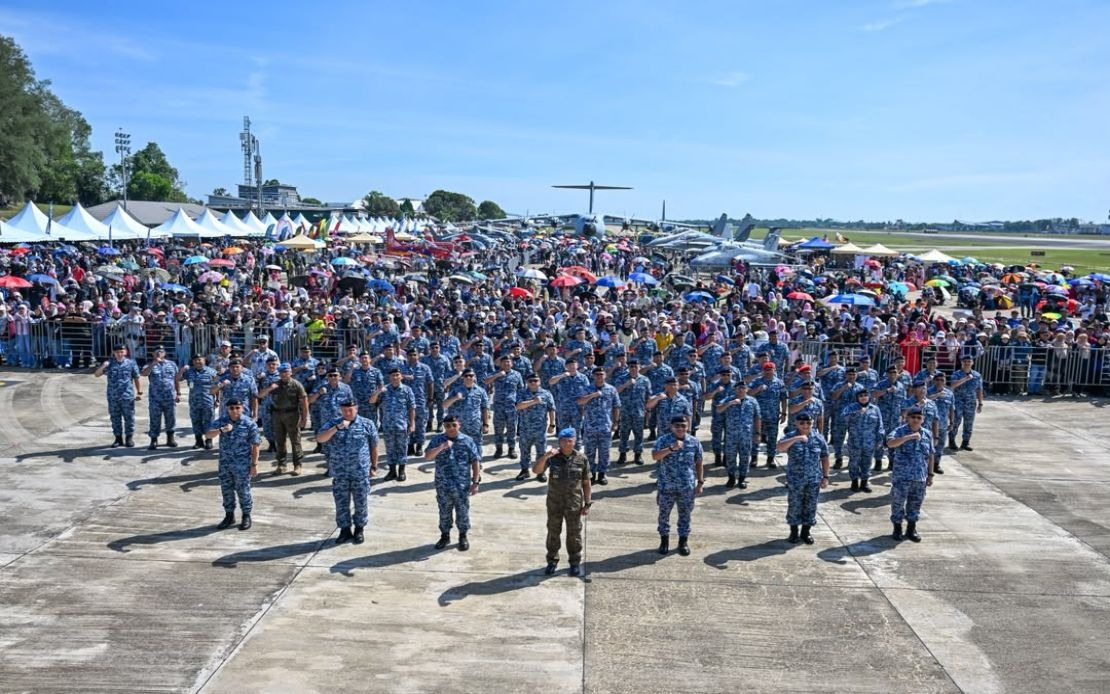
Scorching heat failed to dampen public enthusiasm as thousands converged on Kuantan Air Base over the weekend for the Royal Malaysian Air Force's 68th Anniversary celebration, an open day event that showcased the nation's air defence capabilities to civilians eager for a glimpse into military operations. The two-day programme, running through June 21, drew visitors across all age groups seeking direct experience with cutting-edge aircraft and opportunities to interact with RMAF personnel in an accessible setting.
Air Force Chief General Tan Sri Muhamad Norazlan Aris framed the event within the broader context of government fiscal discipline, noting that despite being organised on a constrained budget, the open day maintained its educational and engagement objectives. He emphasised that while modernisation of defence systems represents a significant capital outlay, creating public understanding of RMAF's strategic direction requires more than digital communication channels. The chief articulated the force's philosophy of balancing transparency with security protocols, explaining that within appropriate boundaries, personnel could address public questions about operational roles, training methodologies, and future acquisition plans.
The centrepiece of the open day involved a series of dynamic aerial demonstrations featuring the RMAF's premier combat and transport assets. Spectators witnessed the agility of the Sukhoi Su-30MKM fighter jets and F/A-18D Hornets performing sophisticated manoeuvres against the Kuantan skyline, complemented by the powerful presence of the A400M transport aircraft and veteran C-130H Hercules. Rotary-wing displays included the modern EC725AP/H225M and AW139 helicopters conducting tactical insertions and extractions, while elite PASKAU special forces demonstrated rapid insertion techniques and parachute operations that highlighted the air force's rapid deployment capabilities across the region.
Parallel exhibitions provided static displays of advanced weaponry and support systems that underscore Malaysia's contemporary defence posture. Ground-based air defence systems occupied prominent positions, signalling the RMAF's integrated air security architecture, while additional aircraft including the Hawk trainer jets, A400M cargo variants, and CN235 utility aircraft offered visitors tangible appreciation for the breadth of the air force's operational inventory. Fire response vehicles and support infrastructure further illustrated the comprehensive logistics framework required to maintain operational readiness.
A particularly innovative attraction emerged through the RMAF Runway Run 2026, offering the public an extraordinary opportunity to traverse an active military runway—an experience strictly prohibited under normal circumstances. The initiative attracted approximately 3,000 pre-registrations, though organisers indicated capacity for additional participants, reflecting the unusual nature of such access. This programme represents a calculated approach to bridging civil-military distance, allowing ordinary Malaysians to occupy space normally restricted to aircraft operations and uniformed personnel.
The experience resonated deeply with younger attendees seeking novel engagement with defence institutions. Mohd Al Muaimin Khairul Amir, a 24-year-old visitor from Arau in Perlis attending his first open day, described the visceral impact of witnessing fighter jets perform overhead while standing on the tarmac. His participation carried additional significance through multigenerational family attendance, as he accompanied his 67-year-old mother Rosnani Itam, who navigated the venue using a wheelchair, enabling her access to close-range viewing of aerial displays. Such inclusive programming reflects efforts to extend military appreciation across demographic segments.
Complementing the aerial and technical exhibitions, the RMAF Central Band delivered musical performances while the Air Force Arts Group presented cultural entertainment, creating an environment blending military capability with broader cultural expression. These programming choices acknowledge that public engagement extends beyond hardware demonstrations to encompass the human and cultural dimensions of defence service. Weapons systems exhibitions and interactive aircraft simulators provided technical depth for mechanically inclined visitors while maintaining accessibility for general audiences.
The open day's framing as a cost-conscious endeavour carries significance for Malaysian defence budgeting discussions, where public military spending invites scrutiny. By maximising engagement value within constrained resource allocation, the RMAF demonstrates responsiveness to government-wide austerity initiatives without surrendering its strategic communication objectives. The approach suggests future military public relations may increasingly depend upon creative programming rather than expansive infrastructure investment.
From a regional perspective, Malaysia's transparent approach to showcasing defence capabilities—including modern fighter jets and transport aircraft—communicates operational readiness and technological sophistication to both domestic audiences and neighbouring states. Public familiarity with military assets reduces security anxieties while reinforcing national defence credibility within the Southeast Asian strategic environment. The RMAF's willingness to invite civilian participation in military spaces, albeit within carefully managed parameters, reflects confidence in both institutional security protocols and public maturity regarding defence matters.
The broader significance of such events extends beyond immediate spectacle to encompass long-term civil-military relations and defence consciousness among Malaysian populations. By demystifying military operations and personnel through direct interaction opportunities, the RMAF cultivates informed perspectives on national defence requirements and budgetary allocations. Multigenerational attendance patterns suggest successful intergenerational transmission of defence awareness, potentially influencing future civilian support for military modernisation initiatives and operational funding.
Looking forward, the Kuantan open day's success—demonstrated through robust attendance despite challenging weather—may establish precedent for annual celebrations prioritising public access and interactive programming. The strategic balance between transparency and security, coupled with inclusive design principles accommodating visitors with varying mobility levels, establishes benchmarks for institutional modernisation extending beyond military hardware to encompass cultural and social dimensions of defence engagement.

