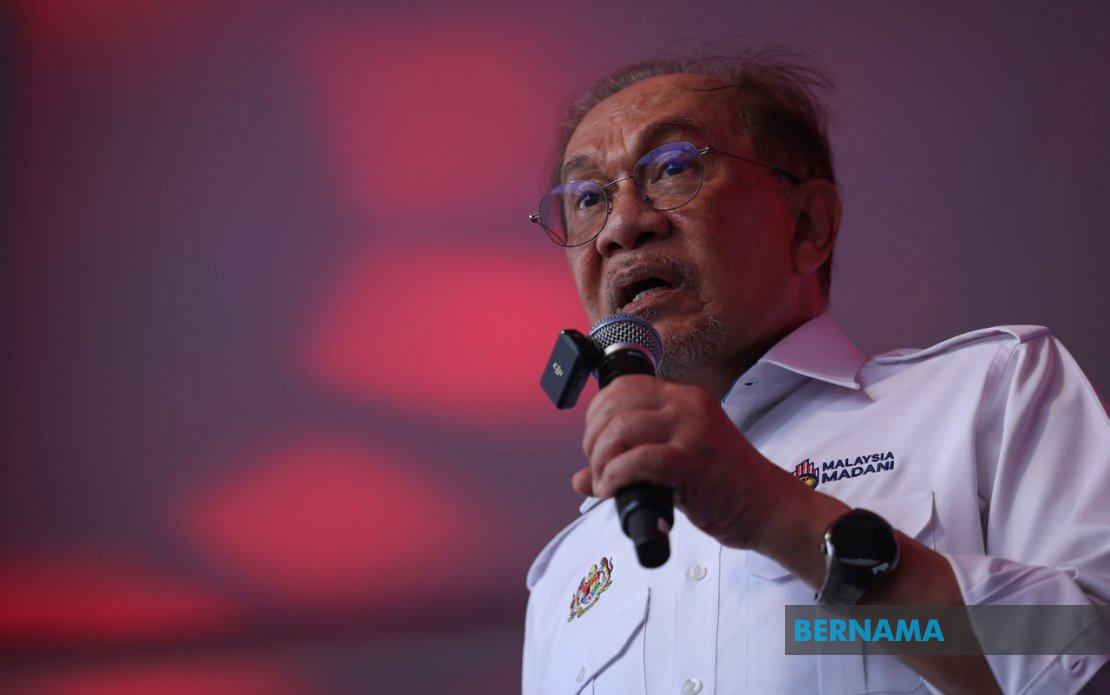
Prime Minister Datuk Seri Anwar Ibrahim has issued a firm commitment that individuals identified as responsible for losses at Lembaga Tabung Haji (TH) will be held accountable under Malaysian law, following the public disclosure of the Royal Commission of Inquiry (RCI) report on July 29. Speaking at an afternoon engagement in the Jelebu district of Negeri Sembilan, Anwar emphasised that the government views the investigation's findings with seriousness, signalling a zero-tolerance approach to financial misconduct within the state-owned Islamic pilgrimage fund.
The Prime Minister's remarks carry particular weight given the scale of TH's financial difficulties in recent years. The fund, which manages savings for Malaysian Muslims intending to perform the Hajj pilgrimage, has faced mounting scrutiny over poor investment decisions and governance lapses that contributed to substantial losses. By publicly committing to prosecution, Anwar is attempting to restore public confidence in an institution that has become emblematic of governance concerns under previous administrations. The RCI report, by examining evidence of misappropriation, fraud, and misuse of authority, provides the legal foundation for potential prosecutions that could stretch across multiple years of TH's operations.
The investigation will involve coordination between three major law enforcement and regulatory bodies: the Royal Malaysia Police (PDRM), the Malaysian Anti-Corruption Commission (MACC), and Bank Negara Malaysia. This multi-agency approach underscores the complexity of the alleged violations and the need for specialised expertise across financial crimes, corruption, and banking regulation. The MACC's involvement signals that intentional misconduct involving public officials is being treated as a corruption matter, while Bank Negara's participation reflects concerns about breaches of financial supervisory standards and prudential banking practices. Police involvement ensures that ordinary criminal charges, should they be warranted, are properly investigated and documented for potential prosecution.
Anwar's declaration that the government will pursue convictions without restraint represents a notable shift from previous political administrations, where prosecutions of senior officials have often stalled or faced public resistance. By stating bluntly that individuals will "go to prison if convicted," he is signalling that the government will not shelter or pardon those found guilty, even if they hold or held high-ranking positions. This commitment to the "rule of law" is framed as a fundamental principle that applies equally to all citizens, establishing an expectation that no one is above legal consequences.
The timing of Anwar's statement, delivered during a campaign appearance with Transport Minister Anthony Loke Siew Fook in the context of the upcoming 16th Negeri Sembilan state election, also reflects the political dimensions of the TH issue. For the Pakatan Harapan coalition, demonstrating decisive action against financial malfeasance represents an opportunity to contrast its governance approach with previous administrations. Anwar's presence at the campaign event highlights how anti-corruption messaging has become central to the coalition's electoral strategy, particularly in states where voters may harbour lingering doubts about institutional accountability.
The RCI's findings are expected to identify specific individuals and patterns of mismanagement spanning multiple investment cycles. TH's difficulties have been traced to high-risk property ventures, poorly structured overseas investments, and inadequate internal controls that allowed senior management to pursue strategies without sufficient board oversight. Previous investigations and media reporting have suggested that some losses were preventable and that decision-making prioritised short-term returns over prudent risk management. The RCI report's public release provides the evidentiary basis for authorities to distinguish between legitimate business failures and deliberate misconduct warranting criminal sanction.
From a legal standpoint, prosecuting complex financial cases involving large institutions requires sustained commitment from investigating agencies and the Attorney General's Chambers. Malaysian courts have demonstrated capacity to handle such cases, though they are typically time-consuming and demand sophisticated presentation of financial evidence. The need to establish mens rea—the criminal intent behind alleged misappropriation or fraud—often presents challenges, as some financial losses result from negligence or poor judgment rather than deliberate dishonesty. However, where the RCI has identified evidence suggesting intentional wrongdoing, prosecutors may pursue charges ranging from criminal breach of trust to abuse of power under the Penal Code.
The implications for Malaysia's financial ecosystem extend beyond TH itself. Demonstrating that senior officials can be prosecuted for financial misconduct, regardless of their connections or previous status, strengthens institutional credibility and sends signals to the broader banking and investment sector about regulatory expectations. If prosecutions proceed successfully, they would reinforce the principle that public institutions managing citizen funds face accountability standards that private entities do not. Conversely, if prosecutions fail to materialise or face legal obstacles, public confidence in the commitment to anti-corruption messaging may erode.
For the Islamic finance sector more broadly, the TH situation has raised questions about governance and risk management standards specific to Islamic banking institutions. The fund operates within a specialised regulatory framework that requires compliance with Shariah principles alongside conventional prudential standards. Ensuring that fiduciary responsibilities to members—predominantly lower and middle-income Muslim Malaysians saving for religious obligations—are upheld with integrity is essential for maintaining the sector's credibility. The government's commitment to accountability may therefore have ripple effects on how other Islamic financial institutions approach governance and oversight.
Anwar's statement also reflects broader international pressure on developing economies to strengthen anti-corruption frameworks. Malaysia has faced scrutiny from international indices measuring governance quality and corruption perception rankings. Taking visible action against financial crimes, particularly those involving large public institutions, contributes to demonstrating institutional capacity and political will to international observers. This positioning may have subtle implications for Malaysia's standing with multilateral organisations and its attractiveness to foreign investors evaluating governance risks.
The path from investigation to prosecution to potential conviction remains lengthy and uncertain. Witnesses may be difficult to locate, documents may be incomplete, and legal challenges could delay proceedings. However, by publicly committing to the pursuit of justice, Anwar has set clear political expectations that will hold his government accountable should prosecutions falter. The RCI report serves as a public record of findings, ensuring that any failure to prosecute would require explicit justification and would be subject to public scrutiny and opposition questioning.

